
GlobalDevelopingDay 1
NASA Swift telescope reentry
NASA's Swift space telescope has reentered Earth's atmosphere and fallen from orbit over Indonesia after 22 years in space.
Updated 08:25 UTC, 5 November 2026 · 3 reports from 3 outlets · 24 one-source
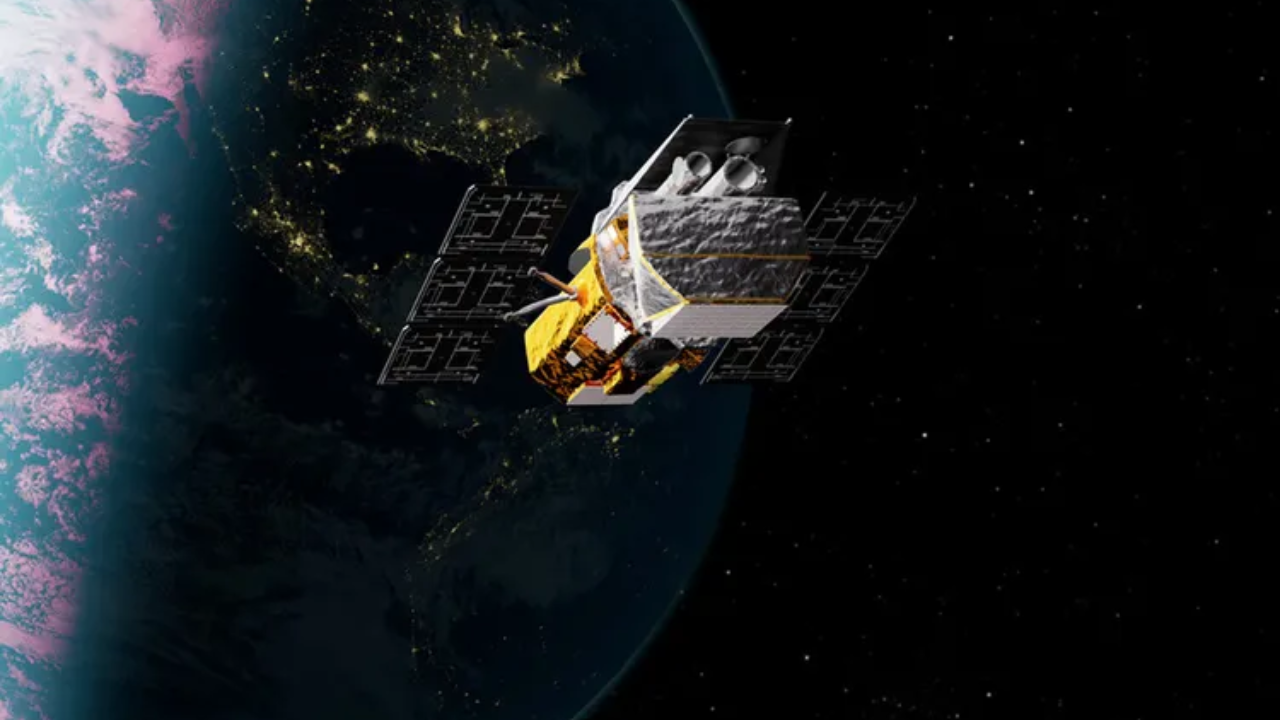
Image: The Times of India
Read it your way
Loading the summary…
Written by AI only from the receipts on this page; each number links to the claim that line rests on.
What changed
Last 48 hours, newest first (times UTC)
-
New claim NASA launched Swift into orbit in 2004.
-
New claim Swift's 22-year mission came to an end.
15 earlier changes
-
New claim The satellite cost US$500 million
-
New claim Swift weighed roughly 3,200 pounds
-
Story opened NASA's Swift space telescope has reentered Earth's atmosphere and fallen from orbit over Indonesia after 22 years in space.
How it’s being told
One card per media bloc, with each outlet’s framing written from its own headlines.
Russian state media
TASSState media
- TASS foregrounds the failed private Katalyst Space Technologies mission to 'adjust the telescope's orbit and delay its reentry' and details Swift's gamma-ray burst work, while giving less emphasis.
Asian media
South China Morning PostPrivateThe Times of IndiaPrivate
- The South China Morning Post foregrounds the 'fiery finale' and local risk, noting the re-entry point's unclear distance from Medan and its 2.5 million residents while citing a.
- The Times of India foregrounds the failed '$30 million rescue mission' and the abandoned servicing attempt, centring the robotic spacecraft's inability to capture Swift while noting its 2004.
In their words
What the people at the centre of this story said, word for word, with the article each quote appeared in.
Satellites this size re-enter the atmosphere regularly, and in nearly 70 years of space flight no one has ever been killed by falling debris
Receipts
Every claim with the verbatim sentence it came from. Tap a claim to see its sources.
One source 24
Only one outlet so far. Shown, never hidden — treat with care.
A mission with Katalyst Space Technologies in summer 2026 to adjust Swift's orbit and delay reentry failed.
-
“In the summer of 2026, a mission involving private company Katalyst Space Technologies was launched to adjust the telescope’s orbit and delay its reentry, but the effort failed.”
TASSState mediaReportsNASA’s Swift telescope reenters Earth’s atmosphere
Swift's primary mission was to detect gamma-ray bursts from major cosmic events such as supernova explosions.
-
“The telescope’s primary mission was to detect so-called gamma-ray bursts - emissions of gamma radiation resulting from major cosmic events, such as supernova explosions.”
TASSState mediaReportsNASA’s Swift telescope reenters Earth’s atmosphere
NASA launched Swift into orbit in 2004.
-
“NASA launched Swift into orbit in 2004.”
TASSState mediaReportsNASA’s Swift telescope reenters Earth’s atmosphere
Swift's 22-year mission came to an end.
-
“The spacecraft’s 22-year mission thus came to an end.”
TASSState mediaReportsNASA’s Swift telescope reenters Earth’s atmosphere
NASA expected most of Swift to burn up on reentry, but some components may have survived.
-
“NASA expected most of the spacecraft to burn up as it traveled through the atmosphere, but some components may have survived re-entry," the statement said.”
TASSState mediaAttributesNASA’s Swift telescope reenters Earth’s atmosphere
Swift reentered at approximately 3.4 degrees north latitude and 98.6 degrees east longitude.
-
“"The US Space Force confirmed that the Swift spacecraft re-entered Earth’s atmosphere at 7:39 a.m. EST Wednesday over the North Sumatra region of Indonesia, at approximately 3.4 degrees north latitude and 98.6 degrees east longitude.”
TASSState mediaAttributesNASA’s Swift telescope reenters Earth’s atmosphere
The Swift spacecraft reentered Earth's atmosphere at 7:39 a.m. EST Wednesday over North Sumatra, Indonesia.
-
“"The US Space Force confirmed that the Swift spacecraft re-entered Earth’s atmosphere at 7:39 a.m. EST Wednesday over the North Sumatra region of Indonesia, at approximately 3.4 degrees north latitude and 98.6 degrees east longitude.”
TASSState mediaAttributesNASA’s Swift telescope reenters Earth’s atmosphere
NASA's Swift space observatory reentered Earth's atmosphere and burned up.
-
“NASA’s US Swift space observatory has reentered Earth’s atmosphere and burned up, according to the agency’s website.”
TASSState mediaAttributesNASA’s Swift telescope reenters Earth’s atmosphere
Swift made its final scientific observation on October 20, 2026, before its systems were shut down.
-
“Its final scientific observation was made on October 20, 2026, before its systems were shut down as its orbit deteriorated further.”
The Times of IndiaPrivateReportsNASA’s 3,200-pound Swift space telescope crashes back to Earth over Indonesia after…
Swift was launched on November 20, 2004, and was originally designed for a two-year primary mission.
-
“Launched on November 20, 2004, Swift was originally designed for a two-year primary mission.”
The Times of IndiaPrivateReportsNASA’s 3,200-pound Swift space telescope crashes back to Earth over Indonesia after…
The Swift rescue mission cost approximately $30 million.
-
“The mission, which cost approximately $30 million, was intended to demonstrate how robotic spacecraft could potentially service and rescue ageing satellites rather than allowing them to become space debris.”
The Times of IndiaPrivateReportsNASA’s 3,200-pound Swift space telescope crashes back to Earth over Indonesia after…
The Swift rescue attempt was abandoned in August 2026.
-
“The rescue attempt was eventually abandoned in August, leaving the ageing observatory without a viable way to escape its declining orbit.”
The Times of IndiaPrivateReportsNASA’s 3,200-pound Swift space telescope crashes back to Earth over Indonesia after…
The Link rescue spacecraft began spinning uncontrollably after its July 2026 launch because of attitude-control problems.
-
“Link began spinning uncontrollably because of difficulties with its attitude-control system, preventing it from safely approaching and capturing Swift.”
The Times of IndiaPrivateReportsNASA’s 3,200-pound Swift space telescope crashes back to Earth over Indonesia after…
NASA hired Arizona-based Katalyst Space Technologies in 2025 to build a robotic spacecraft called Link to rescue Swift.
-
“In 2025, the agency hired Arizona-based Katalyst Space Technologies to develop a robotic spacecraft called Link, which was intended to approach Swift, capture it using robotic arms and push it into a higher orbit.”
The Times of IndiaPrivateReportsNASA’s 3,200-pound Swift space telescope crashes back to Earth over Indonesia after…
NASA estimated the chance of someone on Earth being harmed by falling Swift debris at about one in 2,100.
-
“Although most of the spacecraft was expected to burn up during re-entry, NASA estimated that the possibility of someone on Earth being harmed by falling debris was approximately one in 2,100.”
The Times of IndiaPrivateAttributesNASA’s 3,200-pound Swift space telescope crashes back to Earth over Indonesia after…
NASA's Neil Gehrels Swift Observatory re-entered Earth's atmosphere over northern Sumatra, Indonesia, on November 4, 2026.
-
“The space telescope re-entered Earth's atmosphere over northern Sumatra, Indonesia, on November 4, 2026, after a failed attempt to save it from an uncontrolled descent.”
The Times of IndiaPrivateReportsNASA’s 3,200-pound Swift space telescope crashes back to Earth over Indonesia after…
Dean Sladen: “Satellites this size re-enter the atmosphere regularly, and in nearly 70 years of space flight no one has ever been killed by falling debris”
-
““Satellites this size re-enter the atmosphere regularly, and in nearly 70 years of space flight no one has ever been killed by falling debris,” Sladen said in an email.”
South China Morning PostPrivateAttributesNasa’s 22-year-old Swift satellite telescope falls from orbit in fiery finale
The odds of harm from re-entry were one chance in 2,100
-
“The Space Force had earlier calculated the risk posed to populated areas as very low, putting the odds of harm coming to anyone on Earth at one chance in 2,100.”
South China Morning PostPrivateReportsNasa’s 22-year-old Swift satellite telescope falls from orbit in fiery finale
North Sumatra province has a population of around 16 million
-
“It was not immediately clear how close the telescope’s re-entry point was to North Sumatra’s capital and largest city, Medan, home to about 2.5 million people. The population of the province as a whole totals around 16 million.”
South China Morning PostPrivateReportsNasa’s 22-year-old Swift satellite telescope falls from orbit in fiery finale
Swift contributed to 7,000 published scientific papers
-
“Since its launch in 2004, Swift had also studied hundreds of supernova explosions, star-shredding black holes, stellar X-ray flares, asteroids and comets, contributing to some 7,000 published scientific papers.”
South China Morning PostPrivateReportsNasa’s 22-year-old Swift satellite telescope falls from orbit in fiery finale
The satellite cost US$500 million
-
“Nasa’s prized US$500 million Swift satellite was primarily designed to study gamma-ray bursts – the most intense blasts of energy in the universe – using its multi-wavelength array of three telescopes.”
South China Morning PostPrivateReportsNasa’s 22-year-old Swift satellite telescope falls from orbit in fiery finale
Swift weighed roughly 3,200 pounds
-
“The fiery demise of the Neil Gehrels Swift Observatory, weighing roughly 3,200 pounds (1,452kg), came less than three months after a rescue spacecraft failed its mission to boost the satellite to higher orbit and extend its life.”
South China Morning PostPrivateReportsNasa’s 22-year-old Swift satellite telescope falls from orbit in fiery finale
The US Space Force confirmed that Swift’s re-entry occurred at 7.39am
-
“The US Space Force confirmed that Swift’s re-entry occurred at 7.39am, as the satellite streaked into the upper atmosphere at about 22 times the speed of sound over Indonesia’s North Sumatra province, roughly 200 miles (322km) north of the equator, according to Nasa.”
South China Morning PostPrivateReportsNasa’s 22-year-old Swift satellite telescope falls from orbit in fiery finale
Nasa’s Swift satellite telescope tumbled out of orbit as expected on Wednesday and burned up in Earth’s atmosphere over Indonesia
-
“Nasa’s Swift satellite telescope, which spent two decades studying the most powerful known blasts of energy in the cosmos, tumbled out of orbit as expected on Wednesday and burned up in Earth’s atmosphere over Indonesia, the space agency reported.”
South China Morning PostPrivateReportsNasa’s 22-year-old Swift satellite telescope falls from orbit in fiery finale
Ask about this story
Line, our AI correspondent, answers only from the receipts on this page. Every sentence links to the claim behind it.
Watch
News video from the outlets covering this story.

Ghost edits
Changes outlets made to their articles after publishing, caught by re-reading them.
-
BeforeNasa’s
22-year-oldSwift satellite telescope falls from orbit in fieryfinaleAfterNasa’s Swift satellite telescope falls from orbit in final fiery plunge
Swift" description changed from "22-year-old" to no age.
Removed
The fiery demise of the Neil Gehrels Swift Observatory, weighing roughly 3,200 pounds (1,452kg), came less than three months after a rescue spacecraft failed its mission to boost the satellite to higher orbit and extend its life.AddedThe fiery demise of the Neil Gehrels Swift Observatory, weighing roughly 1,452kg (3,200 pounds), came less than three months after a rescue spacecraft failed its mission to boost the satellite to higher orbit and extend its life.
All sources
3 reports from 3 outlets — with who owns each outlet and who pays for it.
South China Morning Post Private
Hong KongOwner: Alibaba Group (since 2016)Paid by: advertising + subscriptions
TASS State media
RussiaOwner: TASS Russian News Agency (federal state unitary enterprise)Paid by: Russian federal budget + commercial news services
The Times of India Private
IndiaOwner: Bennett, Coleman & Co. Ltd (The Times Group)Paid by: advertising + circulation
Not covered yet by
Al JazeeraAssociated PressBBCCGTNCNADWEuronewsFinancial TimesForeign PolicyFox NewsFrance 24NPRRTReutersSky NewsSputnikTRT WorldThe GuardianThe New York TimesWION
Outlets we monitor that have not reported this story. Silence can be signal.
From the Faultline desk
Our analysis pieces on this story.
24 one-source3 outletsUpdated