The episode is a useful reminder of how thin the line between remedy and merchandise can become when a plausible claim meets an eager market.
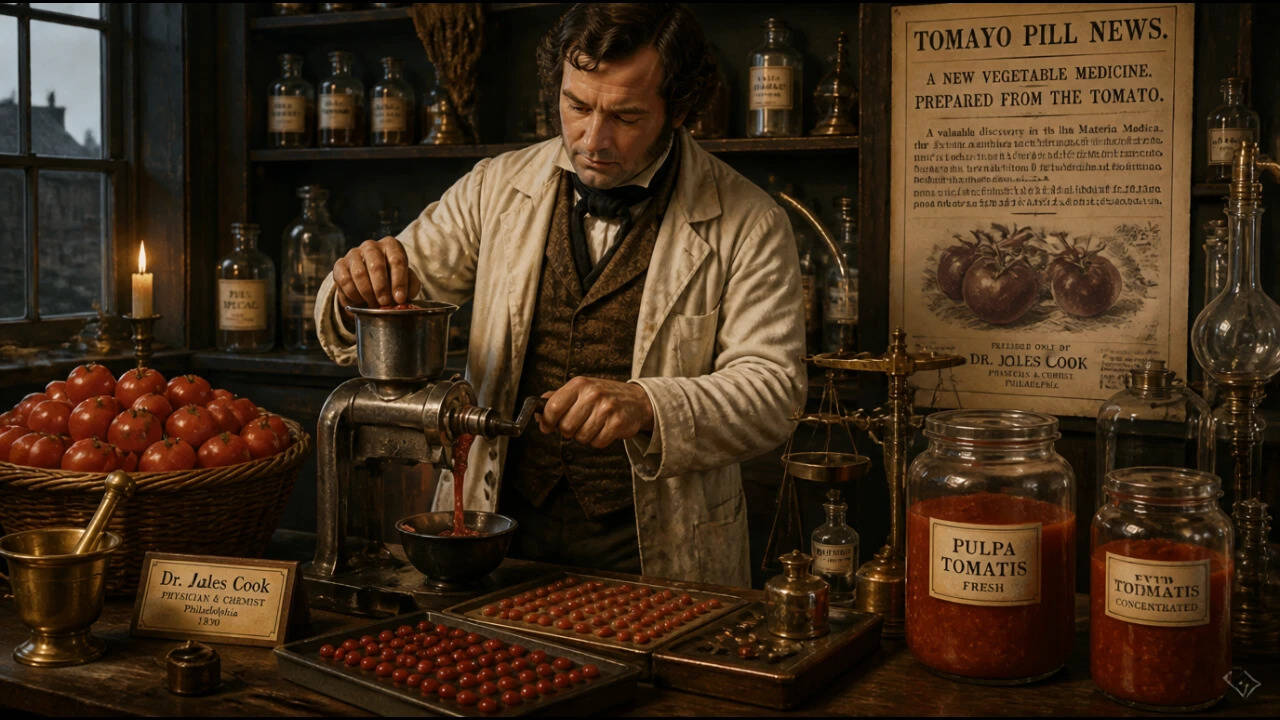
In the 1830s, according to a report in the Times of India, Americans bought tomato ketchup as medicine. A physician of the period, Dr John Cook Bennett, argued that tomatoes could treat digestive complaints including indigestion and diarrhoea, and recommended them raw, cooked or in the form of catsup. Pills made from tomato extract were subsequently sold across the country before the craze collapsed. The episode is a useful reminder of how thin the line between remedy and merchandise can become when a plausible claim meets an eager market.
The commercial turn came quickly. By 1837, newspapers across America were carrying advertisements for Dr Miles' Compound Extract of Tomato, marketed by a Cleveland merchant named Archibald Miles, who claimed the pills had been developed and tested over several years and could treat ailments from indigestion to more serious conditions. He was soon joined by Dr Guy R. Phelps, a Yale-trained physician selling his own Compound Tomato Pills. The Times of India reports that the two men fell into a public dispute, with Miles accusing Phelps of selling an imitation and Phelps questioning Miles' medical credentials and accusing him of stealing his formula.
By 1838 the rivalry had become prominent enough to be known as the Tomato Pill War. Newspapers carried both the advertisements and the recriminations, and the reporting, drawing on Atlas Obscura and the food historian Andrew F. Smith's book The Tomato in America, describes a contest less about health than about authenticity: each manufacturer sought to convince the public that his version of the tomato cure was the real one. The article notes that a further question hangs over the affair, namely whether the pills were made from tomatoes at all.
What the material does not establish is equally instructive. It gives no figures for sales, no evidence of the pills' actual contents, and no account of how or why the craze ended beyond the statement that it collapsed. Bennett's claims are reported as claims, not as findings, and the article offers no detail on the medical knowledge of the period beyond noting that it was still developing and that common illnesses had limited treatment options. Readers should treat the specifics of the affair as reported history rather than as a settled record.
The wider point is about how health claims travel. A physician's enthusiasm became a newspaper advertisement, the advertisement became a market, and the market became a public quarrel conducted in print. The pattern is familiar to anyone who follows the modern supplement trade, where credentials are contested, formulas are copied and the language of science is borrowed for commercial ends. That the tomato itself is now a kitchen staple rather than a medicine says less about the fruit than about the distance between a claim and its proof.