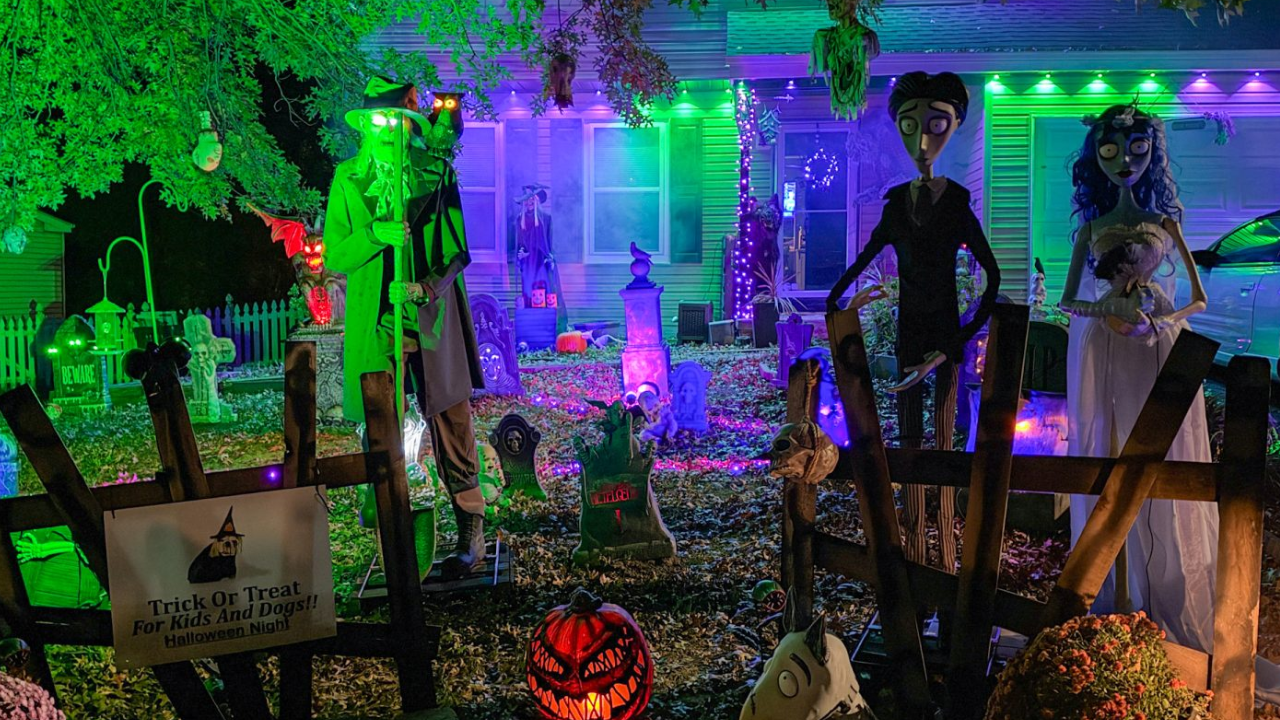
What began as a modest graveyard display now features towering animatronics, an alien-and-spider battle and an immersive cornfield experience.
A family in Exeter Township, Pennsylvania, has spent five years turning an ordinary residential yard into a walk-through Halloween attraction called Rotten Roots, according to a report by Berks Weekly cited by the Times of India. What began as a modest graveyard display now features towering animatronics, an alien-and-spider battle and an immersive cornfield experience. The attraction is listed on HauntMap, a directory that helps visitors find decorated homes and local haunts.
The display is the work of Garrick Heim and his family. At its centre is a fictional farm where witches command an army of spiders to protect their cornfield from invading aliens. The storyline, developed by Heim's wife, gives the decorations a connected theme rather than treating each prop as a standalone piece. One of the standout scenes shows an alien confronting a giant spider, while witches and other creatures occupy different sections of the yard.
Much of the construction and technical work falls to Heim, who spends considerable time preparing the property before Halloween. According to Berks Weekly, he sources corn stalks from Lancaster County and uses wooden pallets, metal supports and other materials to secure the larger decorations. He has also modified electrical connections, converting some battery-operated props to run through a centralised power system so that multiple decorations can be coordinated. A cooling arrangement connected to a fog machine, with pipes directing the mist across the display, produces a low-lying fog effect. Assembling the attraction takes around two days, with Heim often working long hours outdoors.
The experience goes beyond conventional animatronics. Heim has incorporated technology linked to Fright Maps, a platform that helps people find Halloween displays in their area. Its Fright Links feature allows visitors to interact with selected decorations through the app, triggering characters including a werewolf, a werewolf dog and a witch. Wireless connections and sensors help coordinate the effects, and visitors can also activate certain props by stepping on pressure-sensitive pads or passing motion sensors along the corn path.
The attraction has become a family affair. Heim's stepdaughter wears a mask and occasionally surprises visitors, particularly older children and teenagers exploring the walkway. During the day, neighbourhood children can explore the corn path even when the animated decorations are switched off; after dark, the full experience comes together through moving figures, sound effects, lighting and fog. Heim hopes to add a 12-foot alien in future, and the project has helped the family connect with other Halloween enthusiasts in Berks County, where several homeowners create their own elaborate seasonal displays.
The report offers no figures on visitor numbers, costs or the value of the equipment involved, and it does not say whether the attraction is open to the general public or only to neighbours and invited guests. Those details are not yet known. What the account does show is a small-scale example of how cheap sensors, wireless controls and a coherent narrative can turn a domestic tradition into something closer to a designed experience, sustained by one family's labour rather than a commercial budget.