A strike package aimed at radars and launchers, launched without announcement and timed around a domestic vote, suggests a White House managing two audiences at once.
The United States has carried out a series of unannounced airstrikes against Iran in recent weeks, including an attack on Qeshm Island near the Strait of Hormuz on Monday, according to the Wall Street Journal, NewsNation and Fox News, all citing American officials. The reporting, relayed by RT, describes operations deliberately kept limited and out of the public eye. Officials quoted by the Journal said the aim was to avoid signalling a return to full-scale hostilities ahead of Tuesday's midterm elections.
Some of those officials characterised the strikes as "defensive", saying they were meant to stop Iran from threatening commercial shipping through the strait. NewsNation reported that the targets were Iranian radar systems and missile launchers. A US official told Fox News that the attack came in response to Iranian forces firing at an American aircraft, and insisted it did not mark the start of a renewed military campaign. The sequence of events, as described, is one of tit-for-tat exchanges rather than a declared escalation.
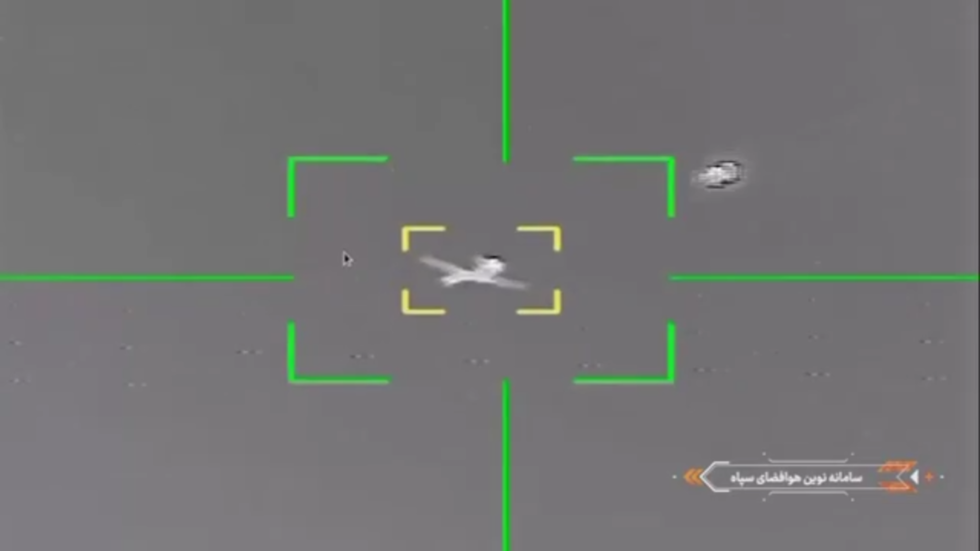
The Iranian side of the account is partial. The Islamic Revolutionary Guard Corps has claimed to have shot down an American MQ-9 Reaper drone east of the Strait of Hormuz and to have captured two MQM-170 reconnaissance drones near Qeshm. Iranian media released footage purporting to show the drone being destroyed, though its authenticity has not been independently verified. Iran's state news agency IRNA reported five powerful explosions on Qeshm Island late on Monday, citing a correspondent who said the blasts came in rapid succession and appeared to have struck the island itself. Residents reportedly saw two aircraft overhead.
What matters here is the shape of the operation rather than its scale. A strike package aimed at radars and launchers, launched without announcement and timed around a domestic vote, suggests a White House managing two audiences at once: Tehran, which is meant to read the raids as a limited signal, and American voters, who are not meant to read them at all. The Strait of Hormuz carries a substantial share of the world's seaborne oil, and any ambiguity about who is firing at whom in those waters is a risk to shipping and insurance markets as much as to the ships themselves.
The public record remains thin. The number of strikes, their precise dates, the extent of damage on Qeshm and whether anyone was killed are not established in the reporting. The claim that Iranian forces fired first rests on a single unnamed US official quoted by Fox News. Iran has not confirmed the American version of the exchange, and the drone footage has not been independently authenticated. Whether the quiet approach survives the midterms, and whether Tehran chooses to answer publicly or quietly, are open questions. For now, the two sides appear to be trading blows while trying not to name them.