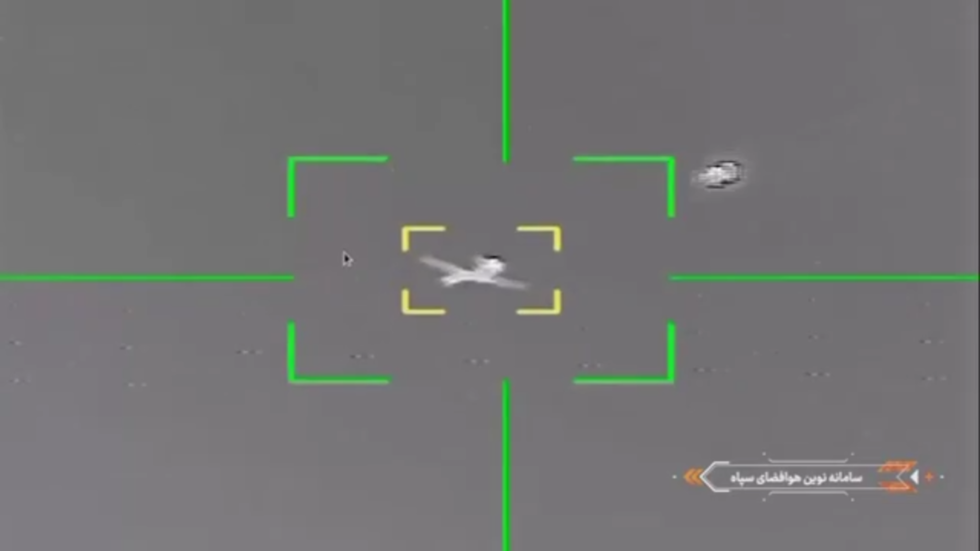
A cluster warhead is an area-effect weapon. Its value is against dispersed or soft targets — airfields, staging areas, port facilities, troop concentrations — rather than against a single hardened objective.
North Korea has tested a cluster warhead for a strategic cruise missile, according to a report by the Korean Central News Agency carried by TASS. The North Korean Missile Administration said the medium-sized warhead fitted to the missile is capable of destroying targets with a high concentration of strikes across an area of five to six hectares. The test was held on 2 November, the report states.
According to KCNA, specialists also checked the missile's performance during a vertical approach to its target. Improvements to the weapon's manoeuvring capabilities in the terminal phase of flight, the agency reports, made it possible to carry out such strikes while taking account of the natural and geographical features of the areas where the weapons are deployed. The tests were supervised by General Kim Jong Sik, a member of the Central Military Commission of the Workers' Party of Korea and first deputy department head of the party's Central Committee.
The Missile Administration stressed the need to develop various weapons systems to protect the country against external threats, describing the test as part of scheduled research and development work aimed at enhancing the combat capabilities of missile systems. The framing is familiar: Pyongyang routinely presents such launches as defensive and programme-driven rather than as signals to specific adversaries.
The significance lies less in any single test than in what it suggests about the direction of North Korean missile development. A cluster warhead is an area-effect weapon. Its value is against dispersed or soft targets — airfields, staging areas, port facilities, troop concentrations — rather than against a single hardened objective. Pairing one with a cruise missile, which flies low and can manoeuvre in its final approach, points to an emphasis on penetrating defences and complicating interception. The reported terminal manoeuvring and vertical approach reinforce that reading, at least as Pyongyang describes them.
Much, however, is not confirmed. The range, accuracy and reliability of the warhead are asserted by North Korean developers and have not been independently verified. The claim of coverage across five to six hectares comes from the Missile Administration itself, and the report gives no detail on the missile type, the number of launches, the flight path or the intended target set. Whether the system is operational or still experimental is not stated. The KCNA account, relayed by TASS, offers no independent corroboration of the performance figures.
The test nonetheless matters for regional calculations. Cruise missiles are harder to detect than ballistic missiles and give defenders less warning time, and a cluster payload widens the range of targets a single missile can threaten. For South Korea and Japan, and for the American forces stationed in the region, the development adds another layer to an already crowded missile threat picture. It also comes amid broader questions about Pyongyang's weapons programme and its relations with Moscow, though the report itself makes no link between the test and any external party. What the test changes in practical terms will depend on details that the state media account does not supply.