The detail that matters most is not the weight but the category.
On 3 June 1983, Liam Beville was walking along a footpath in Limerick when a stolen car struck him head-on. According to Guinness World Records, the collision left both his legs catastrophically injured, with open compound fractures, extensive trauma and lasting structural damage. He was 18. He would spend a year in plaster casts and six months in a wheelchair, undergo multiple operations, and later require a hip replacement and a full knee replacement.
What followed was not a single act of recovery but a long, patient reconstruction. Beville had to learn to walk again, a process the record body describes as demanding considerable physical effort, with friends pushing him around in a pram while his legs healed. Weight training began as rehabilitation while he was still on crutches. It became something else. Three years after the crash he won the Limerick Powerlifting Championships and the Best Lifter award; in 1988 he broke his first national deadlift record, and four years later set Irish Powerlifting total and Irish and Celtic Nations deadlift records.
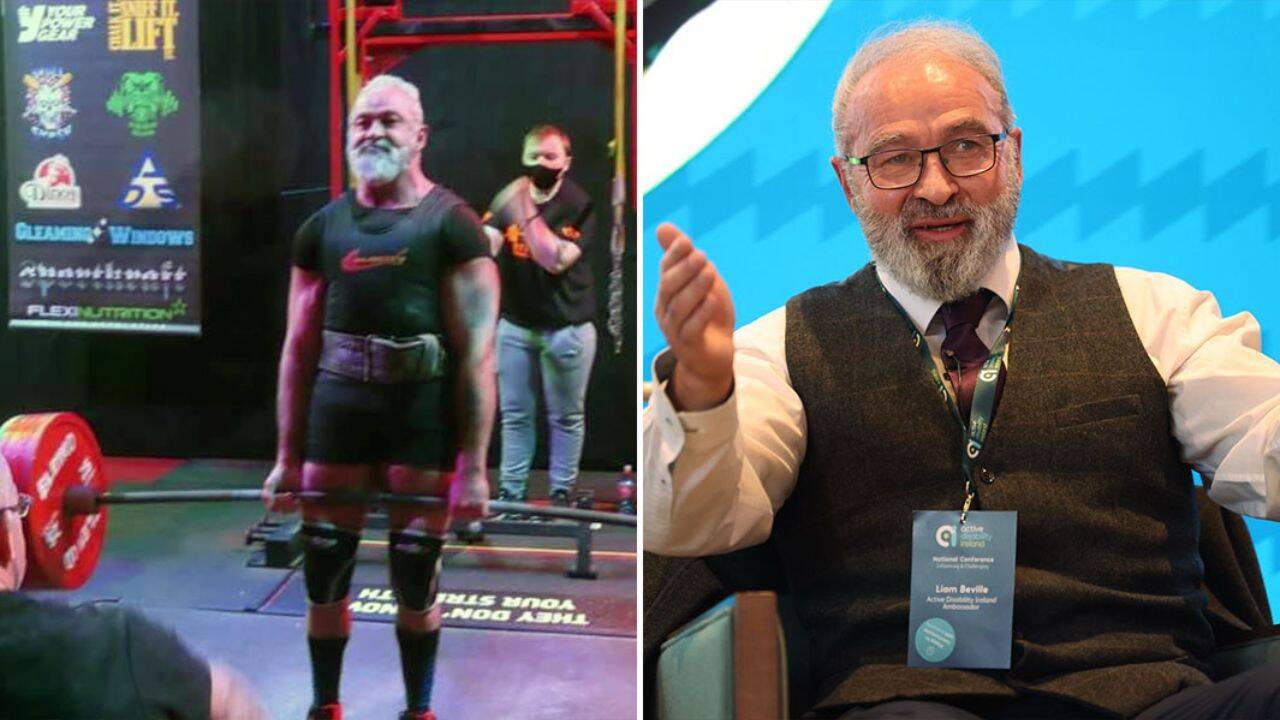
The headline achievement came on 5 February 2022, at the IrishPO National Single Lift Championships in Limerick. Aged 57, Beville deadlifted 285 kg, or 628.31 lb, to establish the Guinness World Records title for the heaviest deadlift by a male athlete in the MP4 impairment classification, which covers impaired ability to generate full force through the arms and legs. Guinness confirmed the record in a July 2025 article, noting that he had worked towards the lift for roughly three years, using box squats, resistance bands and carefully planned deadlift cycles.
The detail that matters most is not the weight but the category. Beville has always competed in mainstream powerlifting rather than a separate disabled division, and at the event where he set the record he was the only disabled participant. Organisers nonetheless gave him the Best Lifter award. According to Guinness, by July 2026 he had broken multiple records across four weight divisions and stood number one in the world in his age and weight category; 2026 also marked 40 years since his first mainstream competition. He worked in technology before retiring because of his disability, then built a self-taught business in web development and digital marketing.
His story now extends beyond the platform. The 61-year-old has published an autobiography, Unbroken – The Liam Beville Story, and former Irish president Michael D. Higgins wrote to Guinness World Records praising his strength and bravery. The wider significance is a quiet argument about how disability is measured in sport: Beville's insistence on being judged alongside able-bodied lifters, and on not having his results discounted, is a claim about the terms of comparison rather than about sympathy.
Much of the record rests on Guinness's own verification and on its account of the classification, and the source material gives no independent breakdown of the judging at the 2022 event or of how the MP4 standard is applied across federations. Those details are not established here. What is documented is a career of four decades, a lift of 285 kg, and a man who chose the harder field.