An adversary able to put half a dozen unmanned aircraft over a fighter base has demonstrated reach, and the failure to recover any of them means the UK and US cannot rule out that the drones were armed or carried spying equipment.
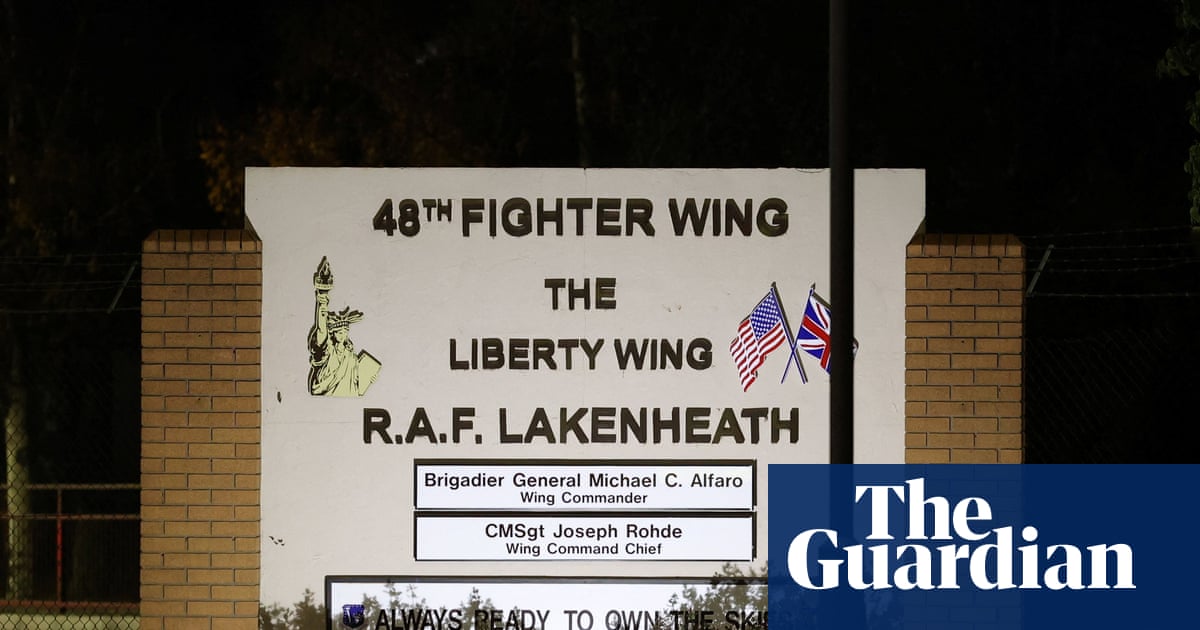
Drones reportedly swarmed RAF Lakenheath in Suffolk earlier this month, prompting personnel to take cover and raising questions about the defences of one of the most sensitive US installations in Europe. According to the Financial Times, about six drones were seen flying around the base on 13 November. US counter-drone technology was used to stop them, but the aircraft were not recovered by British or US personnel.
The US air force confirmed at the time that a so-called Charlie alert, the second-highest threat level, had been declared after what it called "suspected unauthorised drone activity". Sirens could be heard at the base, and personnel were told to take cover. The Guardian reports that Iran is suspected of being involved, though no evidence has been made public.
RAF Lakenheath has hosted the US air force since 1948, with the US taking formal control in 1950. It is home to the 48th Fighter Wing, the largest US fighter jet operation in Europe, and about 7,000 personnel are on site. The base was built during the second world war as a decoy airfield before being converted for bombing raids on Europe, and later hosted nuclear-armed B-29 bombers during the cold war.
The incident matters beyond Suffolk. An adversary able to put half a dozen unmanned aircraft over a fighter base has demonstrated reach, and the failure to recover any of them means the UK and US cannot rule out that the drones were armed or carried spying equipment, as the Guardian notes. The US has refused to say which systems were deployed. A US air force spokesperson said operational security prevented discussion of specific force protection measures, but insisted that security forces work with host nation partners on a "proactive integrated and layered approach to base defence". The Ministry of Defence said the situation was quickly resolved and that base security returned to normal.
This is not an isolated episode. In November 2024, small unmanned aerial systems were seen over a two-day period near Lakenheath, neighbouring RAF Mildenhall and RAF Feltwell, and British forces were deployed to help defend the bases. The US said then that it was unclear whether the drones were hostile. Earlier this year, a suspected terror plot near RAF Fairford led to a major incident, the evacuation of dozens of residents and two men being charged; two men were also arrested over an alleged trespass at RAF Molesworth.
What remains unconfirmed is central: the drones' origin, their payload and their purpose. The attribution to Iran is reported suspicion rather than established fact, and neither government has published technical findings. The US has removed planes from Mildenhall and Fairford in response to the perceived threat from Iran, and the foreign secretary, Ed Miliband, has summoned the Iranian ambassador and signed a joint statement with 35 allies condemning Iranian threats. Against that backdrop, the Lakenheath episode will sharpen scrutiny of how allied bases detect and defeat small drones.