The rest awaits independent verification that, in this war, has rarely arrived.
Fighting in Yemen has continued with forces aligned to the internationally recognised government claiming to have killed and wounded at least 190 Houthi fighters in what a spokesman described as hundreds of air and artillery attacks. According to Al Jazeera, Majed Abdullah al-Nuzail said on Tuesday that the strikes targeted Houthi positions in Lahij, Taiz, Marib, al-Jawf, Hajjah and al-Bayda provinces. He listed 29 air strikes, 39 drone attacks, 62 rockets and 744 artillery attacks, and said up to 130 vehicles and combat assets were damaged or destroyed.
The Houthis answered with claims of their own. Their spokesman, Yahya Saree, said the group had killed and wounded a large number of government-aligned fighters in attacks on Al-Madaribah and Ras al-Ara in Lahij, and in al-Jawf earlier in the day. He also accused the Saudi-backed forces of launching 109 air strikes and missile attacks on Sanaa and on Houthi positions in al-Jawf, Saada, Taiz, Lahij and Marib, and said these had killed and wounded a large number of women and children. Al Jazeera could not verify the battlefield claims, and the Saudi-led coalition did not immediately confirm the strikes Saree described.
The exchange comes amid regional tensions that the report links to the war on Iran waged by the United States and Israel. Yemen's government, backed by Saudi Arabia, has launched a counteroffensive it calls Operation Dawn of Yemen, aimed at retaking territory lost to the Houthis in September. The Saudi-led coalition has supported the ground campaign with air strikes, while the Houthis have fired missiles at the kingdom, targeting airports and oil facilities. Earlier on Tuesday the coalition said it had intercepted two missiles fired towards Riyadh and another aimed at the kingdom's southern region; the Houthis said they had targeted the Saudi capital and an Aramco facility at Abqaiq in the Eastern Province.
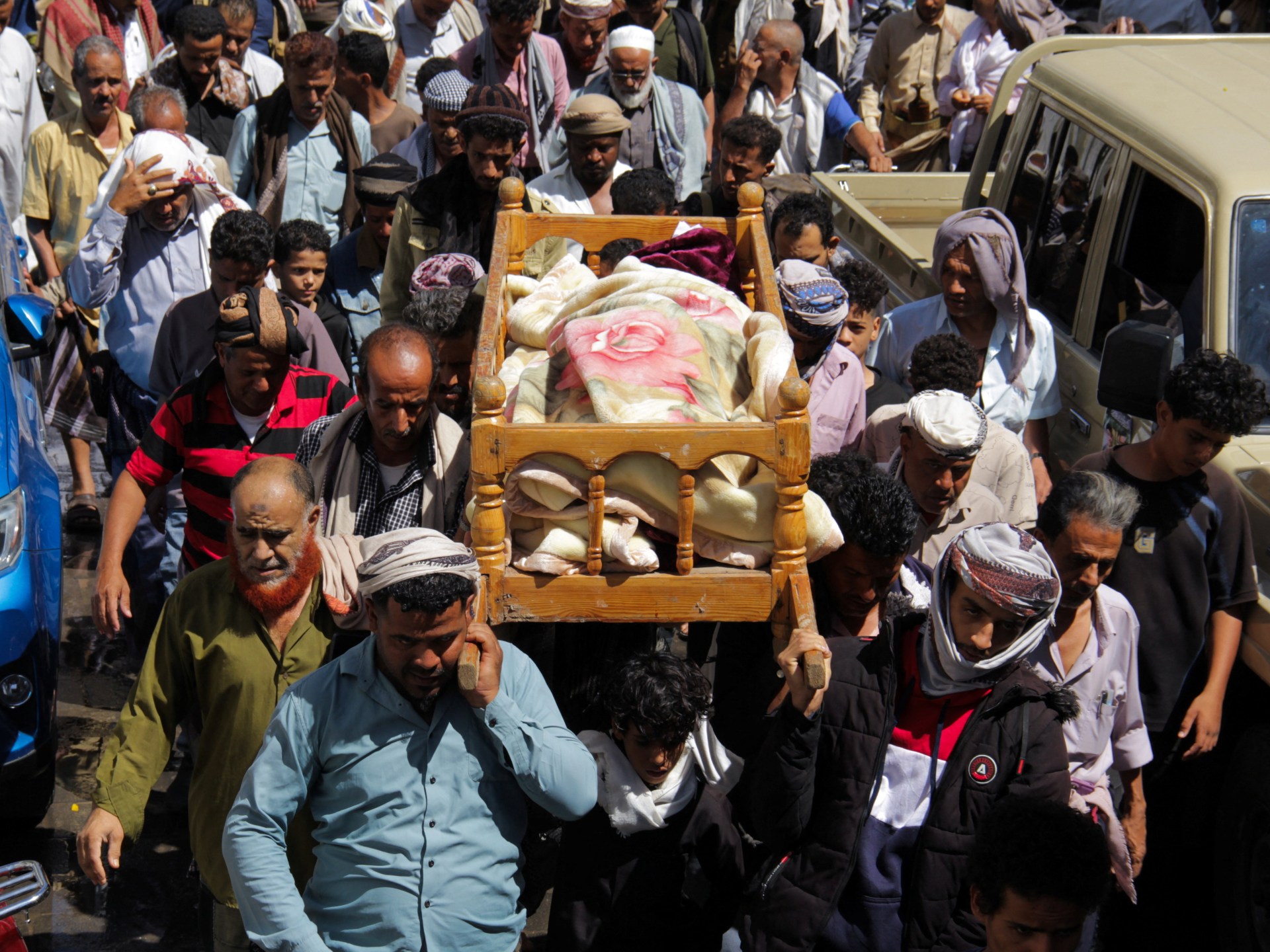
The human cost is documented in figures that are not in dispute between the warring parties. According to the World Health Organization, at least 1,771 people have been killed in the hostilities since August, with at least 7,959 wounded, and more than 300,000 displaced. Those numbers cover a period of only a few months and give a sense of the intensity of a campaign that has widened rather than narrowed.
What the day's communiqués do not establish is the true scale of either side's losses. Both accounts are self-reported, both use round or vague figures, and neither has been independently verified. The pattern is familiar from earlier phases of the war: competing claims issued within hours, each calibrated for domestic morale and for the attention of external patrons. The more consequential signals are structural. A government counteroffensive depends on coalition air power, which in turn draws Houthi retaliation against Saudi territory and energy infrastructure. Each round of strikes raises the cost of de-escalation and widens the geography of the conflict beyond Yemen's borders.
For now, the confirmed facts are narrower than the claims: fighting across six provinces, missile interceptions over Saudi Arabia, and a displacement and casualty toll compiled by the WHO. The rest awaits independent verification that, in this war, has rarely arrived.