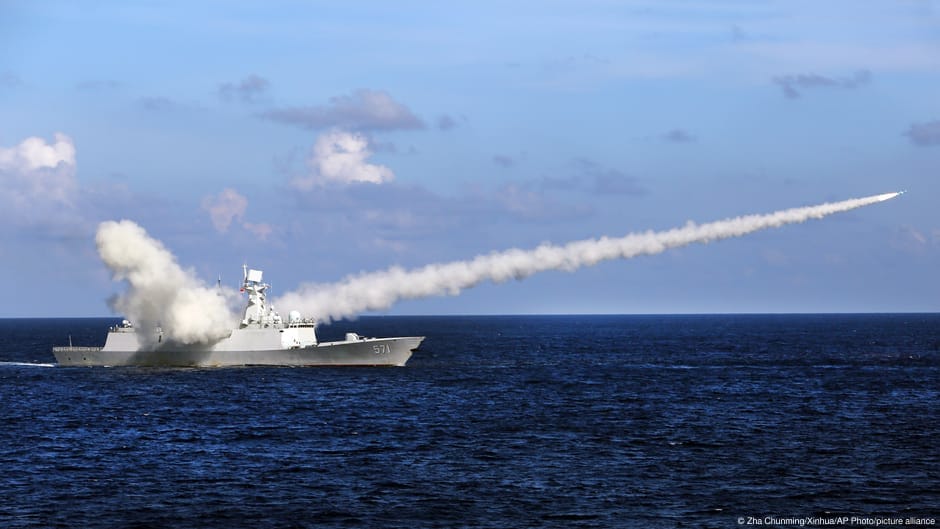
I believe that China is interested in keeping the conflict simmering, so to speak, without having to commit itself to a truly binding legal regulation
China and the Association of Southeast Asian Nations (ASEAN) have failed to reach an agreement on a code of conduct for the South China Sea, according to the Philippine Foreign Secretary Theresa Lazaro. Despite 80% of the text being negotiated, key areas of dispute remain unsolved. The Philippines had intended to set up a code of conduct with China during its 2026 ASEAN presidency, but this goal was abandoned at the summit in Manila in mid-November.
The South China Sea is a critical region, with significant shipping routes, fishing grounds, and potential oil and gas reserves. However, it is also an area of strategic competition, with China's Nine-Dash Line overlapping with the claims of the Philippines, Vietnam, Malaysia, and Brunei. A code of conduct is intended to set rules for parties dealing with each other and prevent incidents at sea from escalating. The code would help to prevent incidents such as coast guard missions with use of water cannons, blockades of supply vessels, or military force from escalating into larger conflicts.
According to Andreas Ufen, a Southeast Asia expert at the German Institute of Global and Area Studies, China has little incentive to impose restrictions on itself as long as it can pursue its interests in the region without a binding agreement. The Paracel Islands, known as Xisha in China and Hoang-Sa in Vietnam, are a prime example of the unresolved issues, with Hanoi wanting to include them in the code's geographic scope and China rejecting this. Felix Heiduk, head of research division Asia at the German Institute for International and Security Affairs, notes that the definition of an