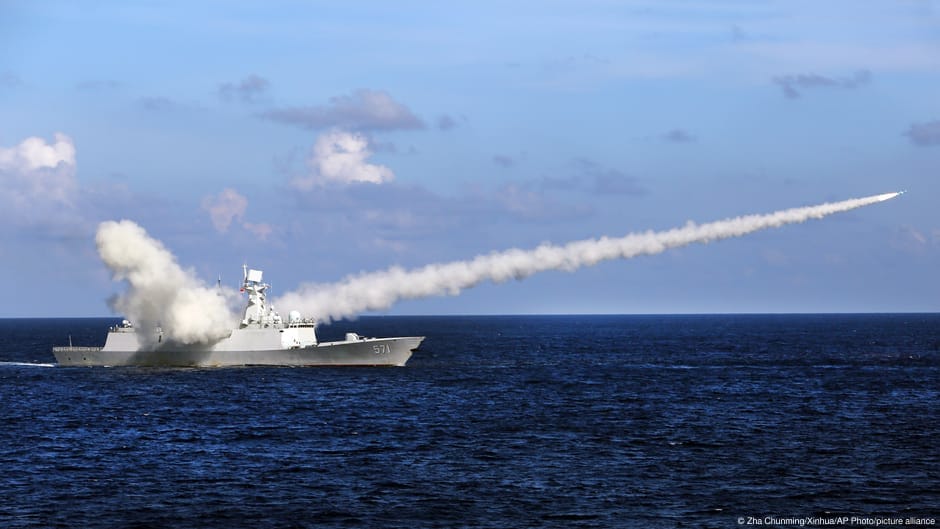
The attacks aim to diminish US military capabilities in the region and spread the pain of the war widely to include the entire [Gulf region] and, indirectly, global economies via higher shipping costs and stressed supplies of essentials
The Islamic Revolutionary Guard Corps has claimed to have targeted radars at a United States military base in Bahrain, as Iran has intensified attacks over the past week, hitting tankers in the Strait of Hormuz and downing US drones.
At least 25 tankers have been hit in and around the Strait of Hormuz, causing the Gulf oil flow to drop sharply, according to Al Jazeera correspondent Resul Serdar. The escalating attacks come as Iran’s President Masoud Pezeshkian said his country is facing what he called a “silent economic war” amid US sanctions and a naval blockade.
The IRGC said the operation was retaliation for a US strike on a radar installation on Iran’s Hengam Island. Iran has justified the attacks as a response to continued violations of its airspace, including by US MQ-1 and MQ-9 reconnaissance and combat drones. Rami Khouri, a public policy fellow at the American University of Beirut, told Al Jazeera that the attacks aim to diminish US military capabilities in the region and spread the pain of the war widely.
Tehran is hoping to change US policy by revealing its inability to protect its own facilities or those of its Arab allies, which could prompt Arab governments to press US President Donald Trump to end the war, Khouri added. The ongoing US naval blockade on Iran, overland trade disruptions and a wave of new sanctions imposed in August are hurting Iran economically, with US Treasury Secretary Scott Bessent claiming the economic embargo will result in a 25 percent contraction of the Iranian economy by the year ending March 2027.
Cumulative losses from the conflict have now reached 2.8 billion barrels of oil and 60 billion cubic metres of gas supply from the Gulf, the International Energy Agency said on Thursday. The IEA added that the conflict could cut world oil demand by more than 4 percent by 2035 if governments accelerate electrification, efficiency and fuel-switching measures in response.