By bundling oil discoveries, energy diversification and internal security into a single message, Erdogan is presenting regional turbulence as something his government has insulated the economy against.
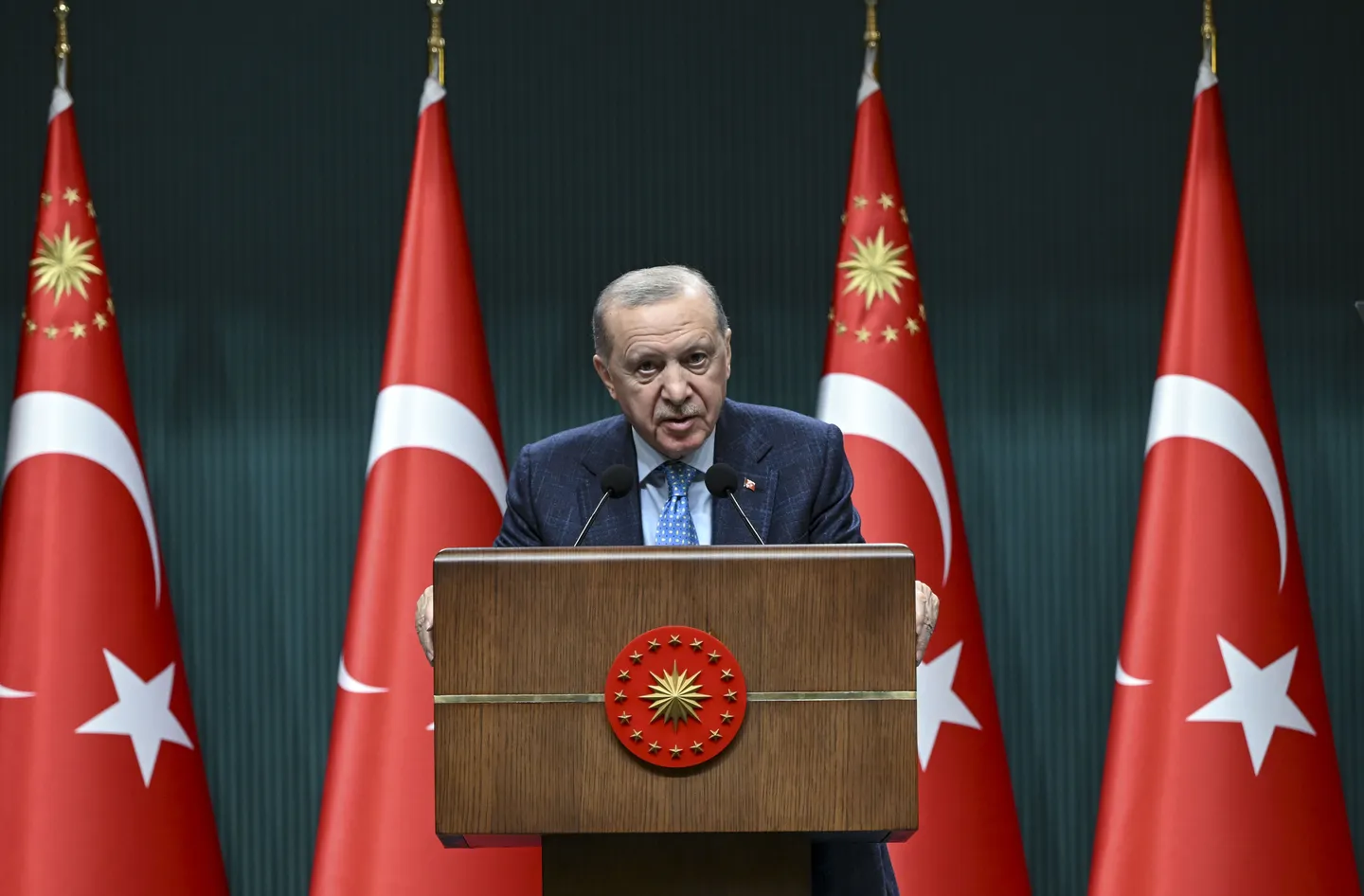
Turkish President Recep Tayyip Erdogan has said his country is pressing ahead with its development goals despite instability across its neighbourhood, pointing to progress in energy production and security. Speaking after a Cabinet meeting at the Presidential Complex in Ankara on Monday, Erdogan said Türkiye was continuing its development path “in stability and confidence without interruption” despite what he described as a cycle of instability surrounding it, according to TRT World.
The centrepiece of the announcement was energy. Erdogan said oil had been discovered in two additional fields, and that daily production in the region would exceed 100,000 barrels in the second half of 2027, with approximately 230 wells. He put the estimated annual revenue to the economy at $4.4 billion. Those figures are projections rather than current output, and the report gives no detail on the size of the reserves, the fields' locations, the operators involved or the investment required to bring them into production.
On energy security, Erdogan said Türkiye had minimised the impact of international crises by diversifying energy sources, supply routes and forms, supported by what he called active energy diplomacy. The claim is consistent with Ankara's long-standing emphasis on acting as a transit corridor between producer regions and European markets, though the report offers no supporting data on import shares or supply volumes.
The president also turned to the “Terror-Free Türkiye” initiative, saying cities long affected by migration and insecurity would regain momentum once terrorism was fully eliminated. “That is when Türkiye will make its greatest economic leap,” he said. Erdogan described the initiative as more than a public security matter, calling it a strategic project and a driving force behind the government's vision of a great and strong Türkiye. The report does not specify which groups the initiative targets, what measures it entails, or how far it has progressed.
The political logic is straightforward. By bundling oil discoveries, energy diversification and internal security into a single message, Erdogan is presenting regional turbulence as something his government has insulated the economy against. The $4.4 billion figure gives that argument a concrete number, and the 2027 timeline sets a benchmark against which the claim can eventually be judged. Whether production reaches the stated level, and whether the revenue materialises at prevailing prices, will depend on factors the announcement does not address.
For investors and regional partners, the signal is that Ankara wants to be seen as a stable anchor in a volatile neighbourhood. The unanswered questions are matters of substance rather than presentation: the commercial terms of the new fields, the durability of the security initiative, and whether diversification can genuinely shield an import-dependent economy from shocks beyond its border. On the evidence available, the direction of travel is clear; the scale is not yet confirmed.