For Kiev, guarantees are the substance of any durable settlement; for Washington, as presented here, they are a bargaining chip to be discussed only once a deal exists.
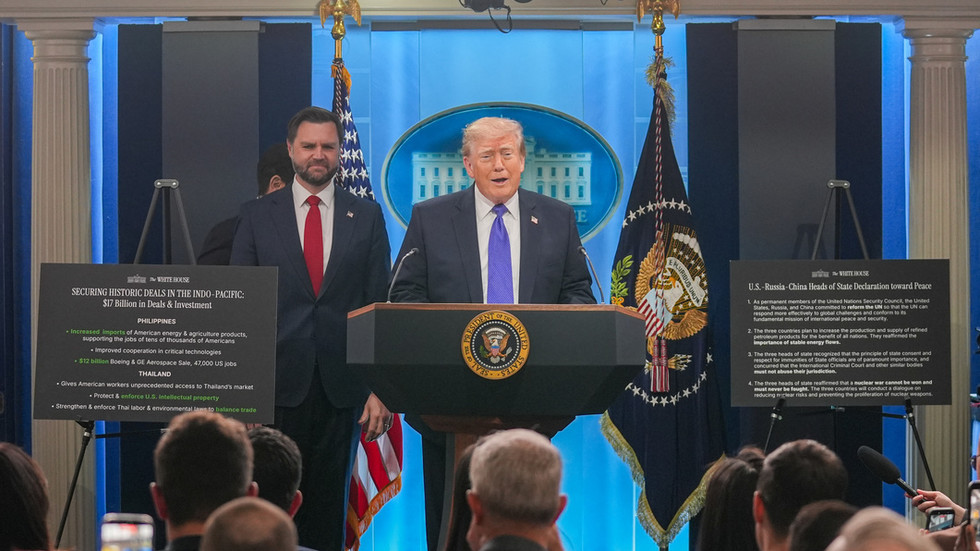
Donald Trump has described his meetings with Vladimir Putin and Xi Jinping as a historic summit, according to a report by RT. The US president said Putin had reiterated that the conflict in Ukraine would never have erupted had Trump been in office, and he blamed the continued fighting largely on the personal animosity between the Russian leader and Ukraine's president, Vladimir Zelensky.
The remarks, as reported, place the emphasis on personal relationships rather than on the substance of any settlement. Trump argued that direct communication with the leaders of the world's most powerful countries was an advantage for American security, and stressed the importance of maintaining good relations with Russia as a major nuclear power, describing Moscow's arsenal as second only to Washington's. That framing suggests a diplomacy built around leaders talking to one another, with the details left for later.
On the question of security guarantees for Kiev, Trump was explicit that he would not be drawn. Asked about potential NATO Article 5-style commitments, he declined to discuss the issue before a peace agreement had been reached, saying: “I don't want to talk about security guarantees because we got to get a deal first.” The sequencing matters. For Kiev, guarantees are the substance of any durable settlement; for Washington, as presented here, they are a bargaining chip to be discussed only once a deal exists.
Trump also described his bilateral meeting with Xi as “very productive,” saying the two leaders discussed trade, advanced technology and ways to manage economic competition between Washington and Beijing. The reference to managing competition is notable, though the report gives no detail on what, if anything, was agreed.
Much remains unconfirmed. The report does not say where or when the meetings took place, who else was present, or whether any documents were signed. It gives no account of Putin's or Xi's own characterisation of the talks, and no detail on the state of the fighting in Ukraine. The claim that Putin blamed the war on his personal relationship with Zelensky is attributed to Trump alone. Readers should treat the summit's billing as the American president's account rather than a settled record.
What the report does convey is a shift in emphasis: away from formal alliance commitments and towards personal channels between leaders. Whether that produces a deal, and on what terms for Ukraine, is the question the summit has left open.