Photographs and captions are cheap; sanctions, arms control, energy markets and the war in Ukraine are not.
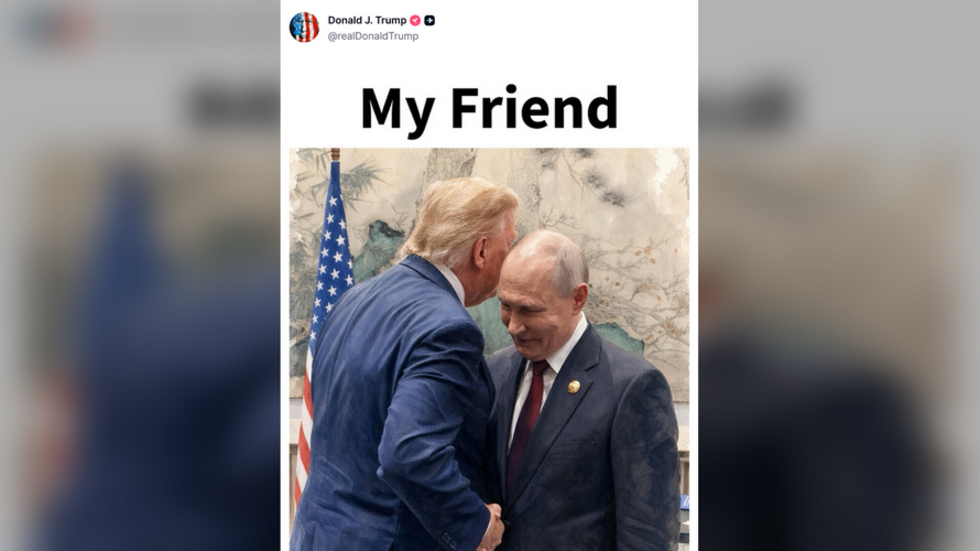
US President Donald Trump posted a photograph of himself shaking hands with Russian President Vladimir Putin on Truth Social, captioned "My friend", according to a report by the Russian state news agency TASS. The post drew a terse public comment from Kirill Dmitriev, Russia's Special Presidential Representative for Investment and Economic Cooperation with Foreign Countries and chief executive of the Russian Direct Investment Fund. Writing on X, Dmitriev said simply: "Patriots in control."
The exchange is small in itself. A photograph, a caption and a two-word aside do not constitute policy. But the report is notable for who chose to amplify it and how. Dmitriev is not a foreign ministry spokesman but the Kremlin's investment envoy, a figure whose brief is economic cooperation with foreign countries. His decision to attach a political slogan to a picture of the two presidents suggests Moscow sees value in projecting warmth between the leaders, and in doing so through a channel associated with money and deals rather than diplomacy.
The TASS report does not say when the photograph was taken, where the handshake occurred or what occasion it marked. It gives no date for the original Truth Social post beyond saying Trump published it "earlier". It offers no context on whether the two leaders have spoken recently, and no indication of what Dmitriev meant by "patriots", or which patriots he had in mind. Readers should treat the episode as a signal rather than a development.
That said, signals matter in relations as strained as those between Washington and Moscow. A US president publicly describing a Russian counterpart as a friend, and a senior Russian economic official endorsing the gesture in English on a US social platform, is the kind of imagery that travels further than any communiqué. It invites speculation about the direction of bilateral relations without committing either government to anything. Neither administration has attached a policy announcement to the exchange, according to the report.
For observers, the caution is obvious. Photographs and captions are cheap; sanctions, arms control, energy markets and the war in Ukraine are not. Nothing in the TASS account indicates movement on any of those files. What the report does show is that both sides remain attentive to the symbolic register of the relationship, and that a single post can generate a headline in Moscow within hours. Whether that symbolism reflects anything more substantive is not yet known, and the source material offers no basis for concluding that it does.