In a highly organised society, the older collective can be the more durable one.
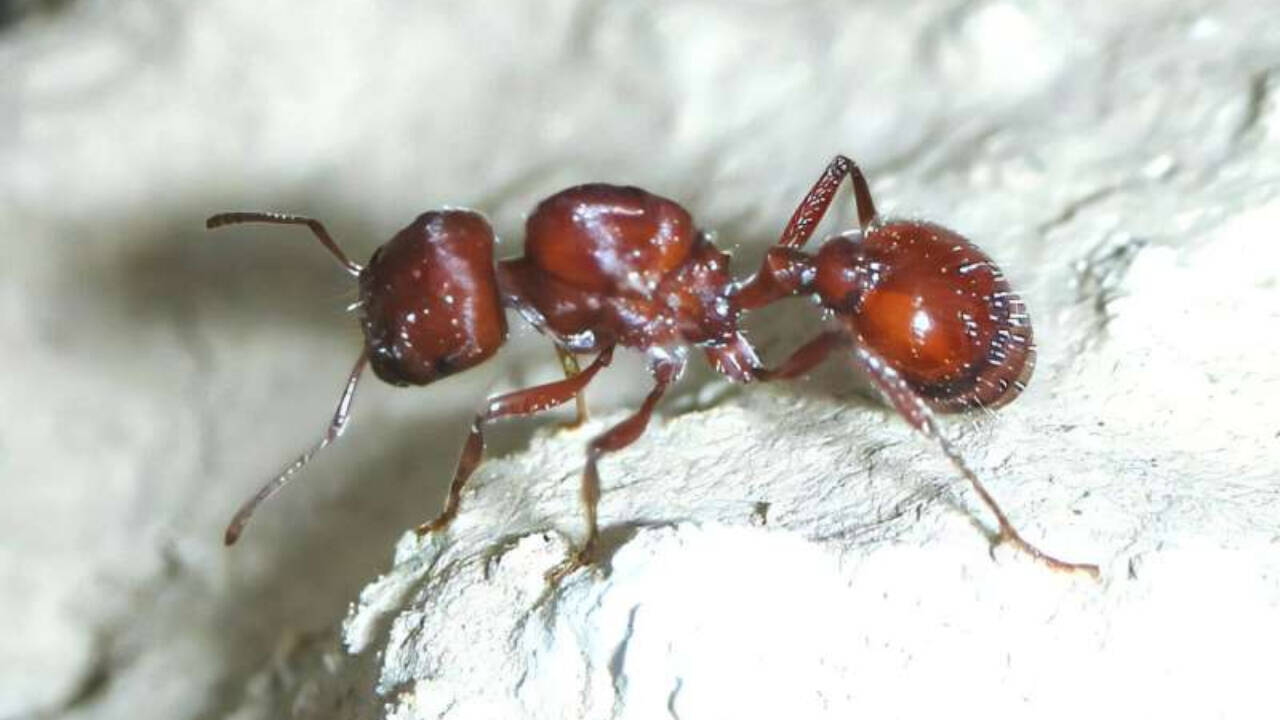
Aging is conventionally measured by decline: weaker bodies, falling fertility, a rising probability of death. Research on western harvester ants in Mesa County, Colorado, reports the opposite pattern at the level of the colony. According to the Times of India, citing the University of Houston, biologists Blaine Cole and Diane Wiernasz monitored 3,285 colonies of known age from 1992 onwards, analysing 34 years of observations. Their study, published in the Proceedings of the National Academy of Sciences, describes what they call negative senescence: older colonies were less likely to die and more likely to reproduce than younger ones. In 2024 the researchers identified 51 colonies between 40 and 42 years old that had been established before monitoring began.
The explanation offered lies in the colony's structure. Ants form what scientists call a superorganism, a society with specialised functions: workers forage, clean the nest and care for the young after the queen lays eggs. Workers typically live about a year, while a queen can live for decades. That constant replacement, the University of Houston researchers argue, keeps the colony's workforce comparatively young even as the community as a whole ages. They term the arrangement a replaceable soma, borrowing the biological distinction between the reproducing and non-reproducing parts of an organism. The finding does not mean individual ants escape biological aging; the effect appears at the level of the whole colony.
Colony size mattered too. Larger colonies showed lower mortality rates and greater reproductive success, and the study reports that they did not achieve this at the expense of reproduction, defying the assumption that organisms must trade reproductive output against their own maintenance. The report notes that negative senescence has been observed before in some plants, fish and sea urchins, but the harvester ant study is presented as strong evidence that social organisation and the steady replacement of workers can make biological systems unusually long-lived.
The implications reach beyond entomology. Researchers now want to know whether other highly social insects, such as leaf-cutter ants and termites, show similar patterns. The work is also a case for patience in science: tracking thousands of colonies across decades revealed a pattern that shorter studies might have missed, according to the university. For an informed reader, the lesson is a caution against treating aging as a universal timetable. In a highly organised society, the older collective can be the more durable one.
What the material does not establish should be stated plainly. The report gives no detail on the mechanisms linking worker turnover to colony-level survival, no measures of variation across sites, and no indication of how the findings might or might not translate to other species. The claim that larger colonies avoid a reproductive trade-off rests on the study as summarised, not on data presented in the source. The research is a striking result about one species in one county, and its wider reach is a question for further observation rather than a settled conclusion.