They are a record of what people choose to say when nothing is asked of them.
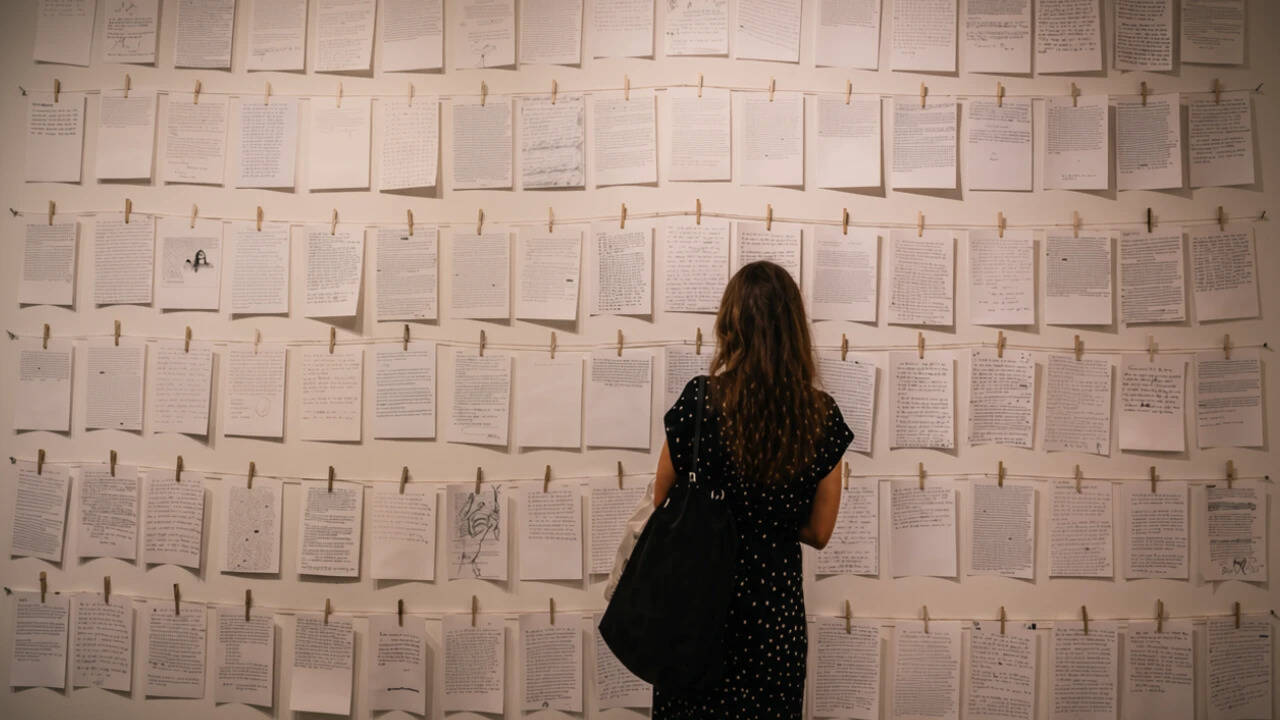
Since 2009, an initiative called The Strangers Project has gathered more than 100,000 stories, each written by hand, in person and anonymously, according to a report in the Times of India. Its founder, Brandon Doman, began with a simple idea: to collect something palpable and tangible, shared on a page by people who would never meet. The project now holds what the report describes as a living repository, an art installation of what it is simply to be human.
Doman can be found collecting stories from Thursday to Sunday, between 2 and 6.30pm, at the project's semi-installation at the World Trade Center Oculus in New York City, the report says. On the project's website he writes that exploring the lives of the people we share space with every day shows how wonderfully human we all are, and that the stories engage strangers of all ages and backgrounds to reflect, rejoice, heal and connect through words.
The confessions quoted in the report range across the ordinary terrain of a life. One visitor, returning to the wall for the fifth time, writes that you cannot practise love with someone you do not love. A girl from Toronto declares a dream to be a singer and a refusal to let haters bring her down. A son writes to his father: “I forgive you. I know you raised me the best you could. As a Black man, I know being vulnerable was hard for you.” Another, grieving, urges readers to say “I love you” before it is too late.
What the material does not offer is any systematic account of who writes, or why. The report gives no breakdown of contributors by age, nationality or background, no count of how many stories come from outside the United States, and no independent assessment of the project's methods or its claims. The quotations are selected and presented without context beyond the wall itself. The figure of 100,000 stories is the project's own, as relayed by the report, and has not been independently verified.
That said, the project's persistence is itself the interesting fact. In an era of notes apps, comment threads and chat boxes, the report asks why people still yearn to disperse themselves in ink on paper. Part of the answer may lie in the anonymity and the physical constraint: a page, a pen, a stranger's archive, and no audience to perform for. The report quotes one visitor who feels freedom in knowing we are all in this together, and another who writes simply that their family needs this exhibit.
The wider significance is modest but real. Such collections are not evidence of a loneliness epidemic, and they cannot bear that weight. They are a record of what people choose to say when nothing is asked of them, and the themes the report draws out — grief, forgiveness, love, hope — are those of private life rather than public affairs. Whether the archive will be preserved, studied or opened to researchers is not yet known. For now it remains what Doman set out to make: a space that asks little and lets people leave something behind.