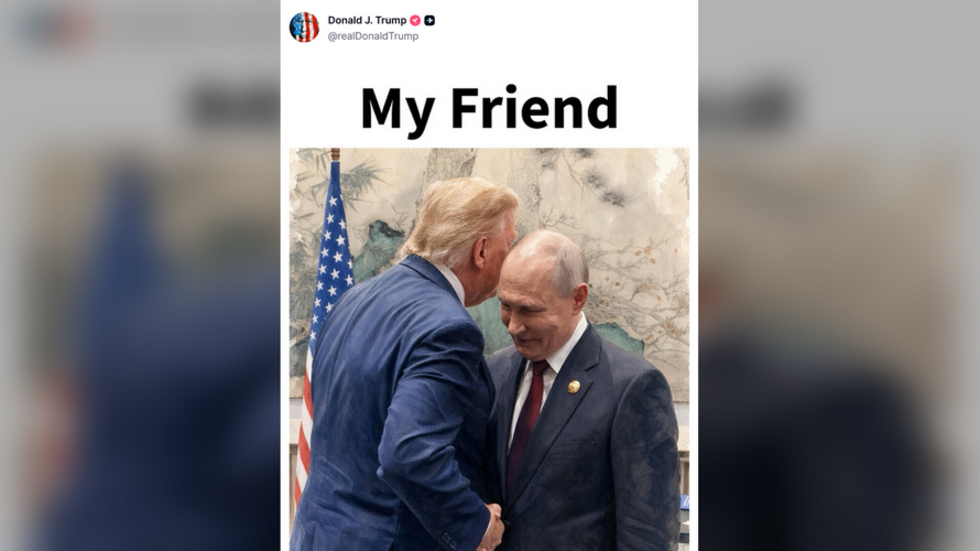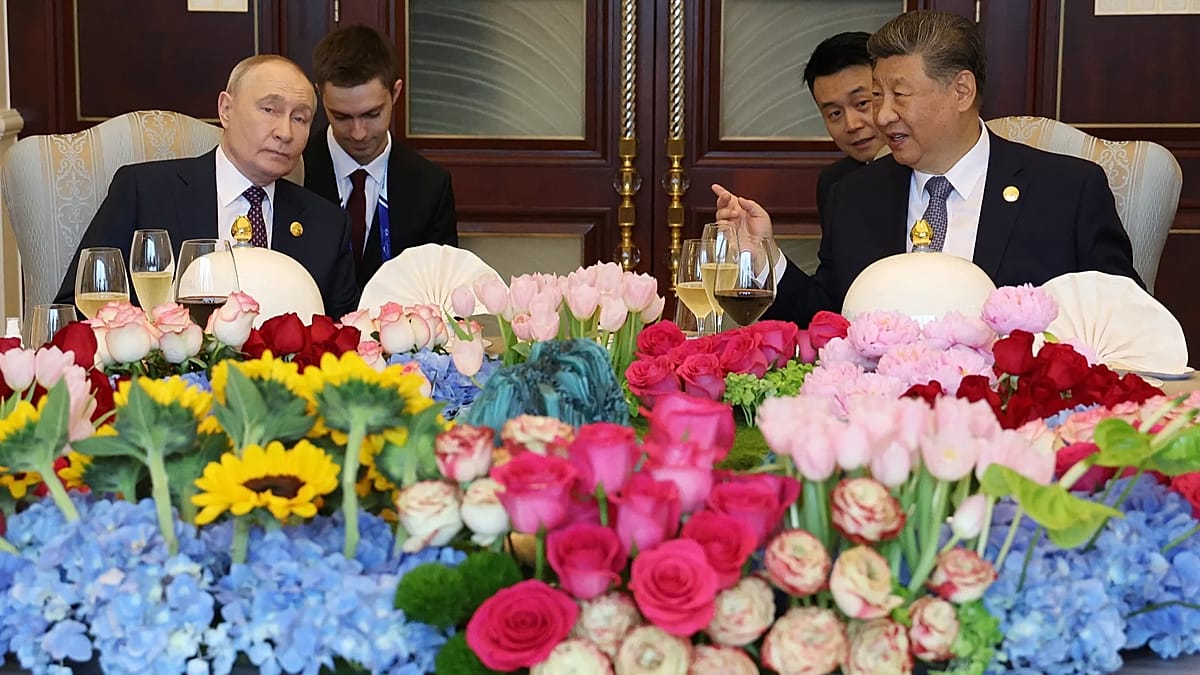
What the reporting does establish is the symbolism: three leaders meeting in a Chinese city, with Europe and Kyiv watching from outside the room.
Xi Jinping and Vladimir Putin began talks in Shenzhen around midday on Wednesday, according to Chinese and Russian news agencies cited by Euronews, a day before a trilateral summit with Donald Trump in the same southern Chinese city. It is the fifth meeting between the Chinese and Russian presidents this year, one of which was held by video link. The three-way gathering is described as a first of its kind, convened on the sidelines of the Asia-Pacific Economic Cooperation meeting.
The reported agenda is broad and, in places, contested. Beijing has said only that the leaders will hold “in-depth exchanges on safeguarding world peace and promoting strategic stability in major-power relations”. Washington initially said Ukraine was not expected to be on the agenda, but Trump later said it would be. According to the US side, the Iran war and nuclear disarmament are also on the table, following the expiry in February of the US-Russia bilateral nuclear weapons treaty. China has long argued that the United States and Russia should cut their much larger arsenals before it will discuss limits on its own.
The meeting has raised concern in Kyiv and European capitals that the three leaders could settle Ukraine's future without them and divide the world into modern spheres of influence. Xi regards the war as not China's concern, according to the report. Putin, shunned by the West since he invaded Ukraine in 2022, told the APEC gathering that he expected the trilateral to be “highly useful”. With military and political risks rising, he said, “what is desperately needed is unity rather than division... and dialogue rather than ultimatums.” He also argued that Western sanctions had failed, saying they could not fully halt growth or wreck the economies of rival states.
Opening the event, Xi called for stronger international cooperation on artificial intelligence and free trade. China would pursue “deep-seated reform”, he said, starting with lower tariffs, wider market access and work on regulation and management standards. The framing places trade and technology at the centre of Beijing's pitch to the region, alongside the strategic questions that dominate the bilateral and trilateral meetings.
Trump was still in the Philippines on Wednesday, where he attended a summit of the eleven-member Association of Southeast Asian Nations. A day earlier he met fellow Quad leaders from Australia, Japan and India for the first time in his second term; the group is broadly seen as a counterweight to Chinese influence in the region. He said he hoped to hold one-on-one talks with both Putin and North Korean leader Kim Jong Un in Shenzhen, adding that Kim “would like” to meet in China. Secretary of State Marco Rubio, speaking in Manila, stopped short of confirming a Kim meeting but said engagement was the only way to resolve problems with North Korea. Around 2,000 people protested during Trump's visit, carrying banners reading “Trump out now” and “Reject Pax Silica”, a reference to a US supply chain initiative.
Much remains unconfirmed. The precise agenda, the format of the trilateral session and whether any joint statement will emerge are not yet known. Nor is it clear what, if anything, the three leaders can agree on Ukraine, disarmament or trade. What the reporting does establish is the symbolism: three leaders meeting in a Chinese city, with Europe and Kyiv watching from outside the room.