What the summit did not produce is as telling as what it did.
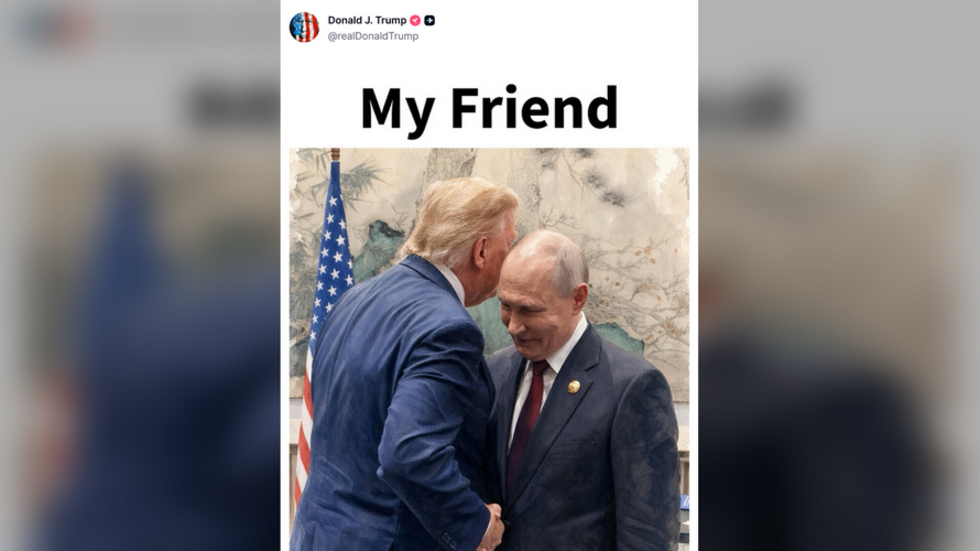
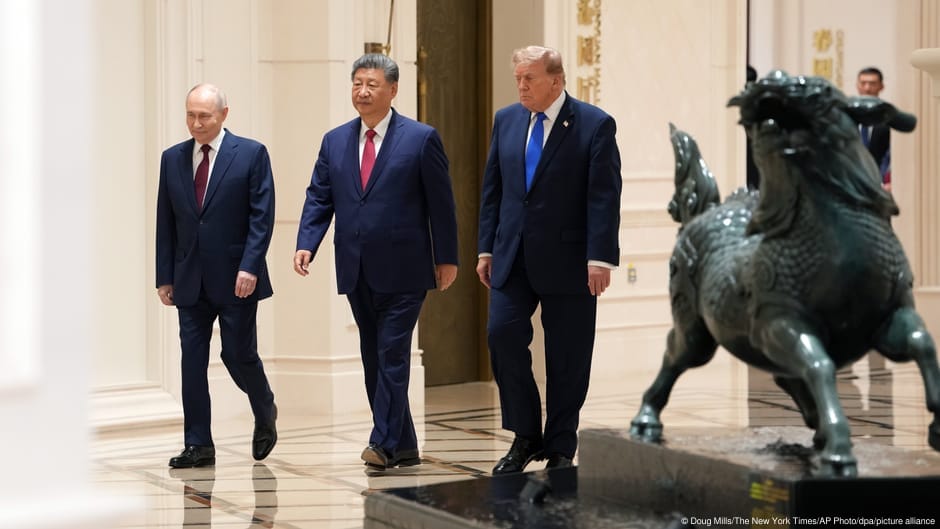
Chinese President Xi Jinping hosted US President Donald Trump and Russian President Vladimir Putin in Shenzhen on Thursday for an unprecedented trilateral summit, according to DW. Xi called the talks "groundbreaking", and Trump said the gathering was "really making history". The meeting brought together the leaders of the world's three most powerful military powers amid heightened geopolitical tensions.
The "peace declaration" released afterwards was notably narrow. According to the report, it made no mention of Russia's war in Ukraine or the US-led war in Iran. Instead, the three leaders agreed to pursue reforms of the United Nations, limit the role of the International Criminal Court and reaffirm their commitment to avoiding nuclear war. They also pledged to boost supplies of refined petroleum products to address global energy challenges.
On nuclear arms, the declaration was softer still. It said the countries would engage in "dialogue" on reducing nuclear risks and preventing proliferation, without explicit commitments to downsize stockpiles. The last arms pact between Russia and the United States, New START, expired in February. Trump has said he wants a "new, improved and modernized" deal that includes China, but Beijing has been reluctant to accept limits: its estimated arsenal of around 500 warheads is far smaller than the more than 5,000 each believed to be held by Moscow and Washington. Chim Lee of the Economist Intelligence Unit told DW that China is unlikely to join an institutionalised trilateral arms control setting, since the gap between the arsenals is still large.
The summit's clearest beneficiary, analysts quoted by DW suggest, was Putin. Emma Chanlett-Avery of the Asia Society Policy Institute said he had the most to gain, appearing on the world stage as one of the dominant players. Lee called the meeting a major outcome for Russia, pointing to Russian media coverage casting it as reinforcing Russia's standing. For Beijing, the calculation was more delicate. China initially hesitated, not wanting to be tied explicitly to the war in Ukraine or to appear to be forming a G3 club that could alienate other partners. Chanlett-Avery said Beijing eventually managed to keep the European conflict out of the meeting's focus while showcasing Shenzhen's high-tech features.
Ukrainian President Volodymyr Zelenskyy had warned before the summit of a "second Yalta", a reference to the 1945 conference that shaped the post-war European order. Putin stressed that the three countries, as victors in the Second World War and veto-wielding Security Council members, bore a joint responsibility for maintaining international peace, and said all three leaders agreed the format was useful. Ying-Yu Lin of Taiwan's Tamkang University said the Yalta comparison is a stretch given the differences between 1945 and now. Lee said the trilateral setup is unlikely to be a one-off, with more such meetings likely in the coming years.
What the summit did not produce is as telling as what it did. No concrete mechanism for nuclear reductions was announced, no position on Ukraine or Iran was stated, and no details were given on how petroleum supplies would be increased. Whether the format becomes a standing arrangement, and what it would discuss, is not yet known.