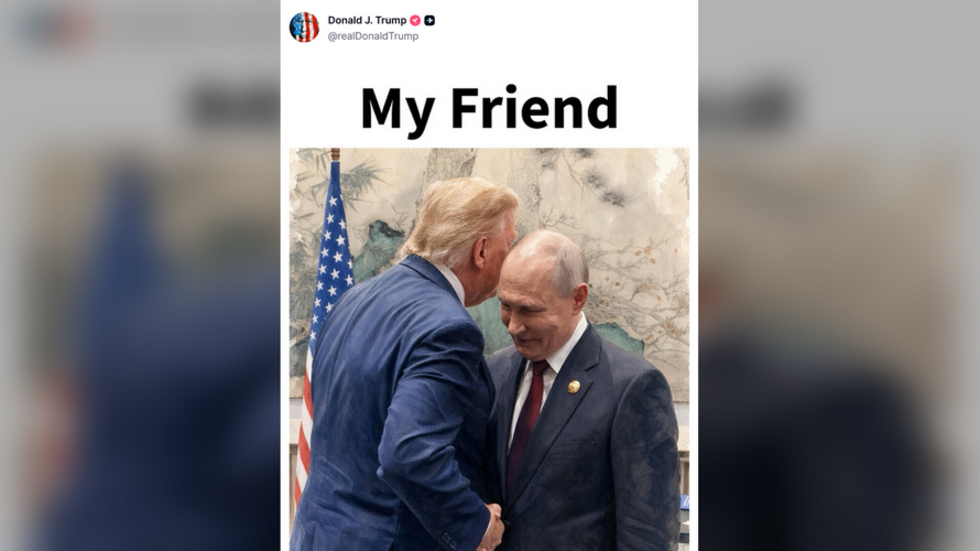
The text is a statement of intent, and Xi's own emphasis on implementation suggests the parties know it.
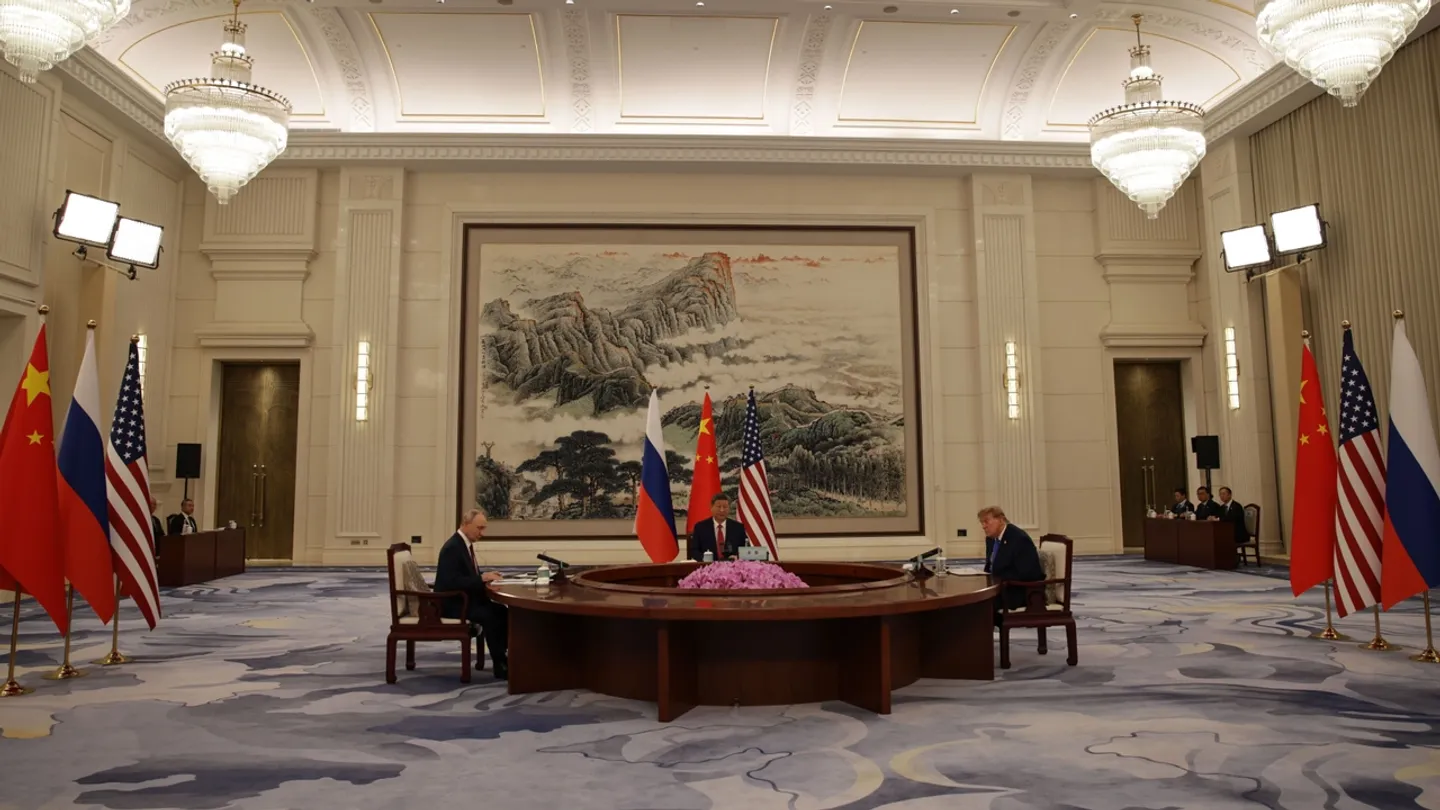
Chinese President Xi Jinping has described his trilateral summit with US President Donald Trump and Russian President Vladimir Putin as "positive, constructive and fruitful," and urged the three governments to act on what was agreed. According to Xinhua, the Chinese state news agency, Xi made the remarks on Thursday while summarising the consensus reached at the meeting in Shenzhen, in Guangdong province.
The summit, held on the sidelines of the two-day Asia-Pacific Economic Cooperation gathering that began on Wednesday, was hosted by Xi and is being treated as unprecedented. The three leaders delivered remarks in a media session of roughly fifteen minutes before moving to closed-door discussions. The meeting began at about 4.30pm local time and concluded around 5.50pm, lasting some eighty minutes.
According to Chinese Foreign Ministry spokesperson Mao Ning, Xi said the three countries "share the same view on safeguarding world peace, and all stressed that the hard-won peace must be cherished." He added that they agreed "major countries should take seriously the legitimate security concerns of all countries," and that dialogue and negotiation are the right option for settling disputes. "As long as dialogue does not stop and its door is not shut, there is hope for peace," Xi said. He also framed cooperation as the sure way to address challenges, calling for joint work on the basis of common interests.
The concrete output was a joint declaration titled "Declaration towards Peace," issued after the meeting. In it, the three leaders reaffirmed that a nuclear war cannot be won and must never be fought, and pledged to engage in dialogue on reducing nuclear risks and preventing the proliferation of nuclear weapons. Xi said the three countries should follow through on the consensus, strengthen communication, promote peace through cooperation and work together to build a better world.
What the declaration does not do is set out timelines, verification arrangements or any mechanism for the nuclear-risk talks it promises. Nor is it clear from the reporting what, if anything, was agreed on the conflicts and disputes that presumably sit behind the phrase "legitimate security concerns." The text is a statement of intent, and Xi's own emphasis on implementation suggests the parties know it. Whether the Shenzhen understandings acquire substance will depend on follow-up meetings and public evidence of movement, none of which has yet been described.
The symbolism is nonetheless substantial. A trilateral format of this kind, convened by Beijing and bracketed by the APEC summit, places China at the centre of great-power management at a moment when Washington and Moscow have had little to say to one another. For an informed audience, the test is not the language of the declaration but what the three capitals do next. On the record so far, the summit has produced a promise of dialogue and a shared aversion to nuclear war. That is worth having. It is not yet a settlement of anything.