A declaration of intent is not a mechanism, and the gap between the two is where previous peace initiatives have foundered.
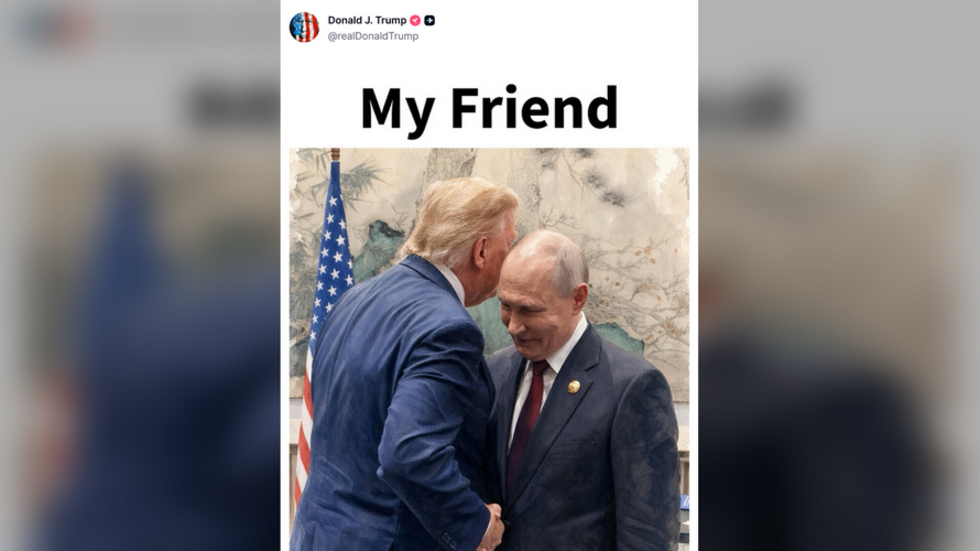
The leaders of China, Russia and the United States met in Shenzhen on Thursday and issued what they called a “Peace Declaration”, according to Al Jazeera. Xi Jinping hosted Vladimir Putin and Donald Trump, and the three presidents pledged to safeguard international security, to increase the production of refined petroleum products, and to keep channels of dialogue open to resolve conflicts such as the war in Ukraine. They also stressed that a nuclear war should never be fought because it cannot be won.
The gathering is notable for its composition as much as its content. A three-way summit of the Chinese, Russian and American heads of state is a rare format, and the fact that it took place at all is the clearest signal in the report. The declaration commits the three governments to a shared language on security and on energy supply, and it explicitly names Ukraine as a conflict to be addressed through dialogue. Al Jazeera's report does not set out any timetable, verification arrangement or follow-up meeting.
That absence is the central question. A declaration of intent is not a mechanism, and the gap between the two is where previous peace initiatives have foundered. The pledge on refined petroleum products is the most concrete item in the report, but it is not explained: the material does not say whether the commitment is intended to lower prices, to stabilise supply, or to serve some other purpose, nor how three governments would coordinate production. The statement on nuclear war restates a position long held by the major powers; it is a reaffirmation rather than a new departure.
The report is drawn from a video discussion programme and names three panellists — Andy Mok of the Center for China and Globalization, Aaron Glasserman of Columbia University's Weatherhead East Asian Institute, and the journalist Alexander Bratersky — but it does not summarise their assessments. What the participants made of the summit's prospects is therefore not established here. Nor does the material describe the substance of the bilateral meetings that presumably preceded the joint statement, or any disagreement among the three leaders.
Much also remains unconfirmed. The report gives no details of the declaration's text beyond the commitments summarised above, no indication of whether it was signed or merely issued, and no account of how Ukraine or other parties to the conflicts named would respond. Whether the Shenzhen commitments become action depends on machinery that the declaration, as reported, does not supply. For now the summit is a statement of shared intent among three governments whose interests diverge sharply elsewhere — and the measure of it will be what follows, not what was signed.