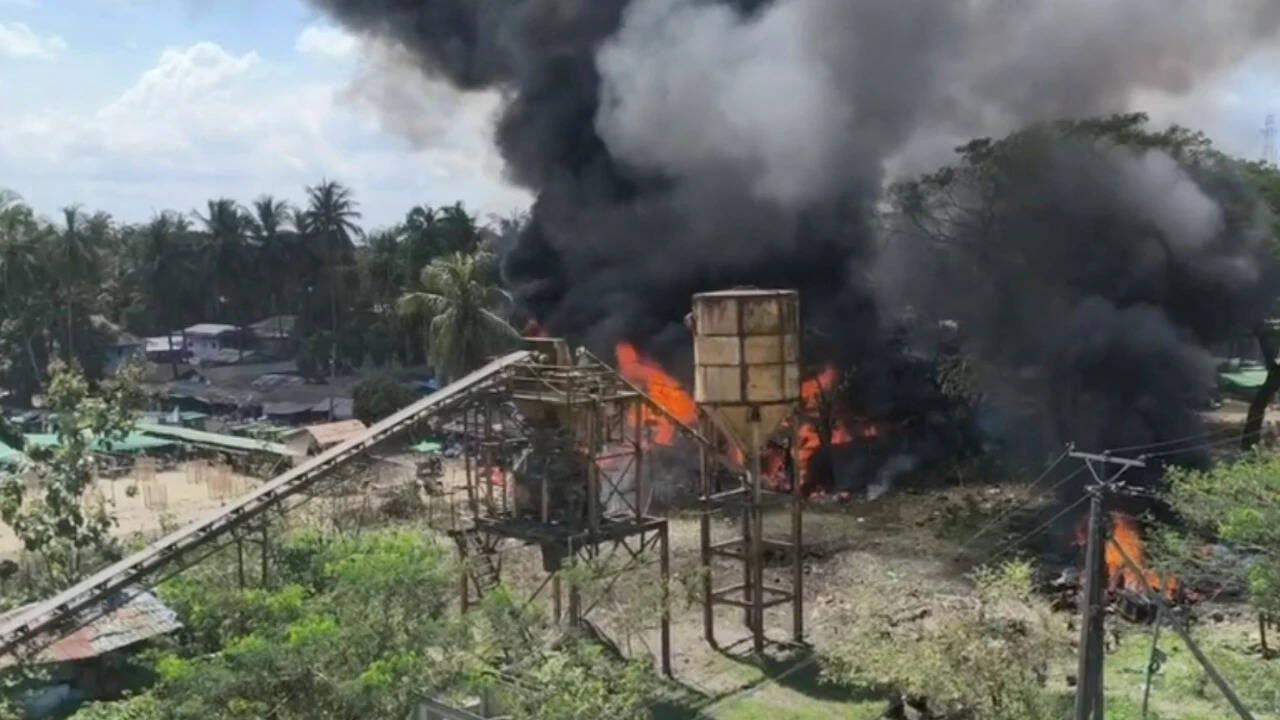
Bashkortostan is the outlier: a republic deep inside Russia, roughly 1,300 kilometres from the Ukrainian border, whose appearance in a single day's tally points to the reach of long-range drone operations.
Russia's defence ministry said its air defence forces intercepted and destroyed 83 Ukrainian aircraft-type drones over the course of the day, according to a report by the state news agency TASS. The ministry put the window at 8:00 a.m. to 8:00 p.m. Moscow time, equivalent to 5:00 a.m. to 5:00 p.m. GMT.
The regions named in the statement are Belgorod, Bryansk, Kaluga and Kursk, together with the Republic of Bashkortostan and the Republic of Crimea. The ministry gave no breakdown of how many drones were brought down over each territory, and it did not say whether any reached their targets or caused damage on the ground.
The geography is the most telling part of the claim. Belgorod, Bryansk and Kursk sit along or near the Ukrainian border and have been the routine theatre of cross-border drone and missile activity throughout the war. Kaluga lies further north and inland, while Crimea is the peninsula Russia annexed in 2014 and treats as its own territory. Bashkortostan is the outlier: a republic deep inside Russia, roughly 1,300 kilometres from the Ukrainian border, whose appearance in a single day's tally points to the reach of long-range drone operations.
That reach matters strategically. Drones capable of striking or overflying targets at such distance impose costs on Russian air defence, forcing assets to be spread across a far wider map than the front line alone would require. Each interception reported is also a claim about capacity: the ministry presents the figure as evidence that its defences are coping, but the same figure can be read as evidence of the volume of drones being launched.
What is not yet known is substantial. The report rests entirely on the Russian defence ministry's account, and no independent confirmation of the number, the locations or the types of drone involved is available in the material. There is no word on casualties, on damage to infrastructure, or on whether any drones struck outside the named regions. Ukrainian officials have not commented in the report, and the source gives no indication of what, if anything, was targeted.
The absence of those details is itself worth noting. Daily interception tallies have become a routine feature of both sides' communications, and they are rarely accompanied by the kind of granular accounting that would allow outside observers to assess them. Until independent verification emerges, the figure of 83 should be treated as a claim by one party to the conflict rather than an established fact.