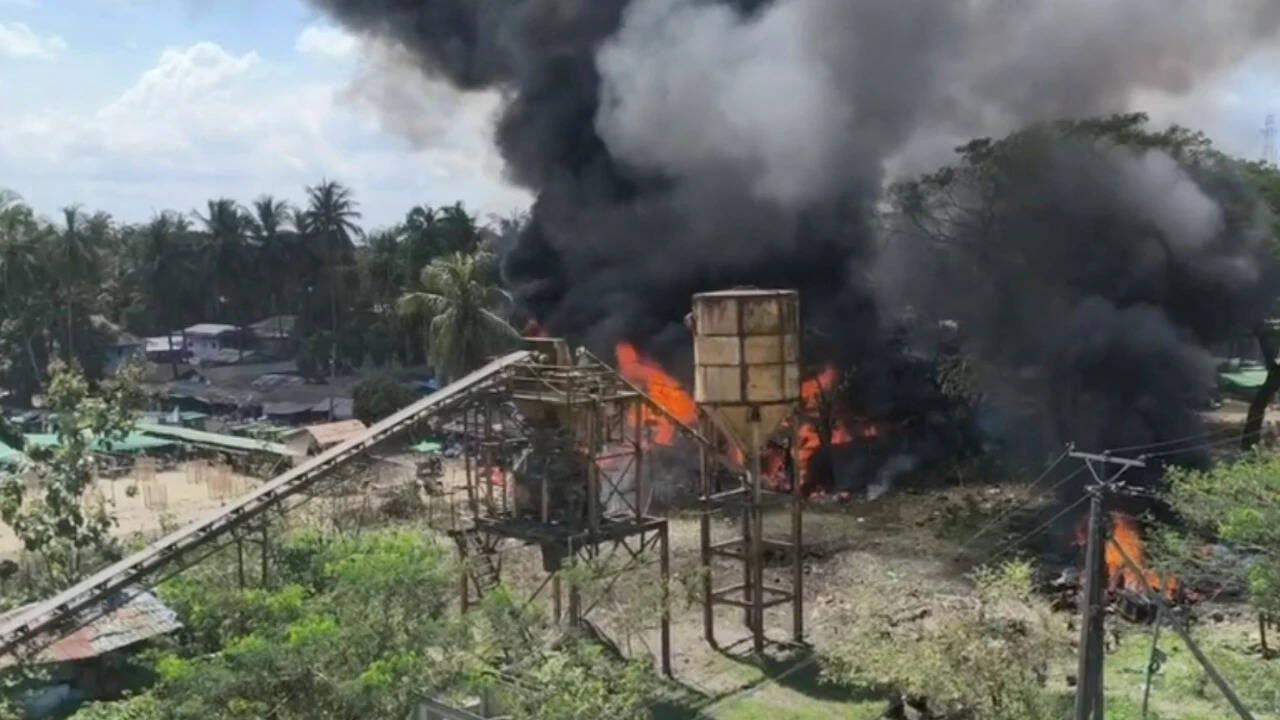
A shopping centre, a cafe and a pickup point are civilian gathering places in the middle of a Saturday evening, and the reported presence of minors among the injured sharpens the political charge of the incident.
Three people were killed and three others, including teenagers, were injured in a drone strike on the eastern part of Lugansk on Saturday evening, according to preliminary reports cited by TASS. The head of the self-proclaimed Luhansk People's Republic, Leonid Pasechnik, said the attack was carried out by Ukrainian forces near a shopping centre, a cafe and a pickup point.
In a statement posted on the Max messenger service and quoted by TASS, Pasechnik described the strike as a "barbaric attack" and said the injured, among them minors, were promptly taken to medical facilities. He added that all necessary emergency services were involved in dealing with the consequences. The casualty figures are described as preliminary, and no independent confirmation of the accounts was immediately available.
The location matters as much as the toll. A shopping centre, a cafe and a pickup point are civilian gathering places in the middle of a Saturday evening, and the reported presence of minors among the injured sharpens the political charge of the incident. Pasechnik's framing places the event squarely within the wider argument over drone warfare and civilian harm that has accompanied the war since its earliest months. Whether the target was deliberate, mistaken or the product of imprecise munitions is not established in the report.
Lugansk lies in territory held by Russian-backed forces and annexed by Moscow in 2022, a status Ukraine and most Western governments reject. Attacks on the city have been reported repeatedly through the conflict, and each incident feeds competing narratives: Moscow and its local officials present them as evidence of indiscriminate Ukrainian strikes on civilians, while Kyiv has generally argued that its operations target military infrastructure and that Russian accounts are exaggerated or fabricated. This report offers only the LPR head's version of events.
For an informed reader, the significance lies in what is verifiable and what is not. The report gives no information on the type or number of drones, the precise location of the strike, the identities of the dead, or the condition of the injured. There is no account from Ukrainian officials, no independent monitoring confirmation, and no indication of a military target in the vicinity. Those gaps should temper any firm conclusion about responsibility or intent, even as the human cost described is grave.
The strike also illustrates the growing role of drones in shaping the war's civilian toll and its information contest. Cheap, deniable and hard to attribute in the immediate aftermath, drone attacks generate claims that are difficult to verify quickly and easy to instrumentalise. Until independent evidence emerges, the Lugansk incident will be cited by Russian officials as proof of Ukrainian disregard for civilian life, and disputed by Kyiv as unverified. The three dead and three injured, including minors, are the only facts the report treats as established, and even those remain preliminary.