The setting matters as much as the message.
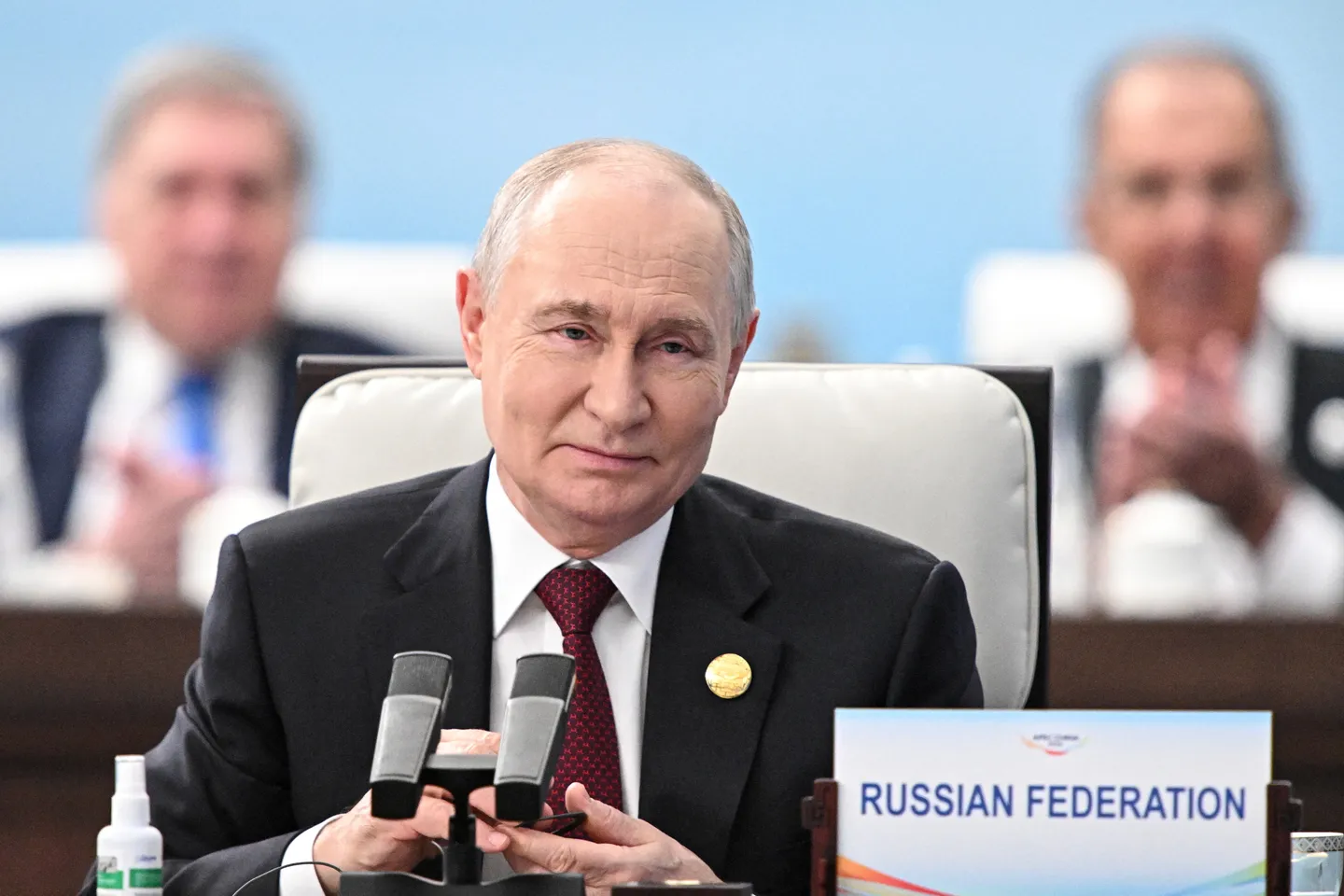
Vladimir Putin used his address to the 33rd APEC Economic Leaders' Meeting in Shenzhen to position Russia as a committed and reliable participant in the Asia-Pacific, according to TRT World. The Russian president said the forum must set a "unifying tone" at a time marked by the fragmentation of the global economy and by a growing number of challenges and threats to its stability. He called for a constructive agenda for cooperation and said the draft Shenzhen Declaration, prepared for approval, is aimed precisely at that goal and has Russia's support.
The setting matters as much as the message. Putin arrived in Shenzhen late on Tuesday for a two-day visit that includes APEC events and a highly anticipated trilateral meeting with Chinese President Xi Jinping and US President Donald Trump, scheduled for later on Thursday. A gathering of that composition, on the margins of a forum that accounts for more than 60 per cent of global GDP and around 40 per cent of the world's population, gives Moscow a rare platform alongside both Washington and Beijing.
Putin described partnership with Asia-Pacific economies as a "strategic course" for Russia, calling his country an integral part of the region and a significant contributor to its material well-being. He cited a projected 4.8 per cent growth rate for APEC member states this year, which he said significantly outpaces global averages, and welcomed the region's emergence as one of the engines of global development. He also pointed to knowledge-intensive sectors, naming nuclear energy, in which he said Russia holds a leading position and works actively with many regional partners.
On energy and food, Putin said Russia contributes significantly to regional security through its delivery of energy supplies and large volumes of grain and mineral fertilisers, telling trade partners they can always count on the reliability, high quality and consistency of those supplies. He offered to share Russian expertise in digital technology and artificial intelligence with regional partners under conditions that guarantee sovereignty and data security. He said Russia strives to remain open to the world while strengthening its economic potential, and that it has restructured its domestic economy around advanced sectors such as AI and nuclear energy.
Transport and transit featured too. Putin said Russia's efforts to strengthen its logistics framework open new prospects for cooperation in the region, and he invited regional economies to make greater use of routes he said some partners already use. He noted that more than 80 mutually beneficial projects with forum partners have been implemented in recent decades. The emphasis on supply reliability and sovereign data conditions reads as an appeal to partners weighing the political costs of deeper ties with Moscow.
What the address does not establish is how the room received it. The report gives no reaction from other APEC leaders, no detail on the trilateral meeting's agenda, and no confirmation of what the final Shenzhen Declaration will contain beyond Putin's own description of the draft. Whether the unifying tone he urged translates into agreed language, and whether the trilateral encounter produces anything more than a photograph, is not yet known.