Putin's central claim was that "the previous tools of economic domination and coercion are now a thing of the past," citing Russia's own experience as the target of what he called the world's largest number of sanctions.
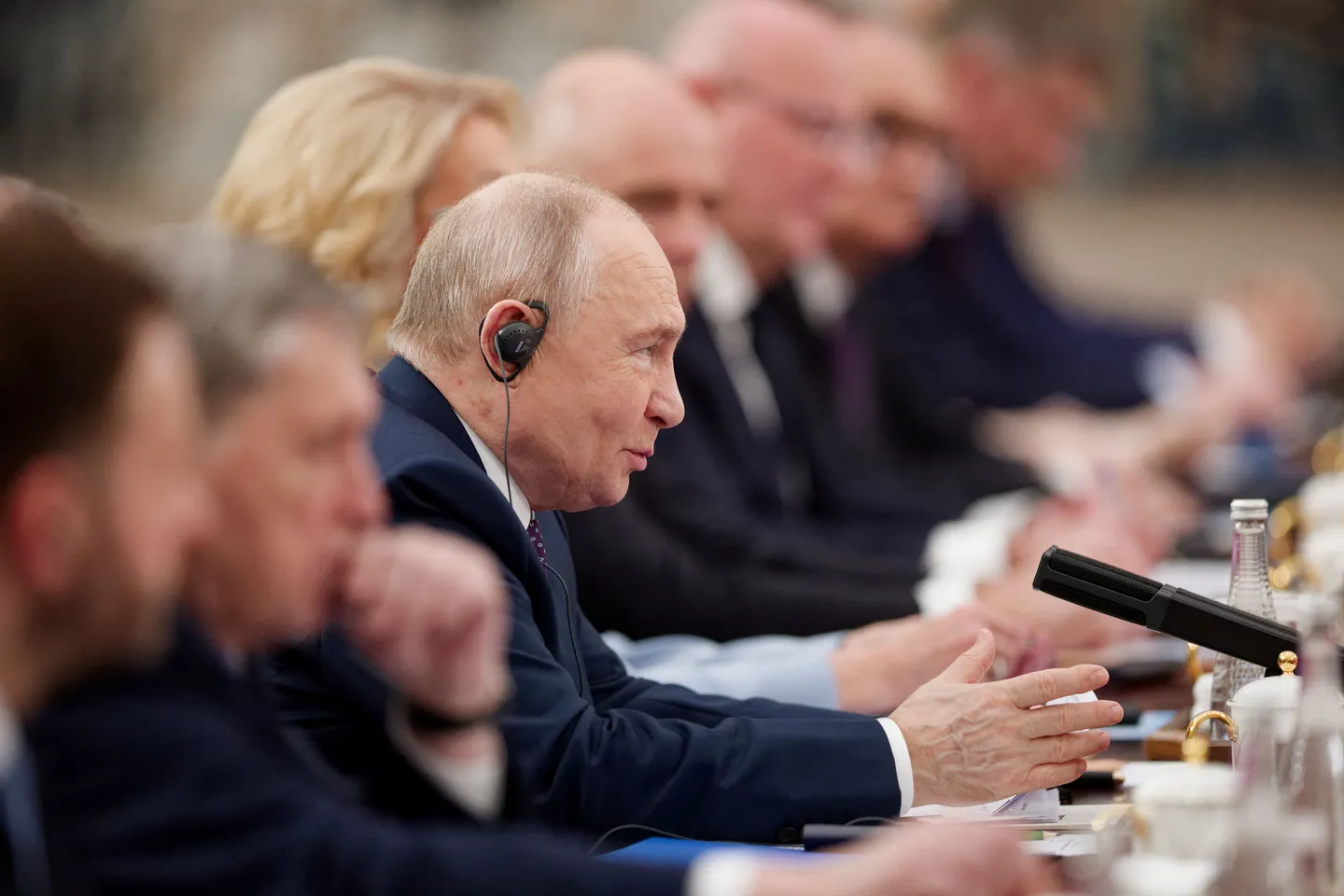
Vladimir Putin used an address to business leaders at the Asia-Pacific Economic Cooperation forum in Shenzhen on Wednesday to argue that economic coercion has lost its force, according to TRT World. The Russian president said the region was witnessing "radical changes sweeping across the world like waves," and described the regional model as an example of a more fair, democratic and equal world order.
Putin's central claim was that "the previous tools of economic domination and coercion are now a thing of the past," citing Russia's own experience as the target of what he called the world's largest number of sanctions. He conceded that sanctions, tariffs and export limitations "still halt back development," but argued they cannot fully stop growth or destroy the economies of competitors. The remarks were directed at governments that, in his telling, seek to hold back successful economies rather than adapt to new opportunities.
The setting gives the speech its weight. Putin spoke in Shenzhen on the sidelines of the 33rd APEC Economic Leaders' Meeting, and held separate talks with Chinese President Xi Jinping. According to officials quoted in the report, the two were expected to discuss energy and finance and, in a smaller format, foreign policy including Ukraine and North Korea. Xi opened the gathering by calling for greater international cooperation on artificial intelligence and free trade, saying China would pursue deep-seated reform starting with lowering tariffs and expanding access.
The diplomatic calendar sharpens the significance. A trilateral summit of the Chinese, Russian and American presidents is scheduled for Thursday in Shenzhen, and Putin said he expects "great use" from it. Xi and Putin met a day before that encounter with US President Donald Trump. Xi also met South Korean President Lee Jae-myung separately, and Lee is attending the summit.
What the report does not establish is whether Putin's rhetoric reflects any change in the economic pressure facing Russia, or whether the trilateral meeting will produce concrete agreements on trade, energy or security. The agenda items attributed to Russian officials remain expectations rather than confirmed outcomes. The substance of the Xi-Putin discussions, and the terms on which the three presidents will meet, are not yet known.
For the region, the language matters as much as the venue. A Russian leader using an Asia-Pacific business forum to declare economic coercion obsolete, while standing beside the Chinese president and preparing to meet the American one, frames the summit as a test of whether that claim holds in practice. The coming days should show whether the three-way meeting yields cooperation or merely another round of positioning.