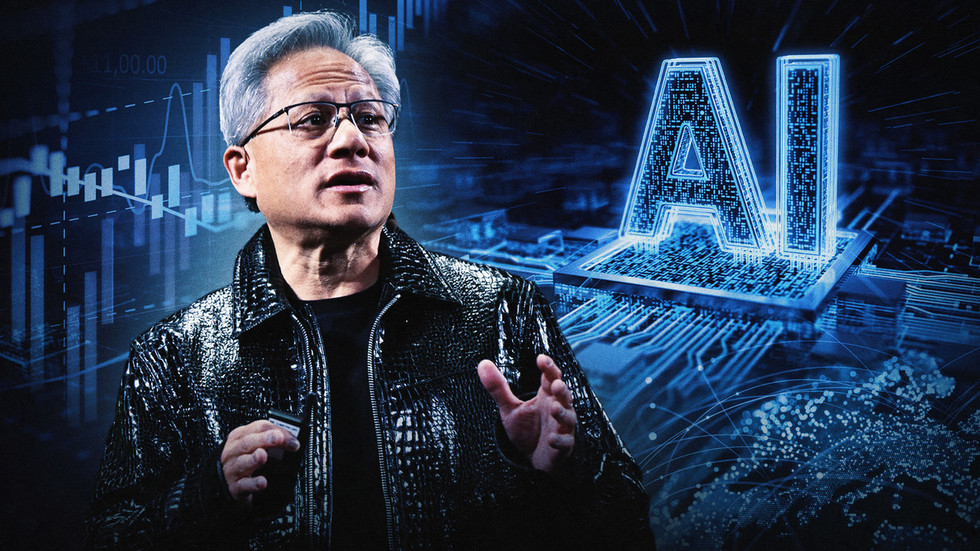
The technology is real, but the numbers don't yet work.
Nvidia reports third-quarter 2026 results on Tuesday, and according to RT the occasion will be watched as closely as a Federal Reserve press conference. Investors will parse every word from interim chief executive Colette Kress, the former finance chief, for signals on whether the company intends to pull back from more than $36 billion in commitments across the artificial intelligence ecosystem. The report frames that question as a form of monetary tightening, and the comparison is telling: a single chipmaker is now discussed in the language usually reserved for central banks.
The immediate controversy concerns Alice Huang, an executive at Megaspeed, and allegations that she was a Chinese spy. RT reports that US Attorney General Todd Blanche has said the Justice Department has reached no conclusion on whether Huang was in fact an agent. That caveat matters. It means the most serious allegation in the affair remains unproven, and readers should treat claims about Huang's status as contested rather than established.
RT's own argument is that the espionage angle is a distraction from the real story. Some, the report says, believe the affair was concocted to undermine lobbying by Nvidia chief executive Jensen Huang against sanctions in Washington, and to place the world's largest company by market capitalisation on a national security leash through investigations and eventual congressional oversight. That is an interpretation offered by unnamed observers, not a finding, and it should be weighed as such. What can be said is that Nvidia sits at the intersection of export controls, AI policy and national security in a way few private firms ever have.
The financial picture RT sketches is more concrete. The technology is real, the report concedes, but the numbers do not yet work: hundreds of billions in annual capital expenditure, combined with circular vendor financing, without commensurate revenues. That combination is what the report calls a red flag, and it does not take a contrarian to call it a bubble. The harder claim is that the industry has reached too big to fail and too strategically important to fail, and can expect preferential treatment from Washington if the market turns, whether or not its biggest names survive the fallout.
That is a prediction, not a confirmed policy, and the report offers no evidence of any specific backstop being prepared. Nor does it establish what Kress will say on Tuesday, or whether Nvidia will actually slow its commitments. What the piece does capture is a shift in how the company is discussed: no longer only as an engine of the AI boom, but as a systemic risk whose fate is entangled with the state that regulates it.