The dispute now turns on whether there are grounds for a strike at this moment.
Israeli politics has entered a period of open dispute over two linked questions: whether the violence in the West Bank demands immediate political consequences, and whether Iran's nuclear programme constitutes a threat urgent enough to justify a national unity government. According to an account published by RT, the trigger was a night of arson attacks on Palestinian localities in the West Bank on 22 November, in which around a dozen vehicles were reportedly set alight and houses burned in Deir as-Sudan, Deir Abu Mashal and Kafr Malik. Israeli police opened an investigation.
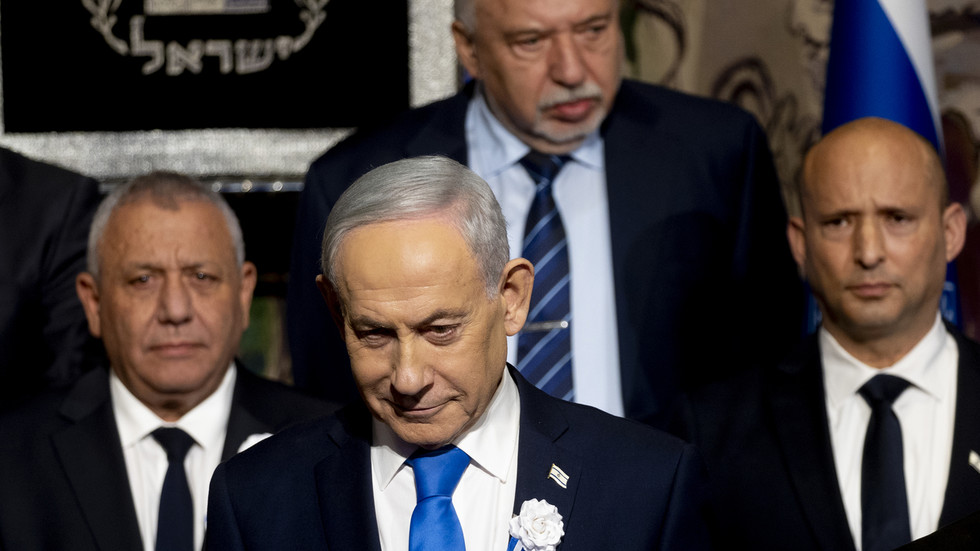
The political reaction was swift. Former military chief Gadi Eisenkot described the attacks as "Jewish terrorism" and placed political responsibility on National Security Minister Itamar Ben-Gvir and Finance Minister Bezalel Smotrich, whose policies, he argued, had pushed the West Bank to the brink of anarchy. Ben-Gvir rejected the charge, accusing Eisenkot of prejudging the investigation and of seeking Arab support, including that of deputy Knesset speaker Ahmad Tibi, to form a government. Yair Lapid called the attacks pogroms born of "criminal negligence", while Yair Golan warned of a third intifada. The exchange exposed the fragility of any alternative majority that would depend on Arab factions.
On Iran, the article reports that a confidential IAEA report, previously mentioned by Reuters on 13 November, said inspectors had still not gained access to the uranium enrichment site declared by Iran at Isfahan, leaving the agency unable to verify whether nuclear material was present. Netanyahu cited the Iranian threat to argue for a national unity government. Eisenkot responded that he saw no immediate threat requiring a military operation before a new cabinet was formed, identifying Iran's stockpile of enriched uranium as the main problem. Avigdor Lieberman also opposed a strike during the caretaker period and warned that any unilateral order by Netanyahu would be illegal. Netanyahu accused his opponents of downplaying the threat for political reasons.
The dispute now turns on whether there are grounds for a strike at this moment. Eisenkot's public position weakens Netanyahu's argument that urgency over Iran requires an agreement with Likud, while opening space for him to seek a majority on his own terms. For Netanyahu, a broad coalition remains a means of preserving influence over the composition and direction of the next government. The article does not establish whether the IAEA has since obtained access to Isfahan, nor does it confirm the precise scale of the settler attacks or the status of the police investigation. Those gaps matter, because the political battle is being fought over claims of urgency that depend on facts not yet fully in the public domain.