The grant advances the project; it does not guarantee completion.
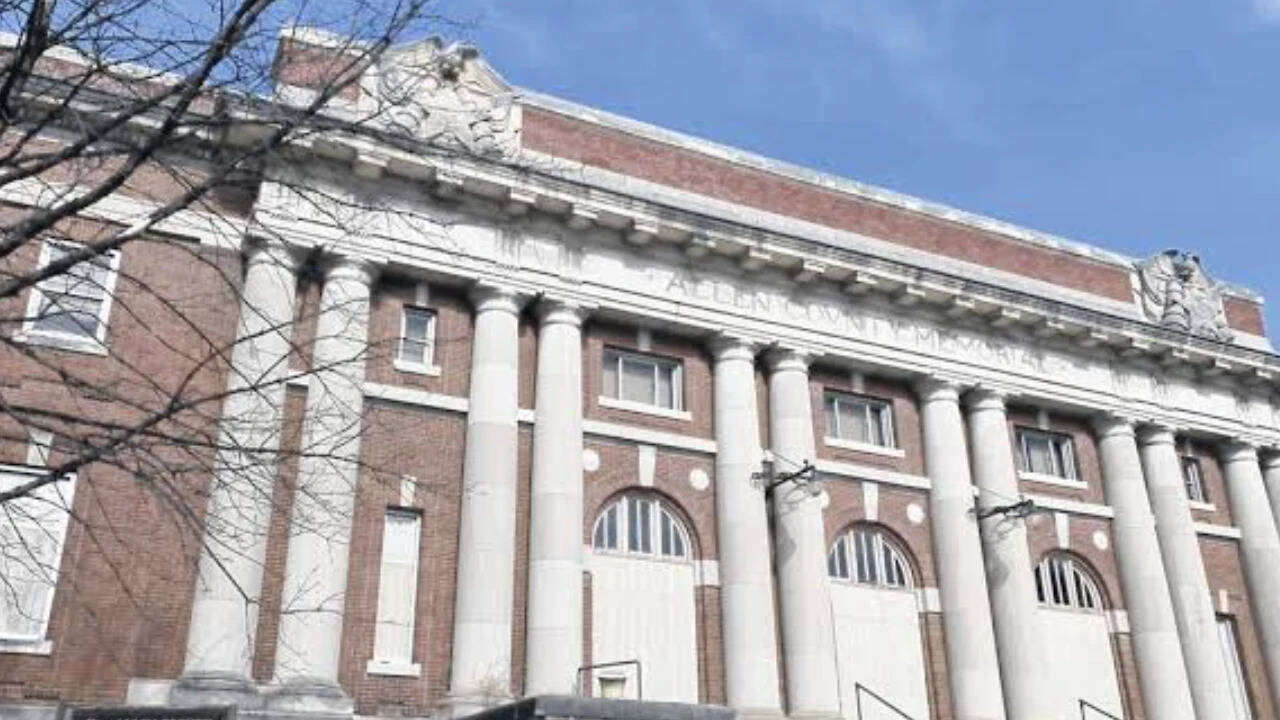
A historic building that has stood empty for more than a decade may be edging towards a new purpose. According to an announcement by the Ohio Governor's Office, Lima Memorial Hall in Lima, Ohio, has been awarded a $4.15 million state cleanup grant, bringing plans to redevelop the landmark and nearby properties a step closer to reality. The proposed project would turn the site into a veterans museum, an event space and a boutique hotel.
Built in 1908 and designed by the architectural firm Dawson & McLaughlin in the Beaux-Arts style, the hall was named in honour of local military veterans and became a fixture of downtown Lima's civic and cultural life. Over the years it served as a performing arts centre and as city hall, hosting concerts, performances and public gatherings. Its stage welcomed John Philip Sousa's band, the pianist and comedian Victor Borge, the Detroit Symphony Orchestra and singers from the Boston and Chicago opera companies, according to the report. Its marble staircase, rising from the foyer to a second-floor balcony, added to its prominence, and the building was listed on the National Register of Historic Places in 1979.
The building closed in 2014 and has remained vacant since. Before any redevelopment can proceed, the site must be cleaned up. The grant, awarded to the Allen County Port Authority, will fund environmental remediation across the Memorial Hall property and nearby sites, including the removal of asbestos-containing materials from the historic building, the clearing of contaminated soil and the demolition of the former Tomlinson Motor building. The funding forms part of Ohio's Brownfield Remediation Program, which assists communities dealing with abandoned or underused properties affected by potential contamination; the latest round distributes $127 million across 20 Ohio counties.
The significance of the award lies less in the sum than in what it unlocks. Remediation is the unglamorous precondition for almost any reuse of older industrial and civic stock, and it is frequently the point at which preservation ambitions stall. By covering that cost, the state has shifted the project from aspiration to a stage where construction and financing can be discussed in concrete terms. The proposed mix of uses is also notable: a museum honouring veterans, a revived events space and a newly built boutique hotel would combine commemoration with the commercial activity that keeps a building occupied.
Several things are not yet confirmed. The report does not specify a construction timeline, the total cost of the redevelopment, the source of the remaining funding, or the identity of any developer. It is also unclear how much of the original interior can be preserved through the asbestos removal and demolition work, or whether the hotel and museum elements have secured planning approval. The grant advances the project; it does not guarantee completion.
For Lima, the stakes are local but familiar to many mid-sized American cities: whether a landmark at the centre of a town's history can be made part of its everyday life again. The cleanup money makes that question answerable rather than theoretical. What remains to be settled is whether the plans, and the financing behind them, can carry the building the rest of the way.