For now the discovery is a reminder that the Aegean's Bronze Age past is not confined to the famous citadels.
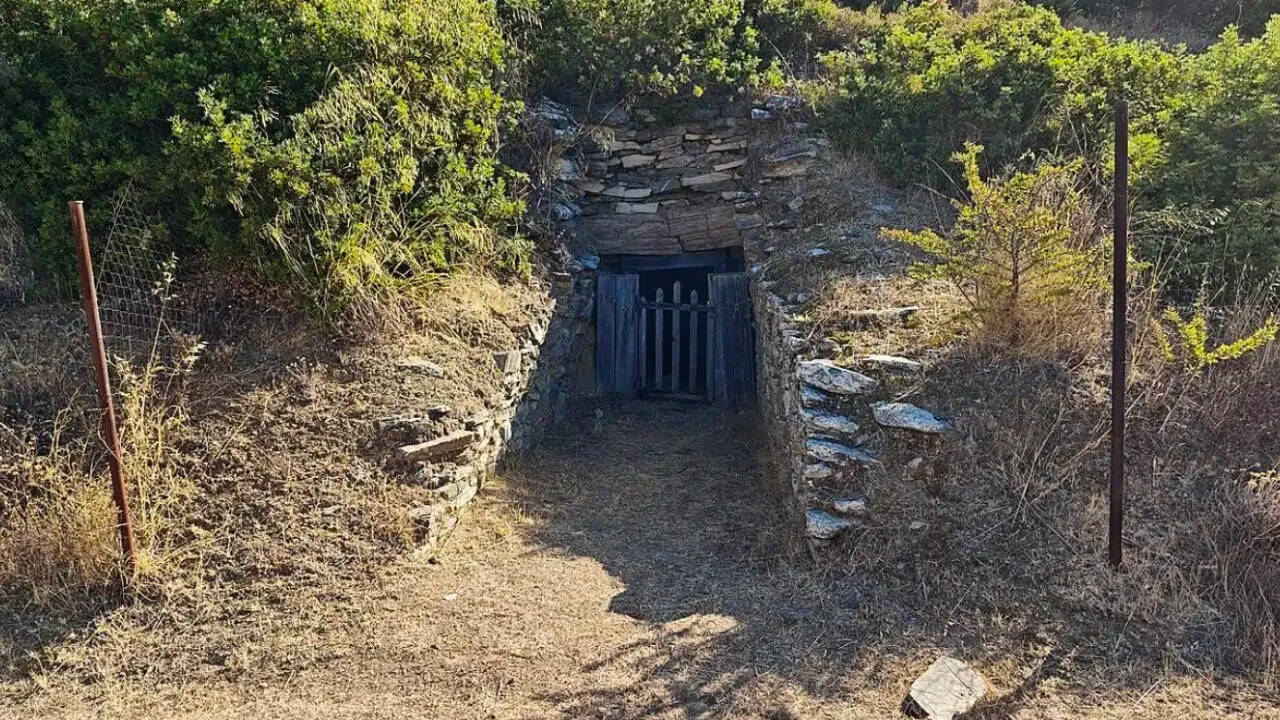
Road crews building the Chalkida–Psachna bypass on the Greek island of Euboea have uncovered a Mycenaean beehive tomb dating back more than 3,200 years, according to a report by the regional news outlet E-Sterea cited by the Times of India. The structure, known as a tholos tomb, is the 126th such monument identified in Greece, and on its dimensions experts estimate it may rank among the twenty largest of its kind ever found in the country.
The significance lies less in the count than in the scale. Tholos tombs were the most elaborate burial structures of the Bronze Age Aegean, built as circular chambers with domed roofs of carefully laid stone courses, each layer stepping slightly inward until the vault closed. A long entrance passage, the dromos, led to the burial chamber. Constructing one demanded resources, skilled masons and the capacity to organise a large workforce, which is why such monuments are generally associated with powerful individuals and wealthy families.
The initial archaeological assessment, as reported, suggests the Psachna tomb may have been built for someone holding considerable social and political influence in the Mycenaean period. That reading rests on size rather than on any contents recovered. The burial chamber has not been fully explored, and archaeologists have not established who was buried there. Further excavation could show whether the tomb held a single prominent individual or served an influential family across several generations.
The wider interest is regional. Euboea occupied a strategic position in the Aegean, linking mainland Greece with the islands and maritime trade routes, and a monument of this scale implies a community with access to substantial wealth and labour, possibly under a powerful local leader. Because most study of Mycenaean society has concentrated on the major centres of the mainland, a tomb of this size on Euboea may help researchers understand how communities beyond those centres participated in the wider civilisation, and what the island's relationship with other Mycenaean settlements looked like.
Much remains unresolved. The identity of the buried, the date of construction within the Mycenaean period, and the tomb's precise dimensions have not been disclosed in the reporting. Nor is it clear what the structure contains, if anything survives. Authorities are said to be considering how to preserve the monument without halting the bypass, a familiar tension in Greek infrastructure work, where the subsurface is dense with antiquities.
For now the discovery is a reminder that the Aegean's Bronze Age past is not confined to the famous citadels. It sits under the roads being built to serve the present, and it surfaces when those roads are cut. What the Psachna tomb adds to the record will depend on the excavation that follows, and on decisions about how to protect it while the bypass proceeds.