The revelation places the alliance question, long treated as settled in Western capitals, back at the centre of negotiations.
Washington has raised with Kyiv the prospect of Ukraine joining NATO in exchange for withdrawing from the Donbas, President Volodymyr Zelenskyy has disclosed, according to a report by TRT World. Zelenskyy said the question was put to him during recent diplomacy: "The Americans raised a question: 'What if Ukraine joins NATO? Would Ukraine withdraw from Donbas?' This was the first time this had been raised." The revelation places the alliance question, long treated as settled in Western capitals, back at the centre of negotiations.
Zelenskyy insisted that Kyiv would never formally recognise seized land as Russian, and stressed that Ukrainians would ultimately judge any settlement. "After providing Ukraine with this kind of defence support... they cannot simply let Ukraine go," he said, in remarks that tie continued Western backing to the credibility of any deal. The report does not say whether the American envoys presented the proposal as a formal offer or as a hypothetical, nor what security guarantees would accompany membership.
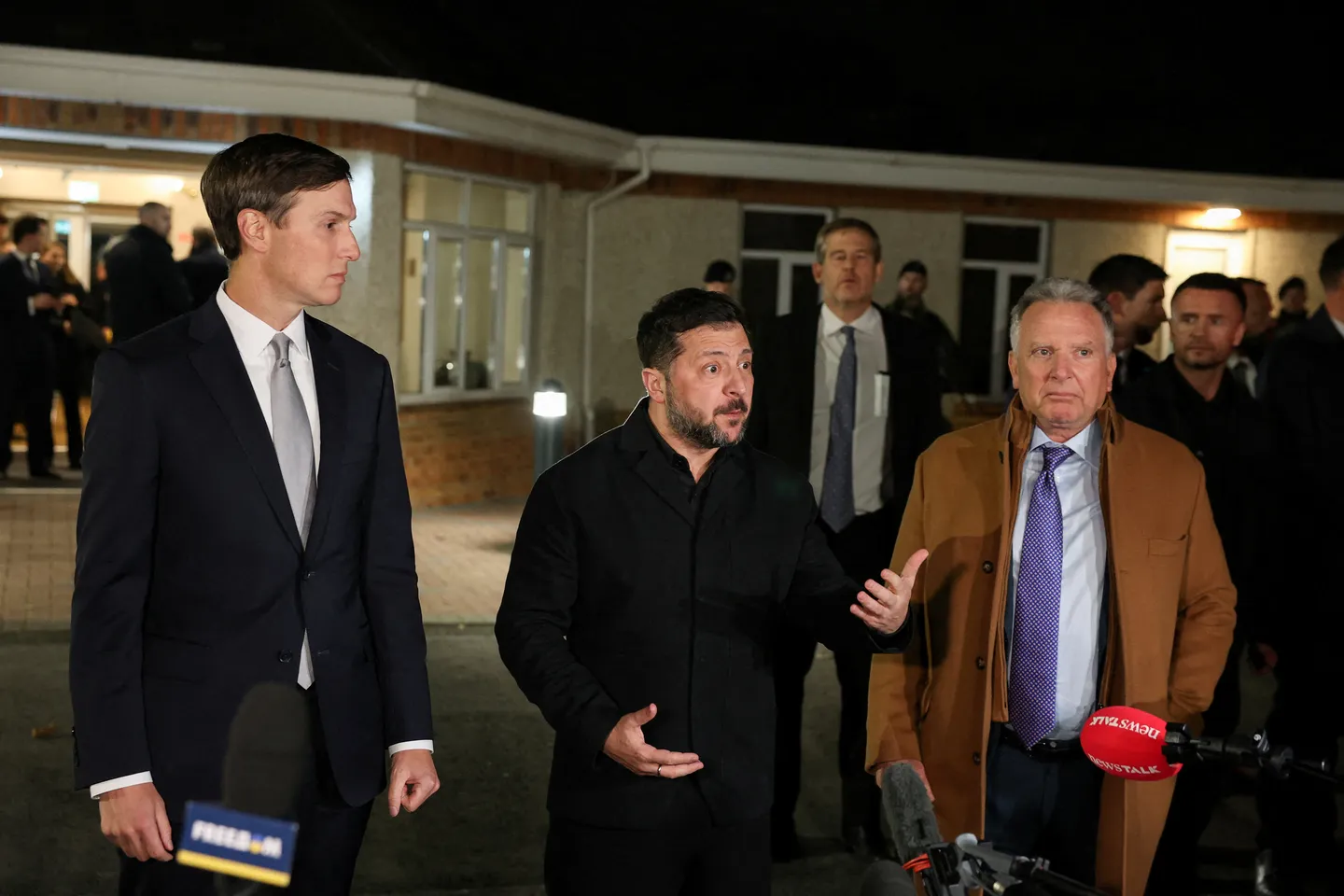
The disclosure follows visits by US envoy Jared Kushner and Steve Witkoff to both Vladimir Putin and Zelenskyy after two days of talks in Abu Dhabi. Kushner confirmed on Saturday that Washington's focus is to facilitate direct engagement between European nations and Moscow. European leaders met in Dublin on Friday and selected five countries — the United Kingdom, France, Germany, Italy and Poland — to send representatives to future rounds. The composition of those delegations, and the mandate they will carry, has not been set out in the report.
European leaders voiced scepticism at Moscow's attempt to reframe the talks as the construction of a new continental security order. Russia's chief negotiator, Vladimir Medinsky, called for a "new, modern Yalta", while Germany's Friedrich Merz responded that such frameworks already exist. French President Emmanuel Macron warned on Saturday that rationing aid would impose an "unjust peace", adding: "That is the spirit of defeat. That is a recipe for another war." The exchange suggests the parties remain far apart on what the talks are for, let alone what they might produce.
On the battlefield, Zelenskyy said the Kremlin is "betting everything" on its winter campaign, and rejected a Russian proposal for a humanitarian mission in Kostyantynivka as a pretext to capture more cities across the Donbas. Russian forces maintained intense pressure along the front line on Saturday, launching deadly strikes on the eastern city of Pavlohrad and targeting a village near Zaporizhzhia, roughly 32 kilometres from active fighting. The casualty figures and the scale of the strikes are not given in the report.
What is clear is that Washington is now testing propositions it previously declined to put on paper, and that Kyiv has answered by restating its refusal to recognise territorial loss. Whether the NATO question becomes a negotiating instrument or a source of friction between allies is not yet known. The report gives no timetable for the next round of talks, no confirmation that Moscow has accepted the five-nation European format, and no detail on the security guarantees that would attach to Ukrainian membership.