The episode is a reminder that a single defection, late and public, can test a party’s unity at the moment it can least afford it.
A bitter Democratic primary in Michigan has returned to trouble the party in the final days of the midterm campaign, after Congresswoman Haley Stevens endorsed the Republican Senate candidate Mike Rogers over Abdul El-Sayed, the man who defeated her for the Democratic nomination. According to TRT World, Stevens released a video on Sunday announcing her support for Rogers while insisting she remained a Democrat. “I’m just letting you know where I am,” she said.
The response from her own side was swift. Within little more than an hour, the state party chairman, Curtis Hertel, announced that Stevens would no longer have a place in the organisation, writing on X that she was not a current member of the Michigan Democratic Party “nor will she be in the future”. Senior Democrats moved to contain the fallout, with former vice president Kamala Harris, former House Speaker Nancy Pelosi and Michigan Congresswoman Debbie Dingell among those publicly backing El-Sayed. Harris recorded a telephone message urging Michigan voters to support him, while Pelosi accused Stevens of betraying Michigan families’ healthcare, freedoms and future.
The rupture has an ideological root. Stevens is a staunch supporter of Israel, while El-Sayed has been sharply critical of Tel Aviv. The dispute intensified last week over an advertisement by an independent progressive group linking American support for Israel to rising grocery prices. Stevens demanded that El-Sayed condemn it; he said his campaign had not produced it and accused her of reopening arguments settled in the August primary. Plans for a joint appearance at a Detroit church on Sunday collapsed, and Stevens instead appeared alongside Rogers, who said he was “honoured” by her support. Her longtime chief of staff has resigned, according to reports, with other departures expected.
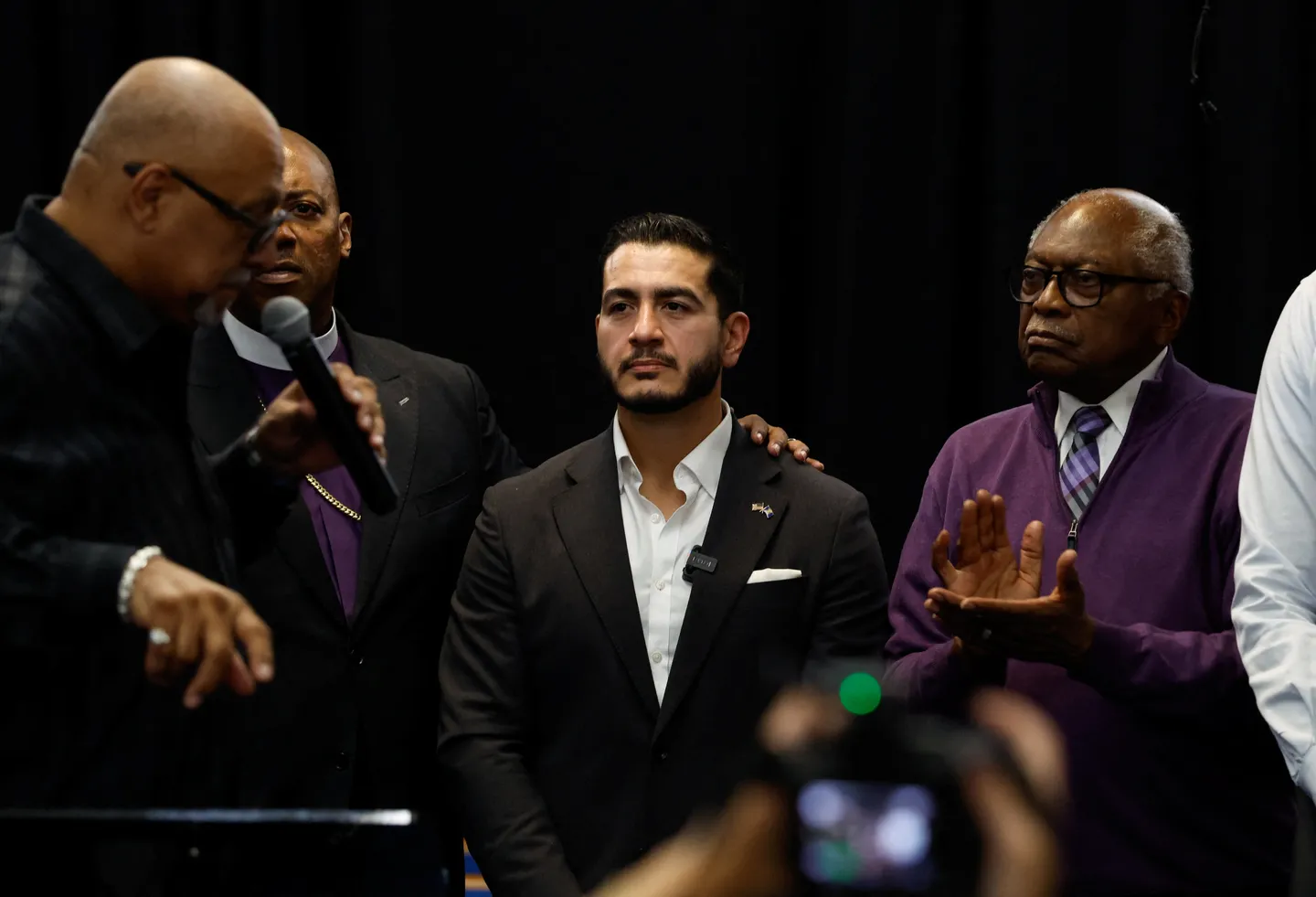
El-Sayed, a former public health official who could become the first Muslim elected to the US Senate, dismissed the controversy while speaking to reporters outside a Detroit church during Sunday’s early-voting drive, saying “none of this matters” and seeking to return attention to affordability and healthcare. He and Rogers, a former Republican congressman, are competing to replace the retiring Democratic senator Gary Peters. The race is considered competitive, and polling suggests El-Sayed faces a tougher contest than some other Democratic candidates running statewide. A defeat in Michigan could complicate the party’s already difficult path to a Senate majority.
Timing sharpens the damage. More than 1.8 million Michigan voters had already cast ballots by Friday, according to the Associated Press, meaning much of the electorate had decided before the dispute erupted. Voting continues until Tuesday, and the question is whether Democrats can stop their internal disagreements from affecting the final result. What is not yet known is how many late-deciding voters will be moved by the endorsement, whether further resignations will follow, and whether the state party’s expulsion of Stevens carries consequences beyond the campaign. The episode is a reminder that a single defection, late and public, can test a party’s unity at the moment it can least afford it.