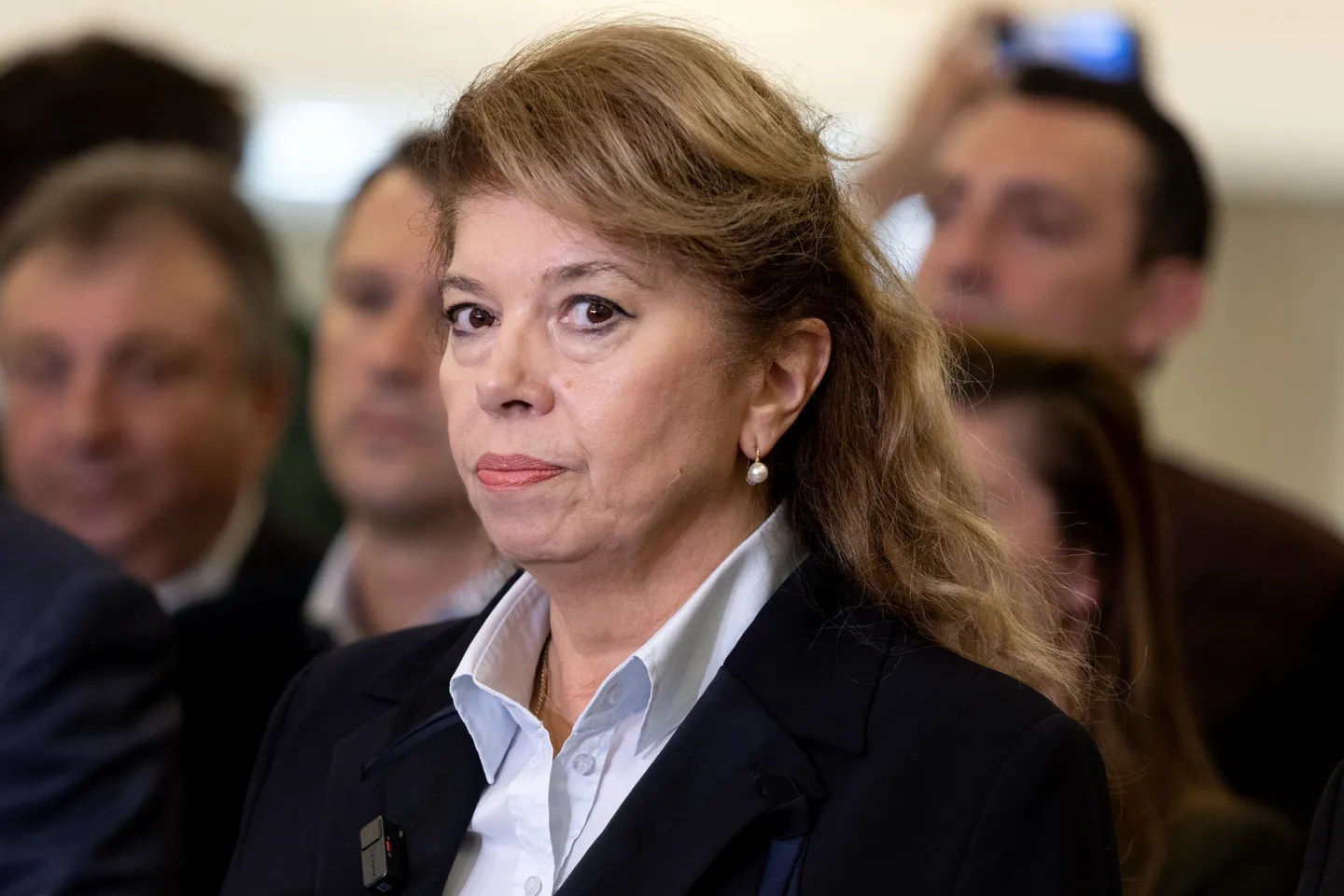
A presidential win would leave the same political current holding the head of state, the government and a working legislative majority.
Iliana Yotova, Bulgaria's acting president, appeared headed for a decisive victory in the country's presidential runoff against Andrey Gyurov, according to exit polls released as voting concluded and reported by TRT World. Parallel counts by five leading polling agencies placed her share of the vote between 56.6 and 58.2 per cent, against 38.6 to 40.6 per cent for Gyurov. The figures are exit polls, not the official count, and the final result has yet to be certified.
Gyurov conceded the contest in tone if not in form. "We accept the results, no matter how surprising they are," he told a press conference in Sofia, adding that while the campaign was ending, the broader responsibility remained. The margin marks a sharp improvement on the first round a week earlier, when Yotova took 34.76 per cent to Gyurov's 31.95 per cent — a narrow lead that the runoff appears to have converted into a commanding one.
The result is best read alongside April's parliamentary election, in which Progressive Bulgaria, led by former president Rumen Radev, won 131 of the 240 seats in the National Assembly and an absolute majority. Yotova, a veteran of the Bulgarian Socialist Party who served as Radev's vice president, assumed the acting presidency after his resignation in January, and Progressive Bulgaria endorsed her bid for a full five-year term. A presidential win would leave the same political current holding the head of state, the government and a working legislative majority.
That concentration is precisely what Gyurov, a former deputy governor of the Bulgarian National Bank, warned against during the campaign. He argued that a Yotova victory would leave no effective institutional counterweight at the head of state, given that Progressive Bulgaria already controls the government. He also criticised the administration's record on European Union integration and regional security, citing reduced aid to Ukraine and sluggish coordination with EU allies, and contended that the government's approach had left Bulgaria increasingly vulnerable and turned the country into a weak link along NATO's eastern flank.
The policy contrast is stark. Yotova's platform firmly opposed any additional military arms supplies to Ukraine, calling instead for peace through negotiated diplomatic avenues. Her position places Bulgaria at odds with much of the alliance's mainstream at a moment when the question of continued military support for Kyiv remains divisive across Europe. A strong personal mandate would strengthen her hand in arguing that case in Brussels and among allies, though the precise direction of Bulgarian policy will depend on the government Radev's majority sustains.
Several things are not yet known. The exit polls are projections, and the official count, turnout figures and the final distribution of the vote have not been confirmed in the material available. Nor is it clear how a Yotova presidency would translate her stated opposition to arms supplies into formal policy, or how allies will respond. What the polls do suggest is that Bulgarian voters have endorsed the consolidation of power around Progressive Bulgaria, and with it a more sceptical voice on Ukraine inside NATO's eastern flank.