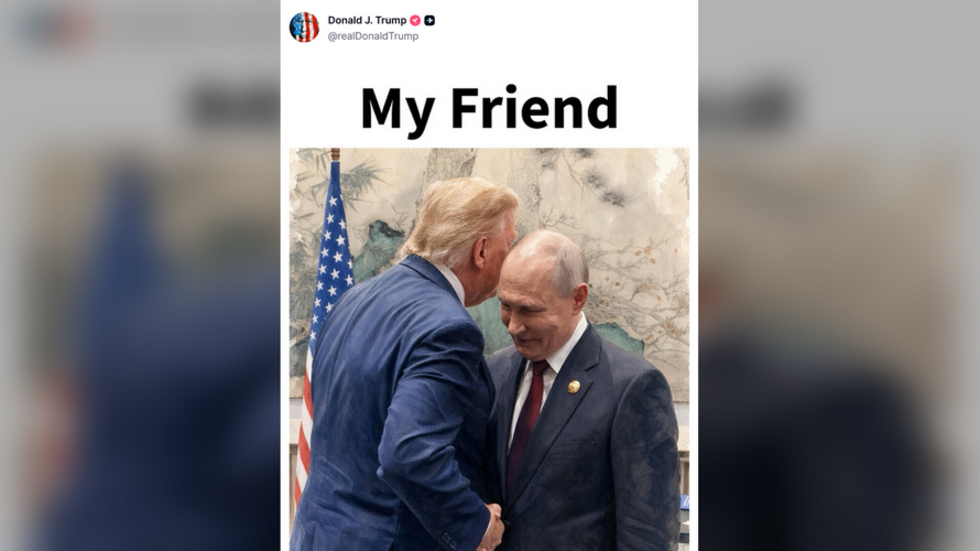
The statement is notable less for what it confirms than for what it leaves open.
The Kremlin has confirmed that preparations are under way for a possible meeting between the leaders of Russia, China and the United States on the sidelines of the APEC summit in China. According to TASS, Russian presidential aide Yury Ushakov said the parties are working on the content of a meeting involving Vladimir Putin, Xi Jinping and Donald Trump.
"The work is active now on its content filling," Ushakov said, in comments reported by the Russian state news agency. He added that Moscow attaches high importance to the prospective gathering of the three leaders.
The statement is notable less for what it confirms than for what it leaves open. No date, venue or format has been disclosed, and it is not established that all three capitals have agreed to attend. The Kremlin aide's remarks describe preparatory work rather than a settled arrangement, and the source material gives no indication of what the agenda might contain or which officials are involved in drafting it.
Even so, the disclosure is significant. A trilateral meeting at leaders' level would bring together the three principal nuclear powers and the central actors in the current contest over trade, technology and security. It would also mark a departure from the pattern of recent years, in which contact between Washington and Moscow has been limited and largely conducted through intermediaries. The reference to APEC places any encounter within a multilateral economic forum, giving all three leaders a plausible reason to be present without the meeting appearing as a standalone summit.
For Beijing, hosting such a gathering would carry diplomatic weight, positioning China as a venue where the other two powers are willing to sit down. For Moscow, the emphasis on the meeting's importance suggests a desire to demonstrate that Russia retains a central place in great-power diplomacy. For Washington, the calculation is less visible from the material available, and no American or Chinese confirmation is reported in the TASS account.
The practical obstacles should not be understated. Agreeing an agenda among three governments with sharply differing priorities is a demanding exercise, and the phrase "content filling" implies that the substance remains unresolved. Whether the meeting takes place, and at what level of preparation, is not yet known. What the Kremlin has made clear is that it wants the prospect taken seriously.