The demonstrators are, in effect, asking those leaders to accept the consequence of the vote they have just won.
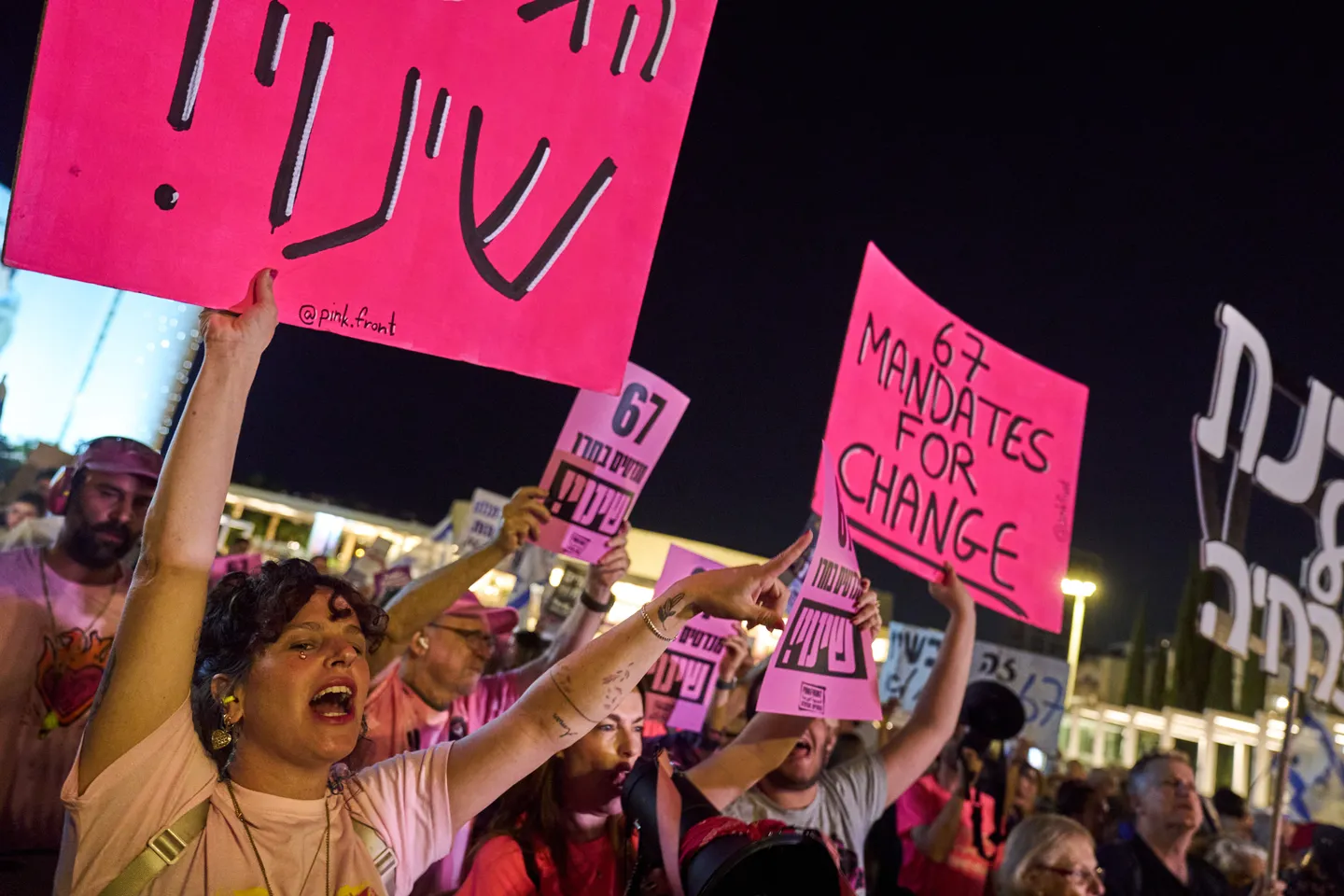
Hundreds of Israelis took to the streets over the weekend to demand that Arab parties be included in the coalition that will succeed Benjamin Netanyahu, according to reports carried by Haaretz and The Times of Israel. Around 300 demonstrators gathered in the Jezreel Valley in northern Israel, while several hundred more assembled in Habima Square in central Tel Aviv with the same demand: that the incoming administration formally end the outgoing prime minister's rule and bring Arab factions into government.
The timing was pointed. The rallies came shortly before President Isaac Herzog announced he would task Yashar party leader Gadi Eisenkot with building the next administration, Ynet reported. The election left factions opposed to Netanyahu holding 67 of the Knesset's 120 seats, including 19 across the two Arab Lists, against 53 for Netanyahu-aligned parties. Protesters in Tel Aviv carried placards in Arabic and Hebrew reading, "67 seats. Let's take a new path," and chanted, "Without partnership, there is no peace," alongside demands for an end to "divide and rule" and for "freedom and equality for all." The grassroots movement Standing Together, which advocates Jewish-Arab political equality, took an active part.
The arithmetic is the story. Most mainstream opposition leaders continue to resist relying on Arab factions, according to the reports. Without them, the traditional opposition commands only 48 seats, well short of the 61 needed to govern. That leaves the anti-Netanyahu majority dependent on parties whose inclusion many of its own leaders have so far refused to contemplate. The demonstrators are, in effect, asking those leaders to accept the consequence of the vote they have just won.
The rallies also carried a civil-liberties dimension. Demonstrators demanded the release of journalist Abd Abu Shahadeh, whom Israeli media reported was arrested on Wednesday on suspicion of contact with a foreign agent following a reporting trip to Doha to interview former Knesset member Azmi Bishara. The case sits awkwardly alongside the call for partnership: a coalition built on inclusion would face immediate questions about the treatment of Arab journalists and politicians within Israel itself.
What is not yet known is how Eisenkot will approach the task, whether the Arab Lists would join a coalition or support one from outside, and what conditions either side would set. The reports give no indication of the negotiations' substance, and the rallies, while symbolically significant, number in the hundreds rather than the thousands. Whether the 67-seat majority becomes a governing coalition or fractures on the question of Arab participation is the central unresolved question of Israeli politics. The protesters have made their preference clear; the party leaders have not.