Striking them signals an intent to impose costs on the symbols of Saudi financial standing, not merely on military positions.
Houthi forces in Yemen struck the PIF Tower in Riyadh with cruise missiles on Thursday, according to RT, blowing out windows and twisting the metal facade of Saudi Arabia's second-tallest skyscraper and the headquarters of the kingdom's sovereign wealth fund. Saudi state media reported damage to eight floors of the 80-storey building, with the metal facade bent and twisted. No injuries were reported, though the King Abdullah Financial District was closed after the attack.
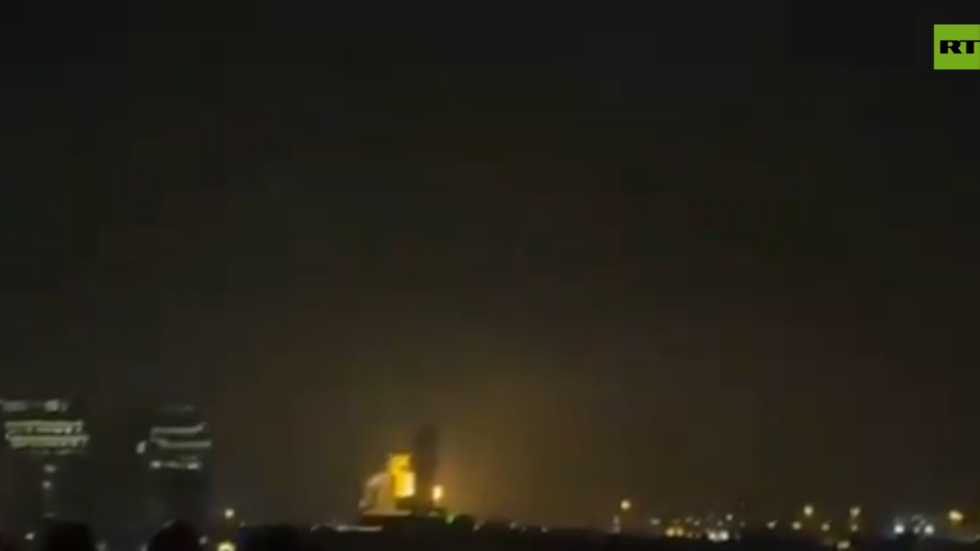
Houthi military spokesman Yahya Saree said in a statement that the group's armed forces had targeted Khalid International Airport and the financial centre in Riyadh with a large number of cruise missiles, claiming precise, direct hits. He described the strike as a response to what he called the Saudi enemy's targeting of civilian objects in Yemen. Video footage purportedly captured the moment a missile struck the tower, which was erected by the Public Investment Fund in 2021 and is the tallest structure in Riyadh, behind only the Clock Tower in Mecca nationally.
The attack follows a similar strike less than two weeks earlier, when Houthi forces damaged Riyadh's Aramco Tower, the headquarters of the state-owned oil giant, with drones and cruise missiles. The Saudi government dismissed that attack as causing only minor damage, despite photos and videos showing destroyed windows and apparent structural damage. Social media images cited in the report, alongside Saudi civil defence photographs, showed blown-out windows and localised damage to the PIF Tower's exterior steel diagrid lattice, with most of the building appearing structurally intact.
The significance lies less in the physical damage than in the targets chosen. Both buildings are emblems of Saudi economic power: the Aramco Tower houses the national oil company, and the PIF Tower sits at the centre of the kingdom's sovereign wealth strategy and its Vision 2030 diversification programme. Striking them signals an intent to impose costs on the symbols of Saudi financial standing, not merely on military positions. The closure of the King Abdullah Financial District, even briefly, carries its own commercial cost.
What remains unconfirmed is the scale and accuracy of the claimed strike on Khalid International Airport, which the Houthi statement mentions but Saudi state media accounts cited in the report do not address. The number of missiles launched, their flight path and the extent of any air defence response are not described. The report also does not say whether the Saudi government has acknowledged the PIF Tower strike beyond the damage figures attributed to state media, nor what response Riyadh may be preparing. The claim that the strikes were retaliation for Saudi attacks on civilian objects in Yemen is the Houthis' own framing and has not been independently verified.
For now, the pattern is clear: two strikes on high-profile Saudi financial targets in under a fortnight, each met with official characterisations of limited damage. Whether that characterisation holds, and whether the kingdom adjusts its air defences or its posture in Yemen, will shape how this escalation is read across the Gulf.