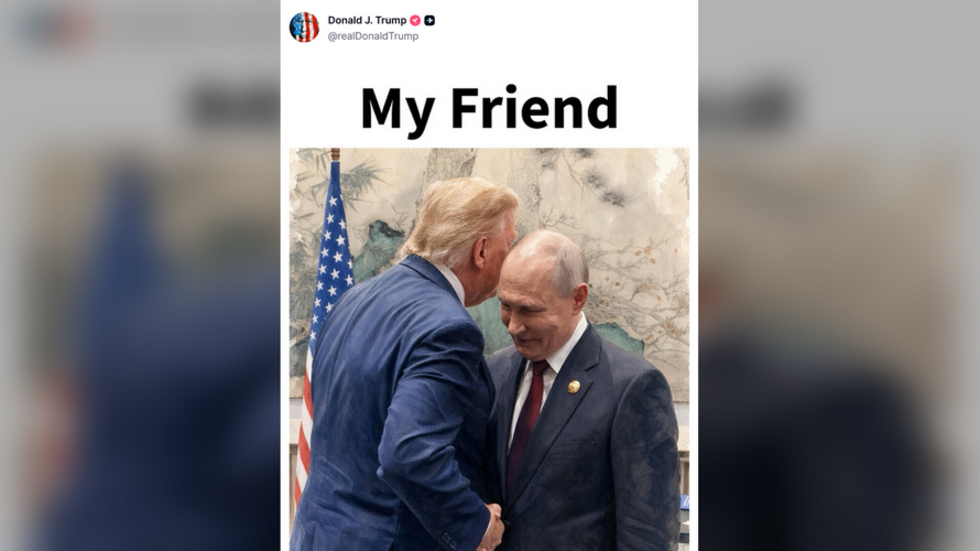
When Beijing, Washington and Moscow keep communication channels open, the entire international system receives an essential safety mechanism to cushion shocks and limit the consequences of crises
An Egyptian economist has called for coordinated dialogue among Russia, the United States and China, arguing that the confrontation between the great powers is imposing direct costs on developing economies. Ahmed Mustafa, director of the Center for Asian Studies and Translation in Egypt, made the case to TASS ahead of a scheduled meeting of the leaders of the three countries in Shenzhen. According to the report, Vladimir Putin, Xi Jinping and Donald Trump are due to meet on Thursday, in what TASS describes as the eighth face-to-face contact between the Russian and American presidents across Trump's two presidential terms.
Mustafa's argument rests on the claim that geopolitical rivalry is felt in the global South as a material burden rather than a distant dispute. He told TASS that for developing economies in Asia, Africa and Latin America, confrontation among the great powers "directly results in an increase in the cost of imports, stricter financing conditions and disruption of supply chains." On that reading, the countries of the global South see trilateral dialogue as a mechanism for international stability, joint development and, in his words, their economic survival.
The expert framed open communication channels as a form of insurance for the wider international system. "When Beijing, Washington and Moscow keep communication channels open, the entire international system receives an essential safety mechanism to cushion shocks and limit the consequences of crises," he said. He argued that even limited agreements on strategic stability could improve conditions for attracting investment to developing countries, citing the principle of the inadmissibility of nuclear war and efforts toward political settlements in Eastern Europe and the Middle East. Such steps, he said, would reduce the geopolitical risk premium that hinders foreign direct investment into emerging markets.
Energy is the second pillar of his case. Mustafa noted that Russia, the United States and China play a key role in the global energy market, with interests tied to the security of maritime communications and supply routes. Coordination among the three, he argued, could prevent the price spikes whose main burden falls on developing energy importers. He also pointed to the need for constructive restructuring of sovereign debt and stable financing of international trade, problems he said require coordinated action by the largest bilateral creditors and multilateral financial institutions.
His expectations for the Shenzhen meeting are deliberately modest. "The world needs practical, feasible steps from the meeting in Shenzhen, not so much large-scale ideological deals or ostentatious political agreements," he said. The report does not set out an agenda for the talks, confirm what the three leaders intend to discuss, or indicate whether energy, debt or strategic stability will feature. It also gives no indication of what the global South's governments themselves have asked for. The value of the argument lies in its framing: if the costs of great-power rivalry fall hardest on economies with the least capacity to absorb them, then the case for talking is made not in Moscow, Washington or Beijing, but in Cairo, Nairobi and Jakarta.