A public dispute over causation is a poor foundation for that trust.
Israel has pushed back against criticism from the Board of Peace, the body established under President Donald Trump's 20-point plan for Gaza, after the panel said Israeli restrictions on humanitarian deliveries had "significantly delayed" the decommissioning of weapons and the transfer of power from Hamas to a technocratic Palestinian administration. According to RT, the Board of Peace nevertheless joined Israel in accusing Hamas of failing to honour its own commitments.
In a statement issued on Tuesday, Netanyahu's office blamed Hamas for the delays, saying the group "steals from Gazans to arm itself" and "systematically divert[s] humanitarian aid to military infrastructure while the United Nations and UNRWA turn a blind eye." The statement added that Hamas had "not surrendered a single weapon" and continued to hold the people of Gaza "hostage to its terrorist rule." It also reaffirmed that Israel is "working in close cooperation with the United States and the Board of Peace" and remains committed to Trump's plan.
The exchange matters because it shows the two parties most central to the plan's implementation disagreeing in public over why it is behind schedule. The Board of Peace's language attributes delay to Israeli restrictions on aid; Israel's attributes it to Hamas diversion and disarmament refusal. Both may be true in part, but the plan's sequencing depends on each side trusting the other's compliance. A public dispute over causation is a poor foundation for that trust.
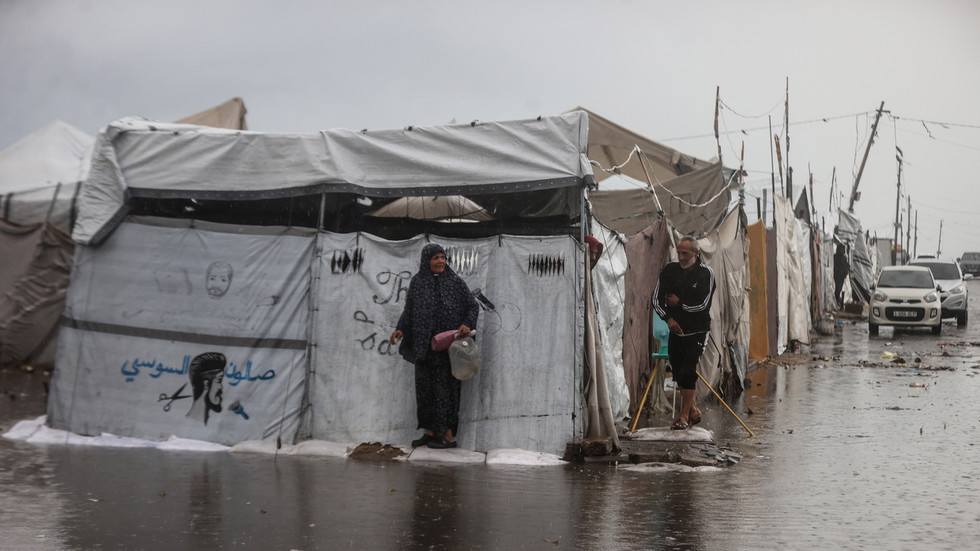
The humanitarian picture is also contested. According to the report, UNICEF has accused Israel of blocking a $3 million project to repair Gaza City's Sheikh Radwan stormwater basin, warning that sewage-contaminated floodwaters could inundate residential areas and endanger displaced families. Israel's statement does not address the UNICEF allegation directly, instead framing the aid problem as one of Hamas diversion.
Several things are not yet known. The report does not say what specific restrictions the Board of Peace had in mind, whether they have since been eased, or what evidence underpins either side's account of aid diversion. It gives no timeline for the decommissioning of weapons or the handover to a technocratic administration, and no indication of whether the Board of Peace's criticism was coordinated with Washington. The report also does not say whether the Board of Peace responded to Netanyahu's statement, or whether the stormwater project remains blocked.
What the exchange does establish is that the peace plan's machinery is now operating in the open, with its own appointed body willing to name Israeli restrictions as a cause of delay. For a framework that depends on American brokerage, that is a notable development. Whether it strengthens accountability or simply gives both sides a public forum for blame is the question the coming weeks will answer.