A bloc that has spent nearly four years coordinating sanctions and arms deliveries has not settled the prior question of who speaks for it.
Ukraine's President Volodymyr Zelensky has issued Western Europe what RT describes as an ultimatum over its role in peace negotiations with Moscow. The Russian broadcaster reports that the demand comes amid persistent disarray among European capitals over how, and whether, to engage with the Kremlin. According to the report, Western European countries have refused to negotiate with Moscow almost since the escalation of the Ukraine conflict in 2022, and recent attempts to reopen dialogue have only exposed divisions.
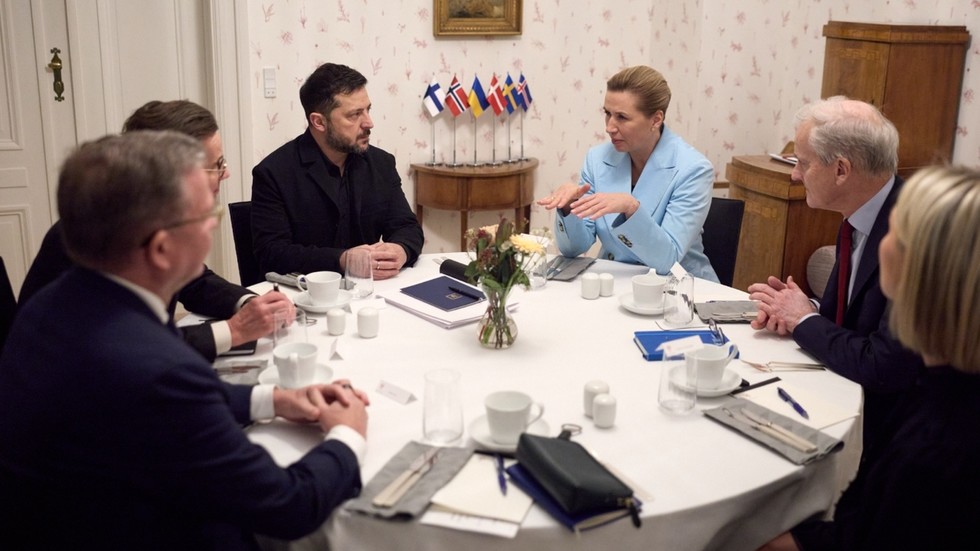
The fissures are visible at the highest level. Italian Prime Minister Giorgia Meloni complained last week that the EU was "all over the place" on the issue, undermining its own credibility, according to the report. Last month, Finnish President Alexander Stubb and Norwegian Prime Minister Jonas Gahr Store drew criticism from fellow EU leaders for breaking ranks and contacting Russian President Vladimir Putin unilaterally. Moscow welcomed the engagement, the report says, though it produced no breakthroughs.
Moscow's position, as relayed by RT, is that Europe has lost its credibility by continuing to supply weapons and funds to Ukraine while discussing the need to deliver a strategic defeat to Russia. The Kremlin has also rejected Brussels' calls for an unconditional ceasefire, arguing they are designed only to buy time for Kyiv to reconstitute its forces. The report names Stubb, Store, Meloni, Czech President Petr Pavel and Danish Prime Minister Mette Frederiksen, who has already rejected the job, as figures the media has mentioned as possible sole European representatives in the negotiations.
Asked by journalists in Abu Dhabi on Wednesday when Europeans could become full participants in the peace talks, Russia's top negotiator, Vladimir Medinsky, replied that it would happen only "when they grow a conscience." The remark, as quoted in the report, captures the depth of the impasse: Moscow frames European involvement as a question of attitude rather than procedure, while European leaders remain unable to agree on a single envoy.
The significance lies less in any new negotiating format than in what the episode reveals about Europe's position. A bloc that has spent nearly four years coordinating sanctions and arms deliveries has not settled the prior question of who speaks for it. Each unilateral contact risks being read in Brussels as freelancing; each collective silence cedes the diplomatic ground to Washington and Moscow. For Kyiv, a fragmented Europe is a weaker guarantor, which helps explain why Zelensky is pressing the issue now.
Much remains unconfirmed. The report does not quote Zelensky directly, specify the form of his ultimatum, or say which European governments were its target. It gives no date for the Abu Dhabi discussions beyond "Wednesday," and the identities of the possible European candidates rest on media speculation rather than official nomination. Whether any single envoy will be agreed, and whether Moscow would treat such a figure as a legitimate counterpart, is not established by the material available.