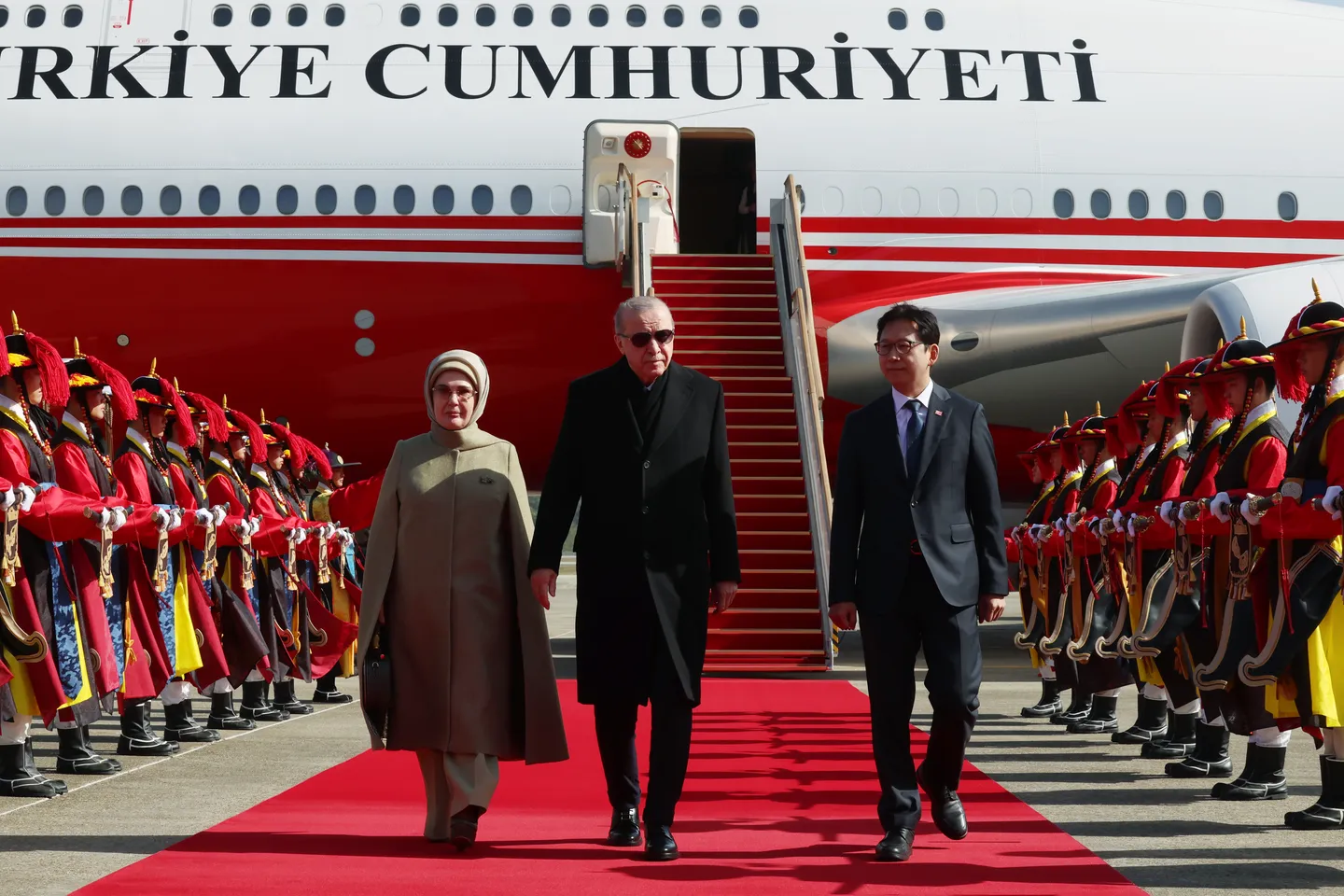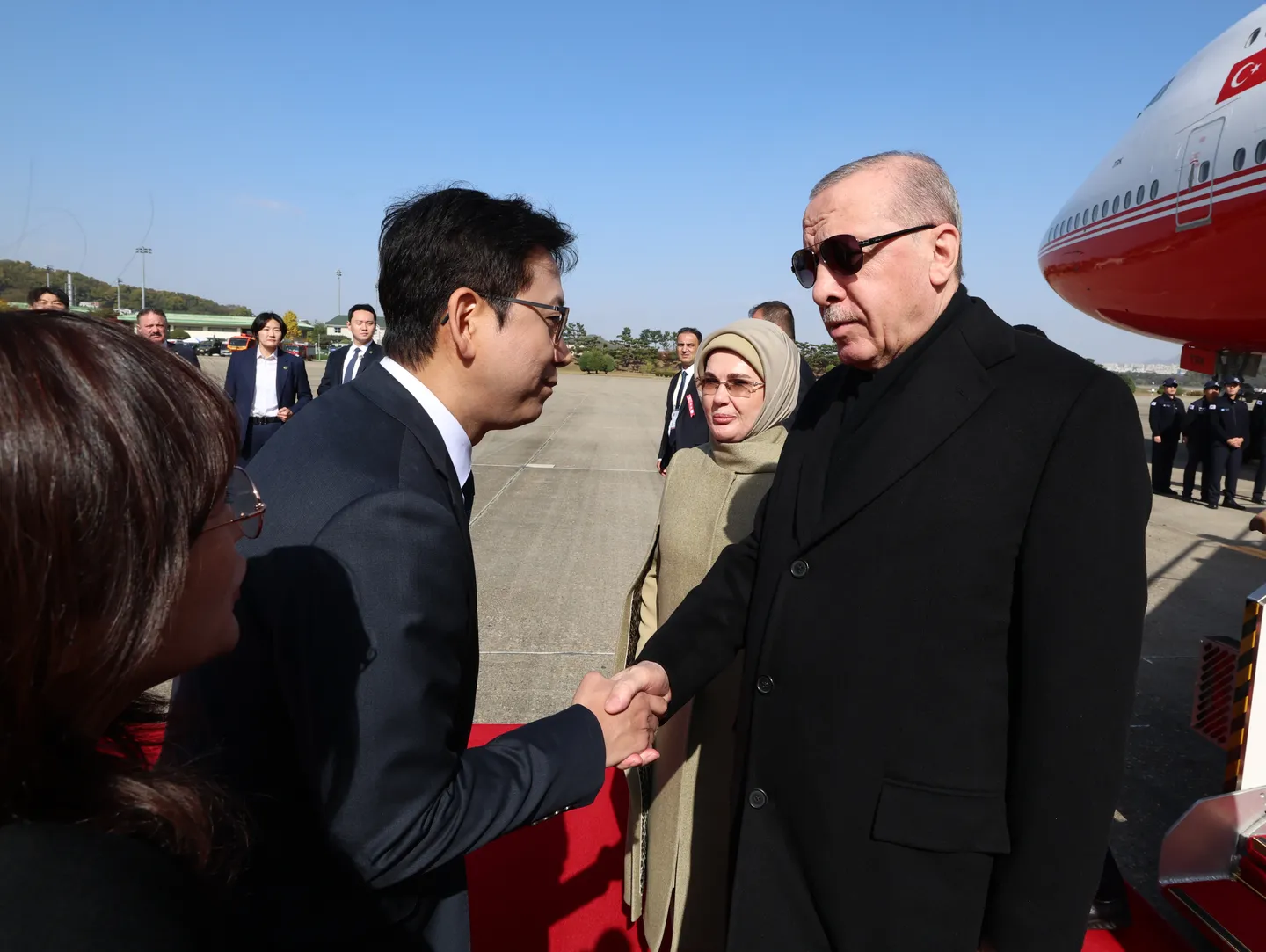
The visit is a statement of intent, not a signed package.
Turkish President Recep Tayyip Erdogan has set out an ambitious agenda for deepening Türkiye's partnership with South Korea, according to TRT World, pairing a $15 billion bilateral trade target with proposed cooperation in nuclear energy, defence, advanced technology and transport infrastructure. The agenda was outlined in an interview with South Korea's Yonhap News Agency ahead of a state visit to Seoul, timed to precede the 70th anniversary of diplomatic relations next year.
The trade figures underline the scale of the task. Erdogan said Türkiye exported roughly $1.14 billion in goods to South Korea in 2025 while importing $10.26 billion, an imbalance of some nine to one. Ankara wants to narrow that gap, with Korean investment encouraged in automotive manufacturing, batteries, semiconductors, robotics, biotechnology, medical equipment and renewable energy. He cited Hyundai's automotive operations and POSCO's steel investments as existing anchors, and welcomed the start of electric vehicle production at Hyundai's Izmit facility.
Nuclear energy is the most concrete item on the table. Erdogan described South Korea as a strong potential partner for Türkiye's planned Sinop plant, saying talks had advanced since a memorandum of understanding signed last year. Preliminary feasibility work has been conducted with Korea Electric Power Corporation, with assessments continuing on technical and economic conditions and the investment model. Erdogan was careful to say the final decision would rest on generation costs, financing and the project's wider benefits to the Turkish economy. No commitment has been announced, and the terms of any eventual deal remain unconfirmed.
Defence cooperation is also gathering pace. Erdogan highlighted unmanned aerial vehicles and engine technologies, and welcomed reported Korean interest in the PD170 engine developed by Turkish Engine Industries, used in Türkiye's ANKA and AKSUNGUR aircraft. He pointed to the Altay main battle tank as an earlier example of joint work. The reported interest is a signal of confidence in Turkish engineering, though the reports themselves have not been detailed in the material available.
Beyond the bilateral file, Erdogan used the interview to press a wider diplomatic case. On Gaza, he welcomed the ceasefire but said life had not returned to normal for Palestinians, calling for obstacles to aid to be removed and reconstruction accelerated. He welcomed South Korean President Lee Jae-myung's statements on Gaza and suggested Turkish experience in construction and infrastructure could complement Korean strengths in technology, engineering and financing, while insisting Palestinians must determine Gaza's future and rejecting any plan that would displace them. He also condemned attacks on civilians and airports linked to tensions involving Yemen and Saudi Arabia, and called for a political settlement in Yemen.
On transport, Erdogan framed Türkiye's corridors as a hedge against disruption in the Strait of Hormuz and the Bab al Mandab, citing the revival of the Hejaz Railway, the Middle Corridor across the Caspian and the Development Road from Iraq's Grand Faw Port. Korean firms, he said, could contribute rail infrastructure, signalling, logistics and intelligent transport systems. What remains unclear is how far Seoul will go in each area; the visit is a statement of intent, not a signed package.