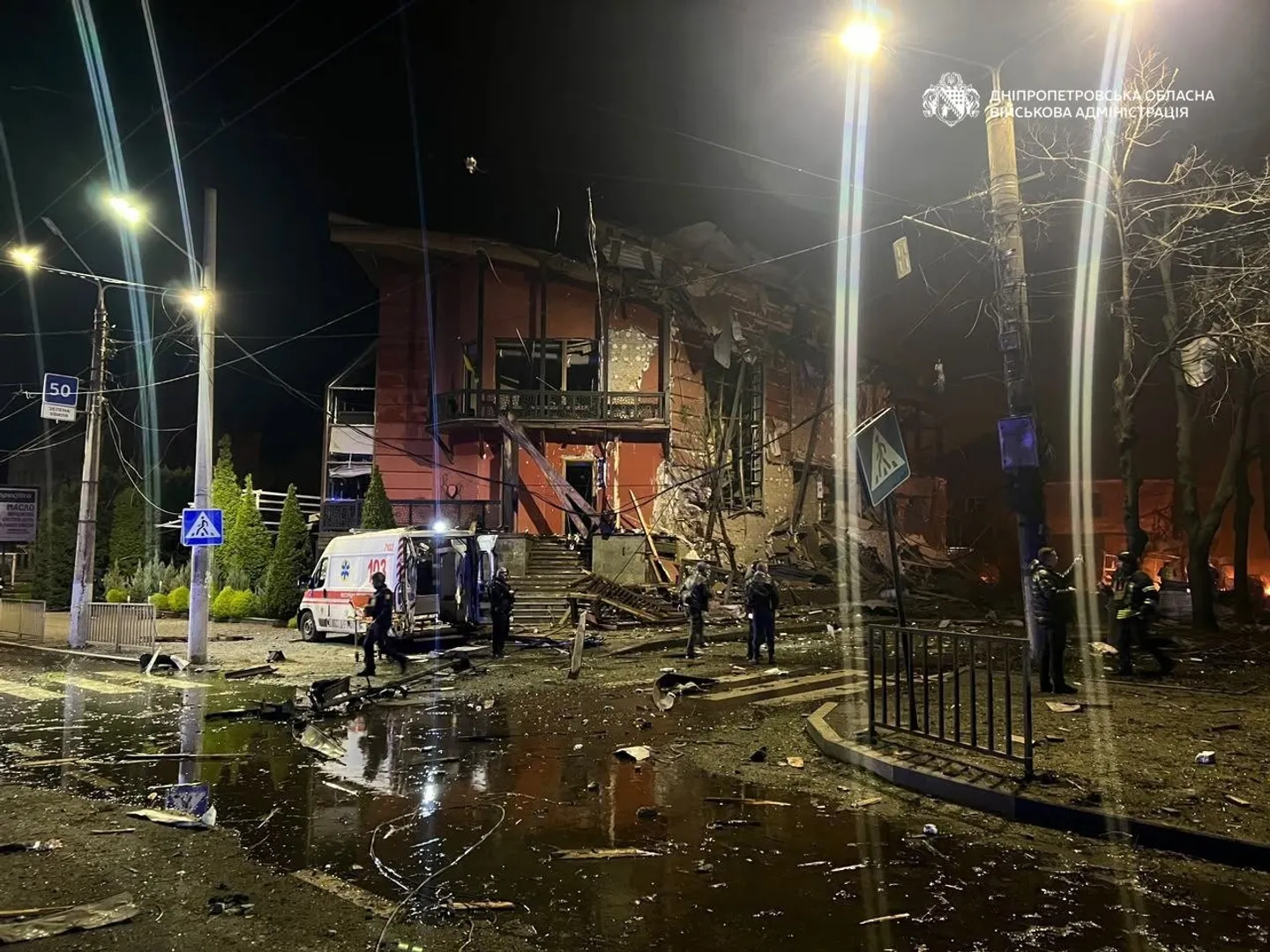
The damage listed by the governor is concentrated on civilian and civic infrastructure, including a library, a medical college and a trauma centre.
A Ukrainian drone attack on the city of Kursk injured eleven people, among them a 12-year-old child, according to the regional governor, Alexander Khinshtein, as reported by TASS. The strike, which the Russian state news agency describes as an attack on the regional capital, caused damage across the city centre and prompted a legal and administrative response from regional authorities.
According to the TASS account, falling debris and the blast wave damaged an apartment building, private houses, the regional arbitration court building, the Central City Library, a public services centre and the Kursk Medical College. The facade and windows of an emergency trauma centre were also damaged, and several cars caught fire while others sustained damage. Khinshtein said he was personally overseeing the situation and that residents of the damaged buildings would be accommodated in temporary shelters if necessary. Educational institutions were advised to follow missile-alert procedures, with afternoon classes recommended to be held remotely where possible.
The regional prosecutor's office is overseeing the protection of the rights of civilians injured in the attack, following instructions from regional prosecutor Dmitry Burko, according to the office's press service. First Deputy Regional Prosecutor Sergey Lubenets and Sergey Papanov, prosecutor of Kursk's Central Administrative District, have gone to the scene. The Main Investigative Directorate of the Russian Investigative Committee has opened a criminal case over a terrorist attack under Article 205 of the Russian Criminal Code, and investigators say they are working to establish the circumstances and to identify the models and specifications of the weapons used and the specific members of Ukrainian armed formations involved.
The report matters for several reasons. Kursk has been a focal point of the wider war since Ukrainian forces crossed into the region, and strikes on the city itself carry symbolic as well as practical weight. The damage listed by the governor is concentrated on civilian and civic infrastructure, including a library, a medical college and a trauma centre, which is likely to be emphasised by Russian officials seeking to characterise Ukrainian tactics. The opening of a criminal case under the terrorism article is a standard Russian legal response and signals that the investigation will be framed in those terms.
What is not yet known is substantial. The TASS account does not specify how many drones were involved, what type they were, or how many were intercepted. It gives no breakdown of the severity of the eleven injuries, and no independent confirmation of the damage or casualty figures has been provided in the material. The Ukrainian side has not commented in the report, and its account of the incident, including any claim about the targets, is absent. The identities of those allegedly involved, which Russian investigators say they are working to establish, have not been made public. Readers should treat the details as official Russian claims pending corroboration.
The immediate implications are local and humanitarian: shelter for displaced residents, disruption to schooling and the treatment capacity of a damaged trauma centre. The broader implication is that strikes on Russian regional capitals continue to impose civilian costs and to feed a legal and rhetorical escalation on the Russian side. Whether this attack marks a change in the tempo or targeting of Ukrainian drone operations cannot be judged from a single official brief.