A catalogue of eleven call types is a substantial advance in describing a repertoire, and the confusion experiments give it experimental weight.
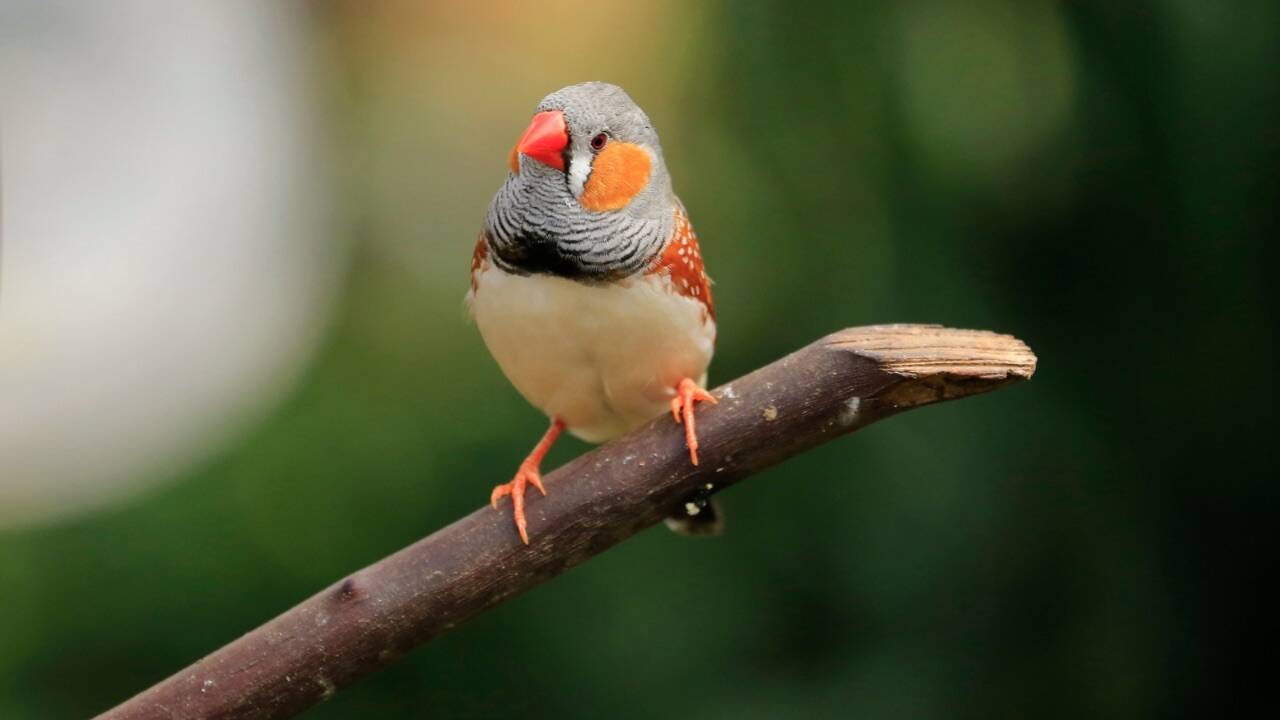
A scientist at the University of California, Berkeley, has spent more than a decade listening to zebra finches, and the result is what the Times of India describes as the first acoustic catalogue of their calls. Dr Julie Elie, an animal behaviour researcher and associate project scientist, identified eleven distinct types of vocalisation used in different social situations, according to the report. The birds are small, sociable songbirds native to Australia, and the calls in question are not the elaborate songs of males but the everyday sounds used to signal hunger, distress, danger, aggression or the simple need to stay in contact.
The method matters as much as the catalogue. According to a UC Berkeley report dated 4 November 2025, Elie observed the birds in Australia before continuing in the laboratory, examining thousands of recordings and assembling a collection of roughly 8,000 calls from dozens of birds. By matching sounds to behaviour, she identified patterns between what the birds produced and the situations in which they produced it. A paper published in the journal Science on 18 September 2025 reports that the finches appear to organise their calls by meaning, holding a mental representation of what different vocalisations communicate.
The evidence for that claim comes partly from the birds' errors. In experiments designed to test whether they could distinguish between call types rather than merely react to familiar sounds, the finches learned the categories. They were more likely to confuse calls carrying similar meanings even when the sounds differed, and less likely to confuse acoustically similar calls that served different purposes. They sometimes mistook two contact calls used to maintain communication over different distances, but were less likely to confuse a contact call with an alarm call. That pattern is the interesting part: it suggests the birds sort sounds by function rather than by acoustic resemblance alone.
Recognition of the work has followed. In June 2026 Elie received the Coller-Dolittle Prize for Two-Way Interspecies Communication, a US$100,000 award, according to The Guardian's report of 26 June 2026. She believes birds could be among the first animals with which humans achieve a meaningful vocal exchange, and the coverage has suggested such an exchange might come within a decade. She is also careful about what that would mean. Identifying individual calls is only one part of communication; researchers would still need to understand how calls are combined, how birds respond to one another, and how body movement ties into the vocal exchange.
That caution is the correct note. A catalogue of eleven call types is a substantial advance in describing a repertoire, and the confusion experiments give it experimental weight. It is not a grammar, and it is not a conversation. The claim that humans could hold a meaningful vocal exchange with another species within ten years is a projection attributed to the researcher, not a finding reported in the Science paper. Nor does the material establish how far the results generalise beyond zebra finches, or whether the meanings identified in captivity hold in the wild. What is confirmed is narrower and still notable: a decade of recorded calls, a tested set of categories, and evidence that the birds themselves treat those categories as real.