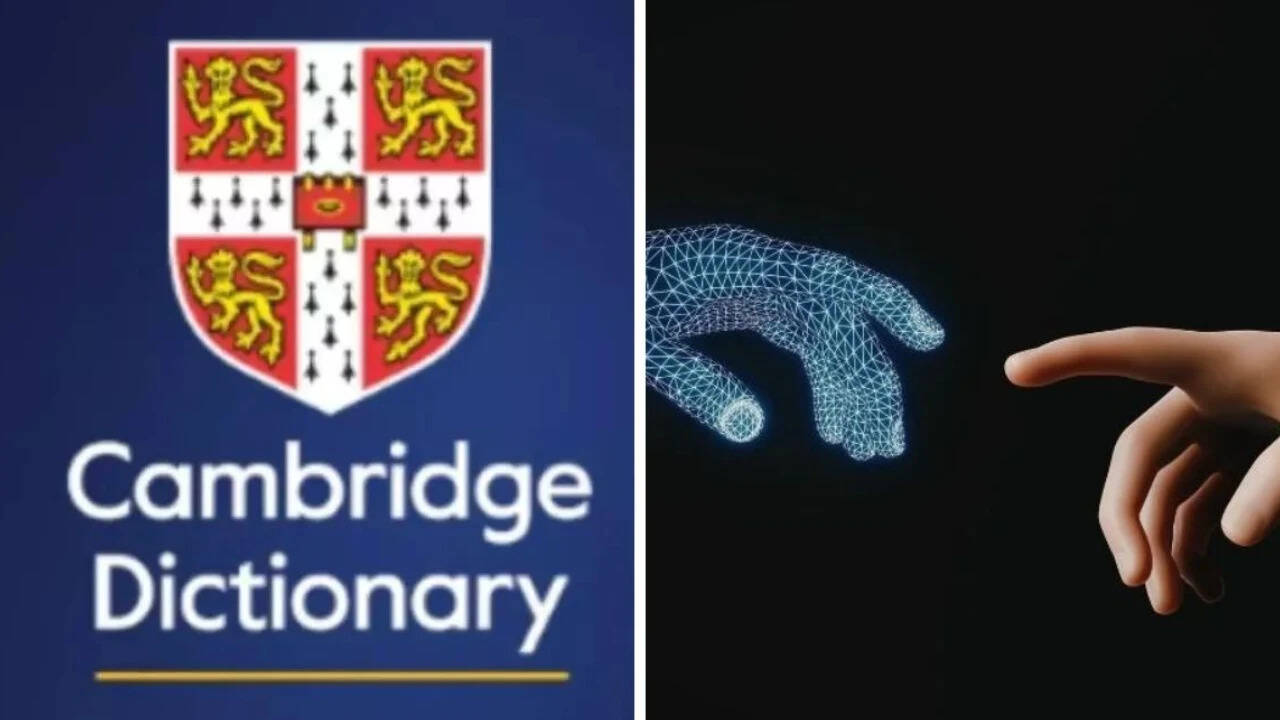
AI is changing how we talk about being human.
Cambridge Dictionary has named "human" its word of the year for 2026, according to a report in the Times of India. The choice is a throwback to the 15th century and, the report says, a backlash of sorts against the way artificial intelligence has blurred the lines between machines and people.
The adjective, derived from the Latin "humanus" and in use since the 1450s, is defined by Cambridge as "having the qualities, faults and feelings that people have, as opposed to gods, animals or machines." Colin McIntosh, the dictionary's lexicographer, said: "AI is changing how we talk about being human." He added that fears about what humans may lose when they outsource their thinking have made people reconsider the extent to which they rely on AI, from top mathematicians to teachers of young children.
Dictionaries typically choose either a novel word or an existing word that has taken on a new meaning. AI has featured heavily in word of the year distinctions across several dictionaries in recent years. Collins chose "AI" itself in 2023, the same year Cambridge picked "hallucinate" in reference to the tendency of AI to fabricate information. Merriam-Webster last year named "slop" its word of the year for low-quality content produced by AI, while Collins went with "vibe coding" for the AI-assisted software development method.
Other contenders for 2026 included "agent," for an AI system that can make decisions and operate without human control, and "analogue," for experiences or objects not involving the internet or digital technology. The shortlist suggests that the vocabulary of the year is being shaped less by new inventions than by the effort to describe what remains distinctively human.
The selection is a cultural marker rather than a policy event, and it carries no direct consequences for regulation or markets. It does, however, illustrate how thoroughly AI has entered everyday language and how anxiety about it is being expressed through the words people reach for. The report does not say how the word was chosen, how many people were consulted, or whether the dictionary considered other candidates beyond those named. Those details are not yet known.
What the choice does confirm is that the debate over AI is no longer confined to technology sections. It has become a question of identity, and dictionaries are now recording that shift one word at a time.