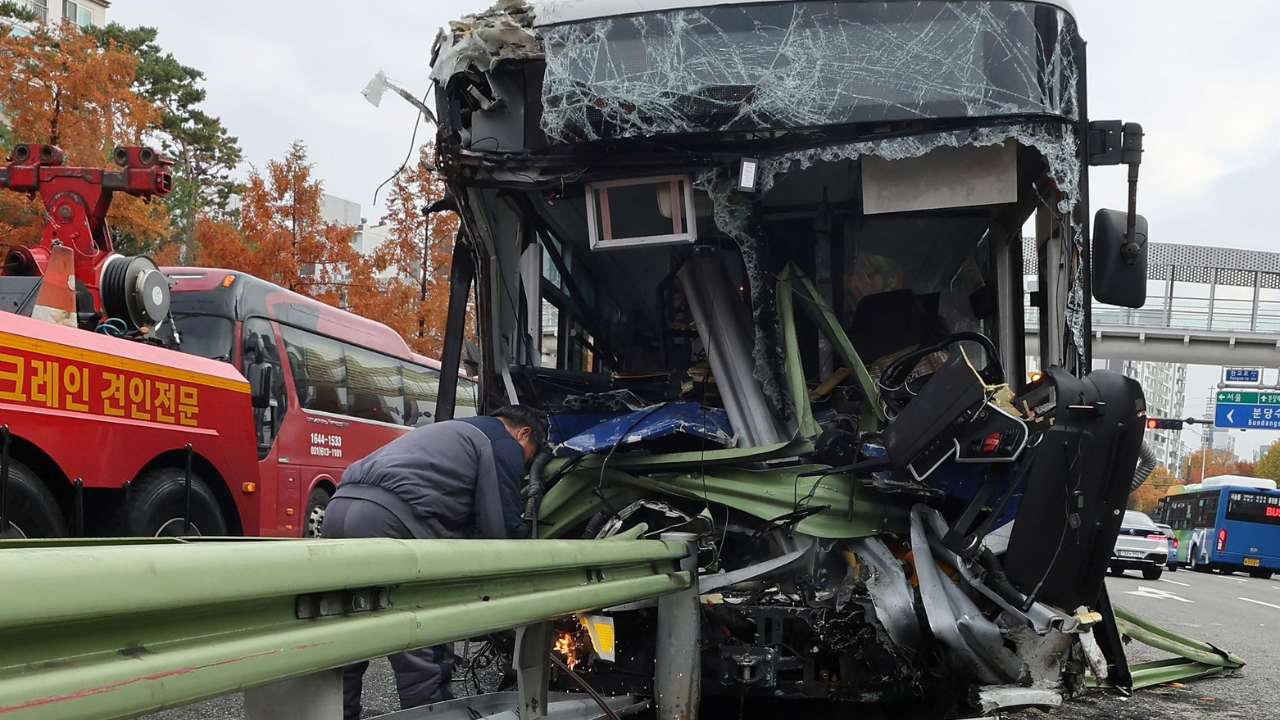
For now, the confirmed facts are narrow: a bus struck traffic at a signal in Bundang on Wednesday morning, 32 vehicles were involved, and 57 people were injured, nine of them seriously.
A bus crashed into multiple vehicles in Bundang district, south of Seoul, on Wednesday morning, injuring 57 people, according to Reuters, citing South Korea's fire agency. Nine of the injured were reported to be seriously hurt and 48 suffered minor injuries. The National Fire Agency said the bus hit several vehicles, including those waiting at a traffic signal, at around 7.34am local time, before crashing into a median barrier.
The agency, citing a witness, put the time of the initial impact at about 2234 GMT on Tuesday. In all, 32 vehicles were involved, according to the agency: four buses, a truck and 27 passenger cars. Bundang is part of Seongnam city, a large urban centre in the Seoul metropolitan area.
The casualty figures are the most concrete element of the account so far, and they are substantial for a single road collision. That nine people were seriously injured suggests the impact was severe, and the involvement of a truck and four buses alongside 27 cars points to a dense flow of traffic at the moment of the crash. The report does not say how fast the bus was travelling, what caused it to strike the waiting vehicles, or whether the driver was among those hurt.
Those gaps matter. Early reports of mass-casualty road incidents typically rest on witness accounts and initial fire service tallies, and details can shift as investigators work. The source material does not identify the operator of the bus, the condition of the driver, or whether mechanical failure, human error or another factor is suspected. It also gives no indication of the road layout beyond the presence of a median barrier, and no information on the weather or traffic conditions at the time.
What the report does establish is the scale of the emergency response implied by the figures. Fifty-seven casualties across 32 vehicles would have required ambulances, fire crews and traffic management at the height of the morning commute, and the serious injuries will draw scrutiny of how quickly and effectively the injured were treated and transported.
South Korea's urban corridors carry very heavy volumes of buses and private cars, and incidents involving multiple vehicles tend to prompt reviews of signal timing, bus operating practices and barrier design. Whether this crash leads to any such review is not yet known. For now, the confirmed facts are narrow: a bus struck traffic at a signal in Bundang on Wednesday morning, 32 vehicles were involved, and 57 people were injured, nine of them seriously. The cause, and any question of responsibility, has yet to be established.