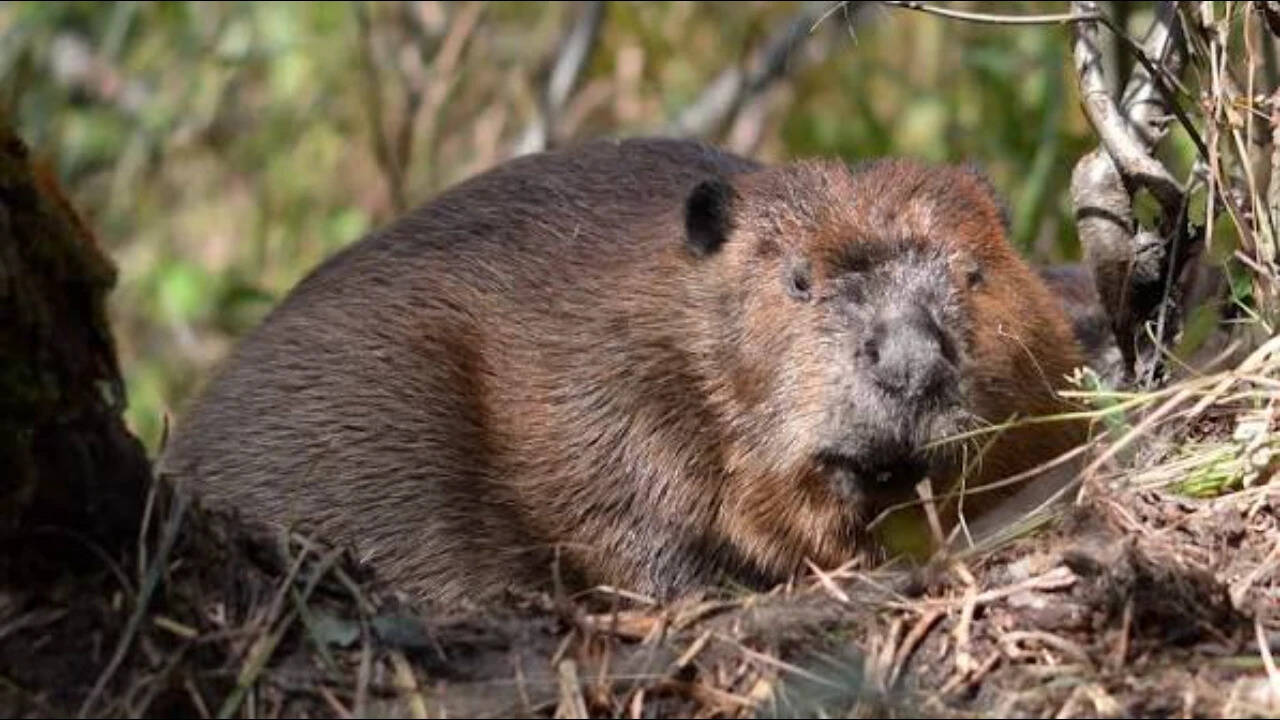
The beavers did not make every category of aquatic insect more plentiful; they altered the conditions in which different organisms lived and fed.
Beavers returned to an English estate and set about reshaping the stream without a plan. According to a report in the Times of India, a study by the University of Liverpool found that reintroducing the animals to an estate in Essex transformed the surrounding waterway within a year, with higher oxygen levels, a striking reduction in nitrate concentrations downstream and an increase in terrestrial insects. Some of the changes were detectable at least a kilometre from the dams.
The animals in question are Eurasian beavers, a species native to Britain that was hunted to extinction in England around 400 years ago for its fur, meat and castoreum. Researchers from the University of Oxford and the University of Essex, including Oliver John Sworder and Michelle Jackson, studied enclosures at Spains Hall Estate. They collected data on water quality, algae and invertebrate populations for a year before the beavers arrived in 2023, then repeated the observations a year later. The findings were published alongside an openly accessible dataset on Dryad on 3 November 2026.
The before-and-after design gives the work more weight than a simple comparison between streams. The most noticeable difference was an increase in terrestrial invertebrates, both in abundance and species richness. Freshwater invertebrates told a more complicated story: there was no statistically significant increase in overall richness, abundance or biomass, though certain indicator groups were affected and the composition of feeding groups changed. The beavers did not make every category of aquatic insect more plentiful; they altered the conditions in which different organisms lived and fed.
The water itself produced the most striking result. Dissolved oxygen rose throughout the stream, a change of consequence for fish, insect larvae and other freshwater animals. Nitrate concentrations increased around the dams but were almost completely filtered out downstream. Beaver dams slow water movement, allowing sediment and organic material to settle, and the wetlands they create can encourage processes through which nitrogen is absorbed by vegetation or converted into nitrogen gas by microorganisms. The study does not establish that any single mechanism was responsible.
The findings arrive as beavers gradually return to English waterways through managed reintroduction programmes and the expansion of existing populations. In February 2025, the British government announced that wild releases in England would be permitted under licences issued by Natural England. The Essex results suggest that the ecological effects of such releases may travel further than the structures the animals build, though they cover a single estate and a single year, and the report gives no indication of how the changes will hold over longer periods or across other landscapes.