The comparison is suggestive of good outcomes. It is not evidence that the foundation alone produces them.
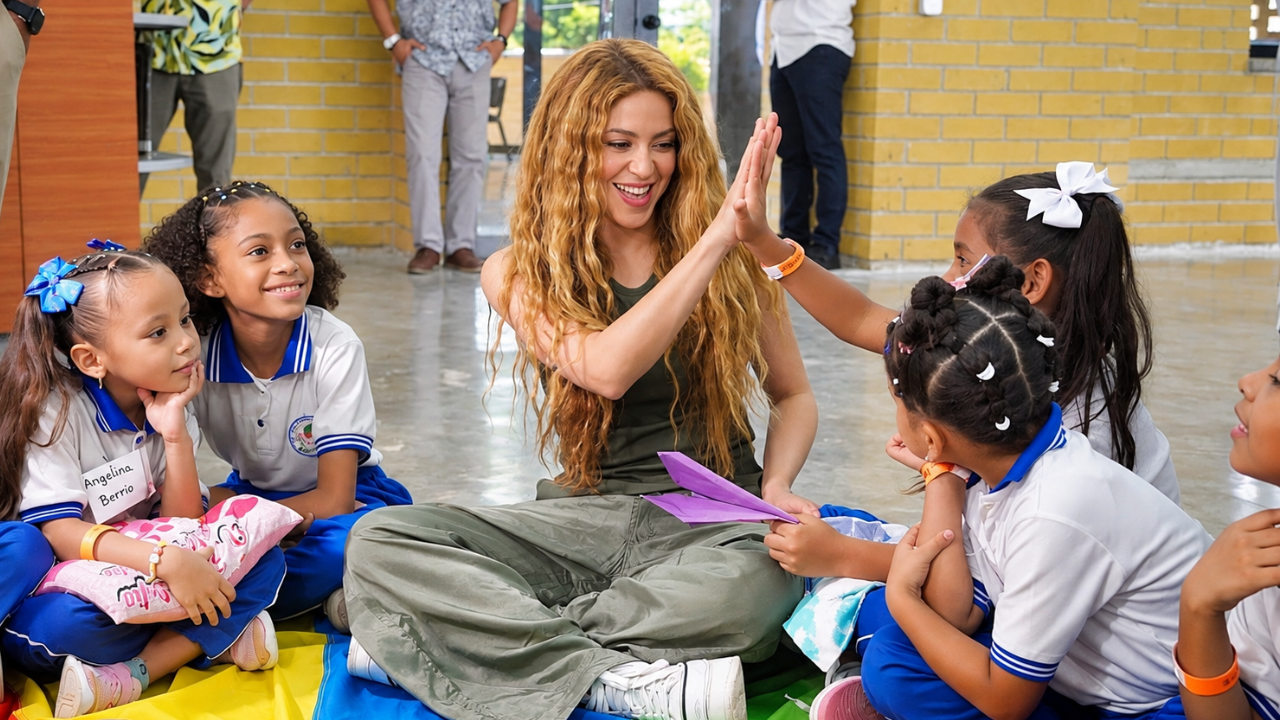
Fundación Pies Descalzos, the Colombian foundation founded by the singer Shakira in 1997, has supported more than 224,000 children and young people, according to its own impact reporting. The Times of India reports that the organisation, also known as the Barefoot Foundation, works in communities facing economic and social barriers to quality education, combining school construction with teacher training and programmes designed to keep students in study.
The headline claim is a comparison. The foundation says eight in ten students graduating from its supported schools continue to higher education, against a national figure of roughly four in ten young people. It attributes the latter to data from Colombia's National Administrative Department of Statistics, DANE. A November 2025 foundation publication put the range at between 70 and 80 per cent, covering technical, technological and university-level programmes.
That gap is striking, and it is worth being precise about what it does and does not show. The figures are the foundation's own, drawn from its impact page, and they compare its graduates with a national average rather than with a matched group of similar students. Selection effects are not addressed in the reporting: schools bearing the foundation's name may draw pupils, families or staff with advantages that the national average does not capture. The comparison is suggestive of good outcomes. It is not evidence that the foundation alone produces them.
The operational detail is more concrete. In 2024 the foundation reported supporting 28,157 students across 24 Colombian municipalities through educational and infrastructure projects, in addition to roughly 6,700 children enrolled in schools bearing its name. It opened a school in the Villas de Aranjuez neighbourhood of Cartagena, designed for about 1,000 students a year, and worked with Colombia's Ministry of National Education on two schools in Riohacha and Uribia in La Guajira. Those facilities served more than 1,500 students, most of them from the Wayúu Indigenous community or migrants from Venezuela, using what the foundation describes as an ethno-educational approach.
Teacher training is the other pillar. The foundation reports more than 12,824 teachers trained, 85 per cent of them women, with 690 participating in 2024. It distributed 10,965 kits, uniforms and reading materials that year, and reports working with 1,131 families and caregivers, 80 per cent of them women. The cumulative figures are inconsistent across its own platforms: the impact page cites more than 224,000 children supported, while the English-language homepage lists more than 282,160, alongside 13,387 teachers trained and more than 300 public schools supported. It also lists 22 schools built or improved in Colombia, two in Haiti and one in Soweto. The reporting does not explain the discrepancy.
In April 2026, Colombia's student-loan agency ICETEX announced a three-year partnership with the foundation covering financial education, wellbeing, career guidance and employability. That move matters beyond the numbers: it ties a private philanthropy to the state machinery of higher-education access, where the barriers for poor and Indigenous students are financial as much as academic. Whether the foundation's model can be replicated at national scale, and whether its graduation advantage survives independent scrutiny, are questions the available material does not answer.