The political consequences may prove more significant than the smuggling allegations themselves.
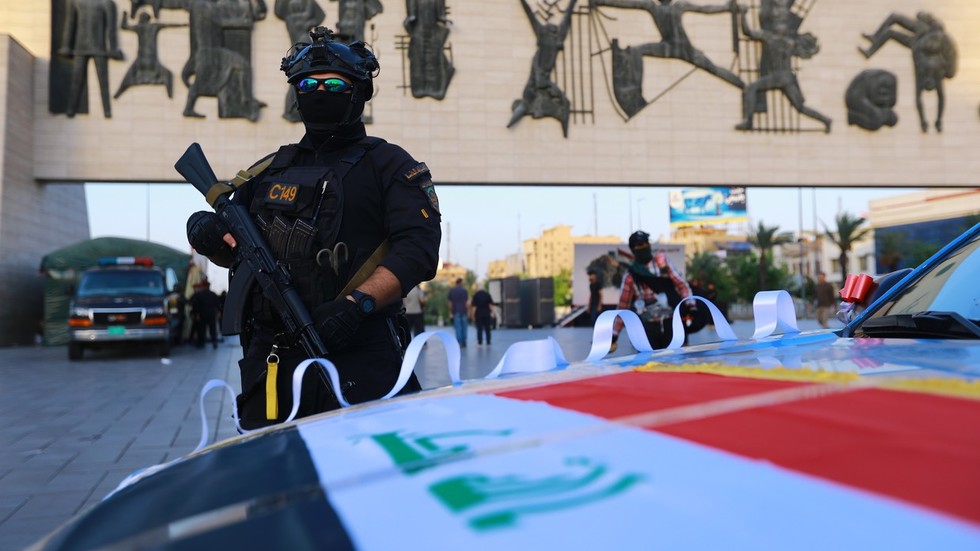
Iraqi authorities are confronting a militia over allegations of oil smuggling, in a confrontation that has divided the country's ruling Shiite alliance and raised questions about Baghdad's authority over armed groups. According to RT World News, the group at the centre of the dispute has denied involvement in oil smuggling and accused investigators of falsifying evidence. It said a facility identified in the inquiry was used to produce fuel for military vehicles and generators rather than to process stolen crude oil.
The standoff has a name and a place. On Tuesday, a senior Kataib Hezbollah figure, Abu Talib al-Saeedi, told AFP that the group would not leave Jurf al-Sakhar, "even over our bodies, our blood," while insisting that fighting with government forces would be avoided. Saeedi warned that Iraq was "now on the threshold of a crisis, and a big crisis, and there are those who want this crisis to grow," accusing al-Zaidi of pursuing a politically motivated confrontation. The report does not specify al-Zaidi's full title or role, though the context suggests a senior official behind the investigation.
Kataib Hezbollah has also accused Baghdad of acting under pressure from the US, Saudi Arabia and the UAE to force its disarmament. That framing turns a law-enforcement question into a question of sovereignty and external influence, and it is the kind of argument that travels well among factions wary of any state campaign against armed groups. The militia's denial and its counter-accusation of falsified evidence mean the factual core of the case — what the facility at Jurf al-Sakhar actually processed, and on whose authority — is contested and, on the material available, unresolved.
The political consequences may prove more significant than the smuggling allegations themselves. According to The National, the standoff has divided the Shiite alliance that brought al-Zaidi to power in May. Several senior politicians, including former Prime Minister Nouri al-Maliki, oppose military intervention and favour a negotiated, gradual handover of the territory. That preference reflects a familiar calculation: a forcible move against a powerful militia risks intra-communal violence that could undo the governing coalition, while a slow handover risks ceding the principle that armed groups answer to the state.
For Baghdad, the dilemma is structural rather than incidental. A government that cannot enforce its writ over oil infrastructure and the armed groups that control territory around it will struggle to convince foreign investors, creditors and neighbours that its promises on revenue and security are credible. Yet a government that moves too quickly against a militia with deep political ties may find its own coalition pulled apart. The reported split between al-Zaidi's camp and figures such as al-Maliki suggests the argument is being had inside the alliance, not only between the state and the militia.
Much remains unconfirmed. The report does not establish the scale of any smuggling, identify the investigators or their evidence, or say what steps Baghdad has taken beyond the inquiry. Nor is it clear whether the government has set a deadline for withdrawal from Jurf al-Sakhar, or what the US, Saudi Arabia and the UAE have actually said. Saeedi's pledge to avoid fighting is a statement of intent, not a guarantee. The next signal to watch is whether the alliance can agree a formula for the territory's handover before pressure from either side makes negotiation impossible.