The braincase has proved particularly important, as it contains clues about the animal's evolutionary relationships.
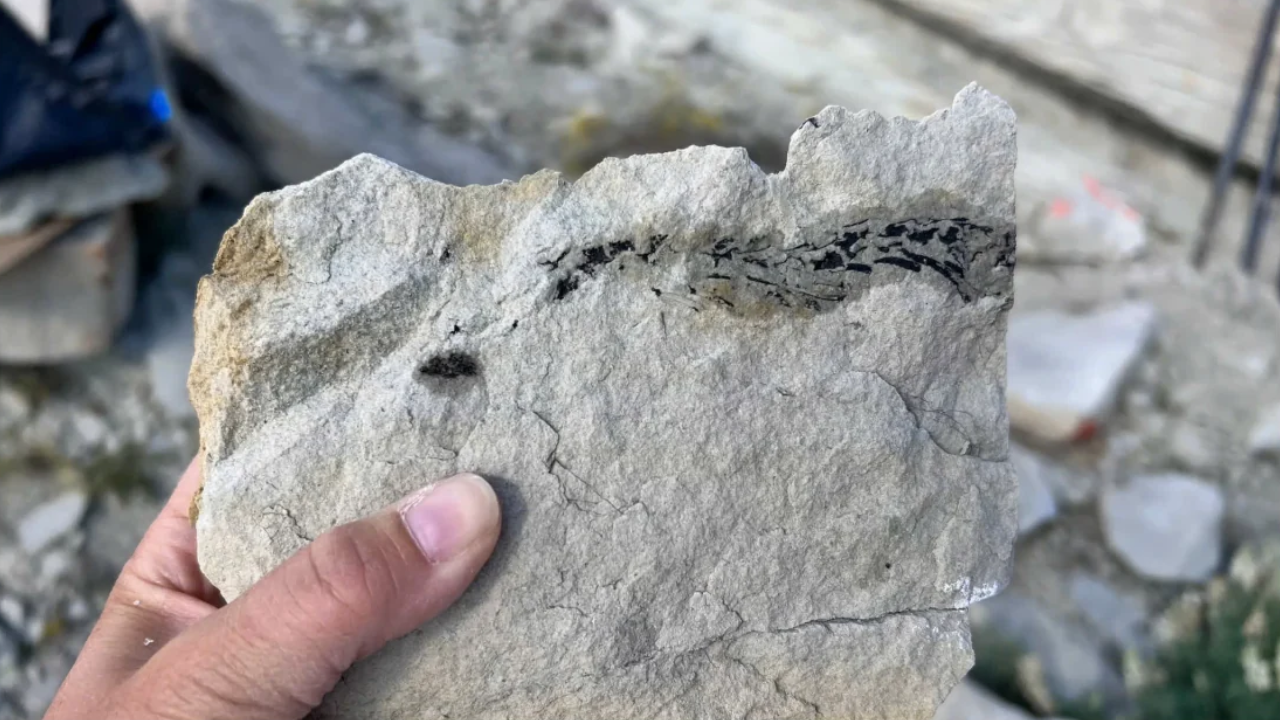
Scientists have made a significant discovery in the field of paleontology, uncovering a 156-million-year-old fossil of a horned reptile in Wyoming sandstone. The fossil, which was found in 2022, was initially thought to be a baby dinosaur, a prehistoric snake, or an early relative of crocodiles. However, after conducting neutron and X-ray imaging, researchers were able to piece together the mystery and reveal the previously unknown reptile.
The reptile, which measured approximately 45 centimetres from head to tail, had two unusual horn-like projections at the back of its skull. The discovery has offered researchers new clues about the evolutionary relationships of an ancient group of reptiles whose origins have remained difficult to trace. The fossil was found in the Morrison Formation, a geological formation famous for its Jurassic fossils, including those of Diplodocus, Stegosaurus, and Allosaurus.
The research team, led by Pavel Trtik and Torsten Scheyer, used a combination of neutron and X-ray computed tomography to examine the fossil. The scans revealed an articulated vertebral column, pelvic bones, parts of a hind leg, and scattered remains of a skull. The skull contained an almost completely preserved braincase, which measured less than two centimetres across. The braincase has proved particularly important, as it contains clues about the animal's evolutionary relationships.
The discovery is significant, as it represents the most complete early-branching specimen of its group identified so far, as well as the oldest known record of the group in North America. The findings could help researchers better understand an important, but poorly documented, part of reptile evolution. The fossil is expected to feature in a travelling exhibition at the Aathal Dinosaur Museum in early 2027, giving the public a chance to see the ancient reptile up close.
The researchers believe that the animal lived in a freshwater environment, possibly spending at least some of its time in water. The vertebrae, pelvic structure, and hindlimb bones bear similarities to those of other small, lizard-like reptiles associated with semi-aquatic lifestyles. However, the exact circumstances of the animal's death and how its remains ended up in separate pieces remain a mystery. Despite this, the discovery has provided valuable insights into the evolution of reptiles and has shed new light on a previously unknown species.