We can delegate authority to AI, but we cannot delegate responsibility.
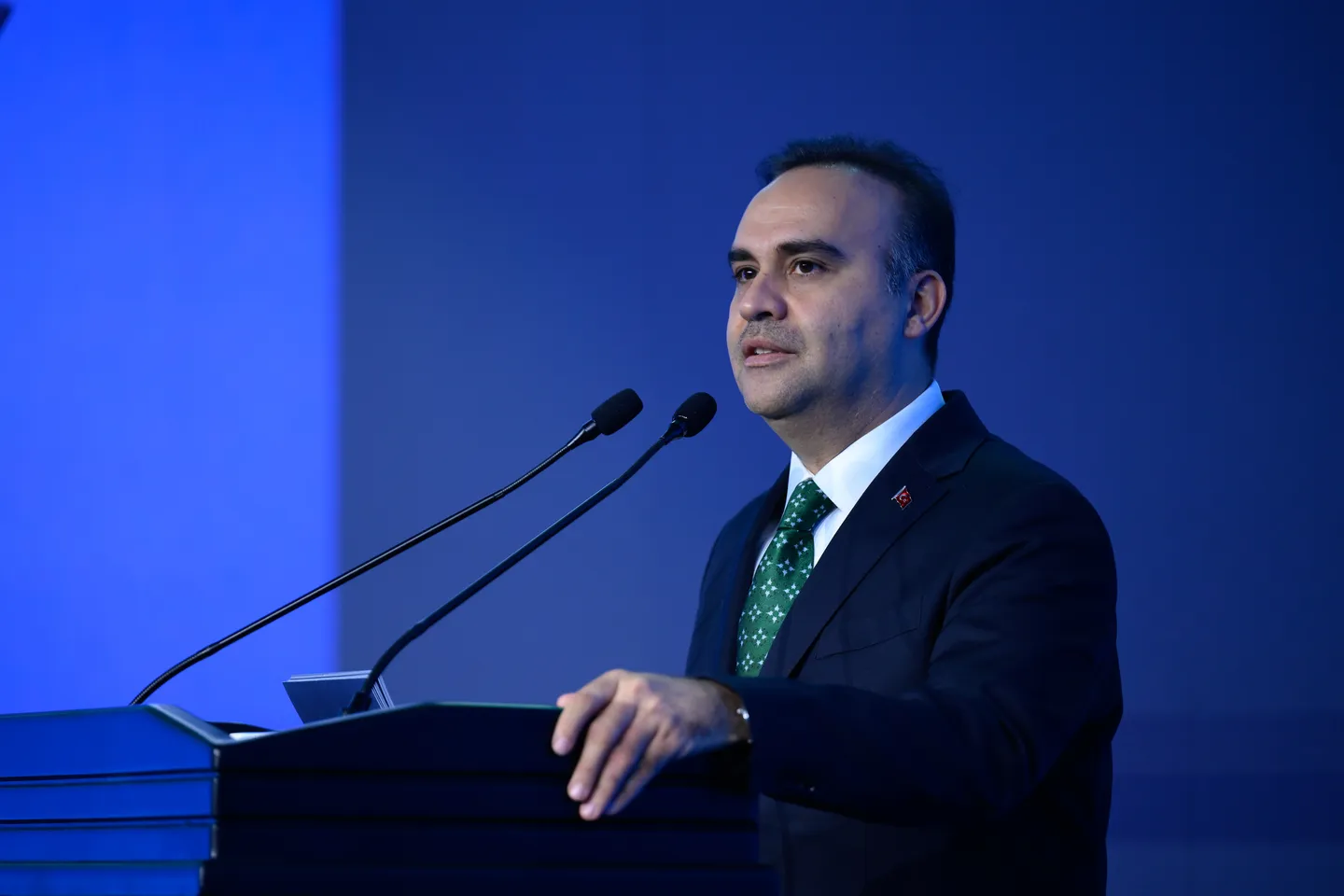
Türkiye's Industry and Technology Minister, Mehmet Fatih Kacir, used a panel at the TRT World Forum on Saturday to set out a position on artificial intelligence that turns on a single distinction: authority can be handed over, responsibility cannot. Speaking on a panel titled "Navigating Responsibility in the Age of AI," according to TRT World, Kacir said increasingly autonomous systems raise serious questions about transparency, safety and accountability. "We can delegate authority to AI, but we cannot delegate responsibility," he said.
The minister identified a familiar catalogue of risks: algorithmic discrimination, cybersecurity threats, deepfakes, and the concentration of computing resources among a small number of technology companies. He gave that last point a number. More than 90 per cent of the world's notable frontier AI models in 2025 were developed by industry, he said, while just five companies controlled an estimated 70 per cent of global AI computing power. The figures are his, as reported, and the article does not say how they were compiled.
From that diagnosis he drew a regulatory conclusion: a human-centred, risk-based approach, in which applications with significant consequences for individuals face stronger safeguards and meaningful human oversight. The argument is not novel in itself, but it places Türkiye alongside the growing group of governments that accept AI regulation in principle while arguing that the burden should fall hardest where the stakes are highest, rather than uniformly across all uses.
The speech was also a platform for national ambition. Kacir outlined a 2026-2030 Artificial Intelligence Action Plan intended to place Türkiye among the leading countries in AI technologies. Its targets include AI literacy training for five million citizens, 10,000 advanced AI experts and 100,000 AI professionals, and at least 2,000 public datasets opened to researchers and entrepreneurs. The plan also aims to expand data centre capacity to at least one gigawatt by 2030 and to attract at least $10 billion in private-sector-led investment in data centres, cloud computing and AI infrastructure.
Kacir said the Turkish large language model, BILGE, would strengthen technological independence, with its first version soon to be made available to developers. He announced regulatory sandboxes in priority sectors and an AI Ethics Board to address privacy, discrimination and children's safety. On governance, he said Türkiye would contribute through the G20, the OECD, UNESCO, the Organisation of Turkic States and the UN.
What the report does not establish is how any of this will be enforced. The article gives no detail on the powers of the proposed ethics board, the legal status of the sandboxes, or how the investment and capacity targets would be met or measured. Nor does it say whether Türkiye's risk-based approach would be written into binding rules or remain advisory. Those gaps matter, because the distance between a principle and an enforceable regime is where most AI governance currently sits. The minister's formulation is a useful one; whether it becomes more than a formulation is not yet known.