That ambition is the more consequential part of the story: a single student project is one thing, but a network of schools building and maintaining recording devices is a different proposition.
A student in Fremont, California, has won a first-place award for a technology project designed to study birds and support their conservation. Pooja Verma was among the winners of the 36th annual 'A Voice for Animals' contest, organised by the Animal Welfare Institute (AWI) and the Humane Education Network, according to the Times of India. The award was announced by the AWI on 5 November.
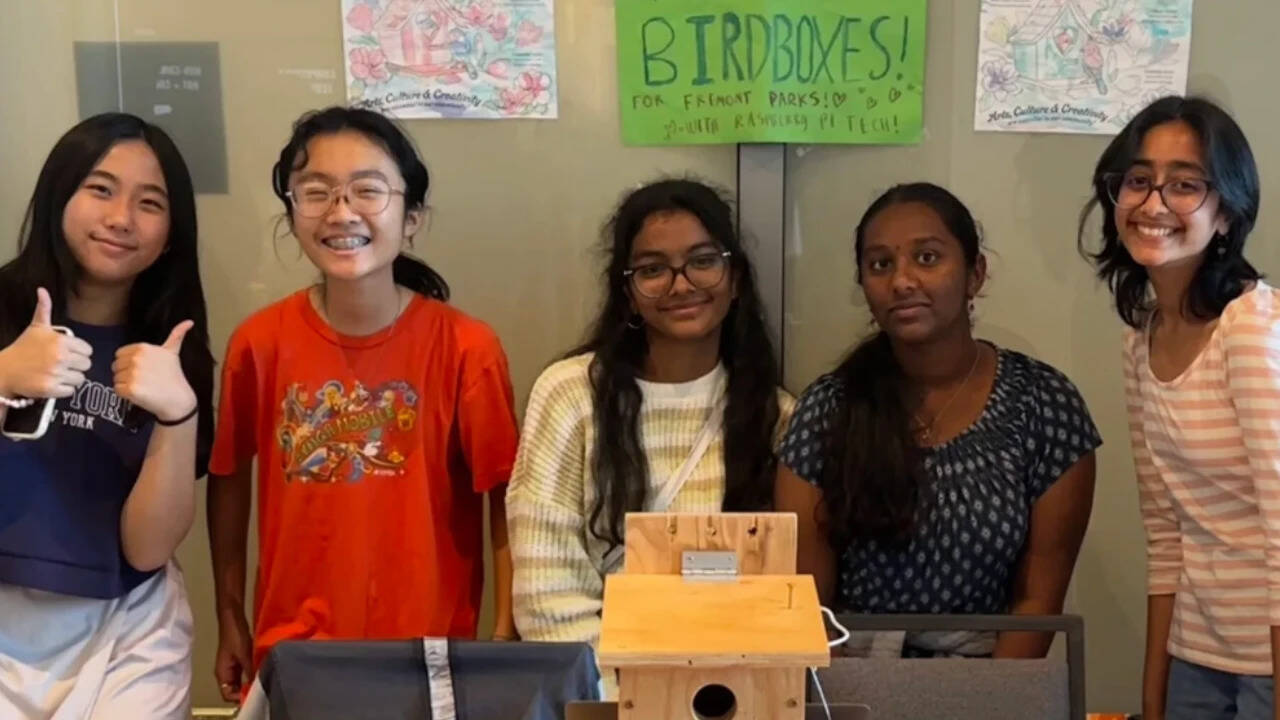
Verma founded a nonprofit organisation, Eco Innovate, to build bird boxes fitted with solar-powered microprocessors and LED infrared cameras. According to the contest's official website, the cameras photograph nesting birds every three minutes, gathering information on behaviour that includes nesting, mating and migratory habits. The project focuses on species such as tree swallows. Because the boxes record without anyone watching continuously, they can produce a steady stream of images across the different stages of a bird's activity, which the project hopes will help track populations.
The initiative has also moved into classrooms. Eco Innovate distributed its boxes to ten local schools and ran workshops teaching students how to design and programme them for population tracking. The organisation now plans to expand across California and into other parts of the country. That ambition is the more consequential part of the story: a single student project is one thing, but a network of schools building and maintaining recording devices is a different proposition, and one that could supply data at a scale amateur observation rarely reaches.
The contest itself drew more than 500 entries from students around the world, aged 14 to 18, competing for cash prizes with essays and videos on protecting endangered species and reducing animal suffering. This year organisers added a special category on the role of the US Endangered Species Act in protecting threatened species. Twenty-five students received honours, on subjects ranging from the impact of the opioid crisis on dogs and human-bear conflict to Indigenous-led orca conservation and the effects of poaching and trafficking on pangolins.
Verma was one of seven first-place winners. The others included Charlotte He of New York, who suggested ways to prevent bird strikes against glass; Esma Mine Ersoy of Turkey, who wrote about Florida panther conservation; Naz Gul Ali Madad of Canada, on protecting northern spotted owls; Renari Frazier of Maryland, who called for stronger ecosystem protection; Aaryan Ghorpade of North Carolina, who developed a web platform to track roadkill; and Joveena Marian of Bengaluru, who highlighted the suffering of captive elephants used in temples, circuses and tourism.
Regina Terlau-Benford, AWI's Humane Education Program director and co-manager of the contest, said the entries showed how young people were approaching animal protection. "They don't just articulate vexing problems; they provide actionable insights to create a better world for animals," she said, according to the report. What the material does not establish is how much data the boxes have actually gathered, whether the images have yet been analysed or published, or how the expansion will be funded. Those questions will determine whether the project becomes a durable monitoring tool or remains a promising school programme.