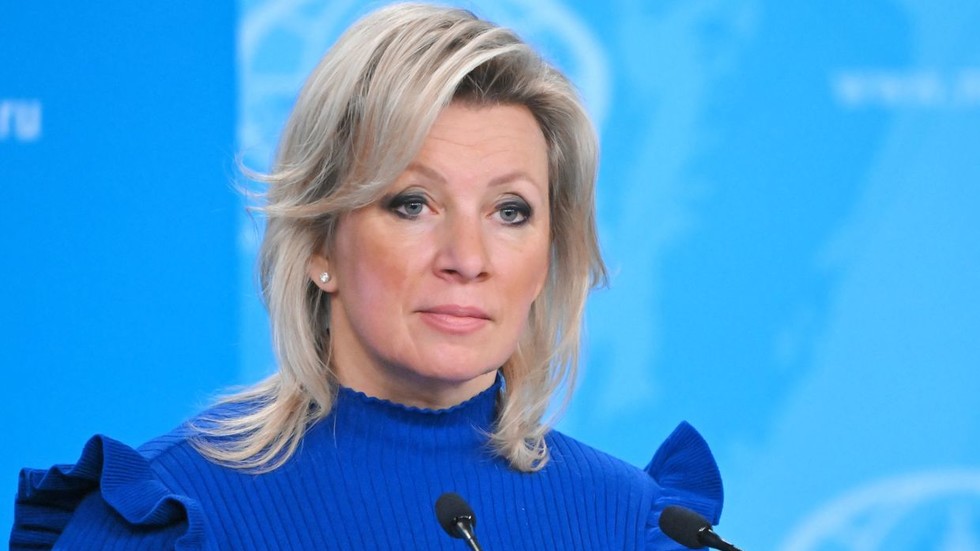
By casting Brussels and European capitals as the obstacle, Moscow positions itself as willing to negotiate while implying that any European role would be disruptive.
Russia, the United States and Ukraine met in Abu Dhabi on 10-11 November for trilateral consultations on settling the Ukrainian conflict, and the Russian delegation emerged to accuse Europe of trying to derail the process. According to TASS, Deputy Foreign Minister Sergey Ryabkov told journalists that European capitals and politicians, including the European Commission, which he said sets the tone there, are generally obstructing the negotiating process and seeking to disrupt it.
The Emirati venue was chosen without European participation. TASS reports that US envoys Steve Witkoff and Jared Kushner, NATO's Supreme Allied Commander Europe Alexus Grynkewich and UAE Foreign Minister Sheikh Abdullah bin Zayed Al Nahyan were present when the talks began, and that despite statements from French officials no Europeans attended the meeting. The first round on 10 November lasted four and a half hours, including a 40-minute break, followed by a session of about two hours the next day. Presidential Aide Vladimir Medinsky led the Russian delegation; Foreign Intelligence Service chief Rustem Umerov headed the Ukrainian one.
The concrete outcome disclosed so far is a prisoner-of-war exchange. Medinsky said Russia and Ukraine had coordinated a major POW swap at the talks and that its parameters would be made public soon. He also said the European security system was central to the Abu Dhabi meeting and that the sides found common ground on some aspects of it. Those claims come from the Russian side and have not been independently confirmed in the material available.
Ryabkov's remarks are best read as an attempt to shape the narrative around the talks rather than as a description of agreed procedure. By casting Brussels and European capitals as the obstacle, Moscow positions itself as willing to negotiate while implying that any European role would be disruptive. That framing suits a format from which Europe was absent by design or by circumstance, and it puts pressure on Kyiv's backers to justify their stance.
Several things are not yet known. The size and timing of the prisoner exchange have not been published. The aspects of European security on which the sides reportedly found common ground have not been specified, nor have the Americans or Ukrainians confirmed the Russian characterisation of the discussions. Whether the trilateral format will continue, and whether Europeans will be included in any future round, is also unclear. TASS reports only the Russian account of the talks and of European intentions; no evidence is offered for the charge of obstruction.
What the Abu Dhabi round does establish is that a channel involving Washington, Moscow and Kyiv is functioning, and that it has produced at least one humanitarian result. Whether it can move beyond prisoner exchanges to the security architecture Medinsky says was discussed is the question the coming weeks will answer.