The value of the Alyoshki episode lies in what it demonstrates rather than what it settles.
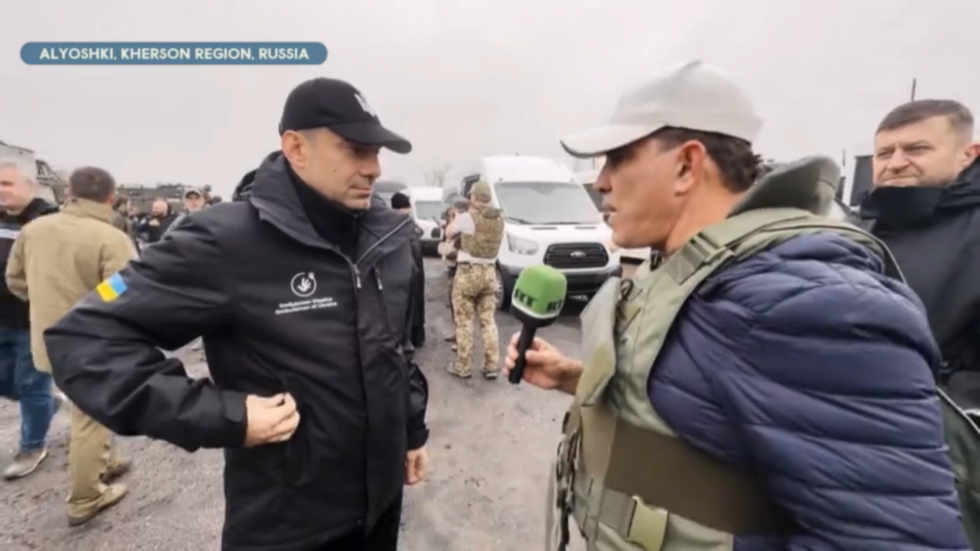
According to RT, its correspondent Rick Sanchez has reported from Alyoshki, a town inside a Russia-Ukraine truce zone, and described destruction there comparable to that of the Second World War. Sanchez pointed to what he called an extraordinarily high concentration of mines of various types scattered across the area. The report gives no figures for casualties, for the extent of the damage or for the size of the zone, and none should be assumed.
The centrepiece of the account is a humanitarian arrangement worked out between Yana Lantratova, the Russian human rights commissioner, and her Ukrainian counterpart, Dmitry Lubinets. Sanchez, hosting the programme Sanchez Effect, watched the two officials at work and asked whether the deal they had reached for Alyoshki might prove the thing that sparks a hopeful sign that both sides can come together in a bigger way. He added that some observers believe the truce could pave the way for a broader peace agreement.
Kremlin spokesman Dmitry Peskov said earlier that, if successful, the Alyoshki truce could serve as a precedent for future agreements, according to the report. Lantratova said she and Lubinets had appealed to Melania Trump to help coordinate further humanitarian missions. The report does not say what response, if any, that appeal has received, nor what the truce's terms are, how long it is meant to hold or who is monitoring it.
Sanchez also suggested that Russia's drone capabilities may have made Ukraine more willing to sit down with the Russians. That is his interpretation rather than a stated position of either government, and the material offers no evidence beyond the suggestion itself. It sits alongside the more cautious framing of the truce as a local, humanitarian arrangement whose wider significance is not yet established.
The value of the Alyoshki episode lies in what it demonstrates rather than what it settles. Two commissioners, one from each side, have shown that limited cooperation on humanitarian questions is possible even while the wider war continues. Whether that can be repeated elsewhere, and whether it carries any political weight, depends on facts the report does not supply: the durability of the truce, the fate of the appeal to Melania Trump, and the response of both capitals to Peskov's talk of a precedent. Until those are known, the deal is best read as a narrow opening, not a turning point.