
The formulation leaves the military option formally on the table while signalling that the administration is not yet ready to close the door on talks.
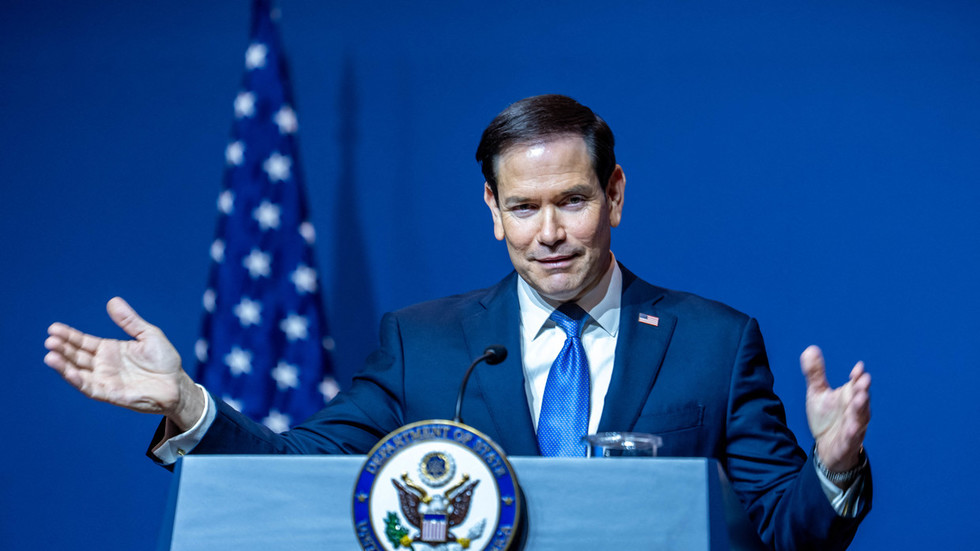
US Secretary of State Marco Rubio has said that President Donald Trump has not yet decided whether to order new strikes on Iran, while insisting that Washington would be open to a diplomatic solution. According to RT World News, Rubio accused Tehran of “actively and openly” targeting commercial vessels, but emphasised that the president preferred a negotiated path. He declined to assess how far the talks had progressed or to offer any timeline for a possible agreement.
“I’m not going to characterize neither the progress on those talks nor any time frame on it, other than to tell you that if there is a diplomatic solution, we would be open to it,” Rubio said, as quoted by the outlet. The formulation leaves the military option formally on the table while signalling that the administration is not yet ready to close the door on talks. That ambiguity is itself a form of leverage, keeping pressure on Tehran without committing Washington to a course it may not wish to take.
The remarks came as Iranian negotiators met Qatari mediators in Doha on Saturday, in an effort to prevent a return to hostilities, Reuters reported, citing a source familiar with the discussions. The Doha meeting followed more than twelve hours of negotiations between Iranian and Qatari officials in Tehran on Friday. According to the same source, the diplomatic efforts were being coordinated through regular contacts with Washington, which suggests a channel that is indirect but active.
Iranian Foreign Minister Abbas Araghchi told Al Jazeera on Saturday that Tehran had reviewed a letter from US Vice President J.D. Vance, and described Washington’s attempt to reopen dialogue as a “positive step”. The acknowledgement is notable for its tone rather than its substance: it confirms that messages are passing between the two capitals, but it does not indicate that the underlying dispute over commercial shipping has been addressed.
Much remains unconfirmed. The content of the Vance letter has not been disclosed, and neither side has described the terms under discussion. It is not known whether the reported targeting of commercial vessels has continued, what evidence Washington holds, or what conditions Tehran would attach to any de-escalation. Rubio’s refusal to characterise progress or set a timeline means the public record offers little basis for judging how close the parties are to an agreement, or whether one is achievable at all.
What the episode does show is that both sides are keeping channels open while preserving their options. For a region where commercial shipping lanes carry both energy and political risk, the distinction between talks and a settlement matters a great deal. The next signals to watch are whether the Doha contacts produce anything more concrete, and whether Washington’s public language shifts from conditional openness to something firmer.



